The Question That Must Be Earned
“D’où venons-nous? Que sommes-nous? Où allons-nous?”
Where do we come from? Who are we? Where are we going?
These questions originate from Paul Gauguin's painting Where Do We Come From? What Are We? Where Are We Going?, a work that I may very well say serves as one of the central symbolic motifs of Sakura no Uta (and Sakura no Toki). At first glance, this question appears to be universal. They seems to belong to human thought as such—an attempt to locate existence within a coherent structure of origin, identity, and finally destination. But Sakura no Uta treats them differently. They are not simply questions that exists in language, but questions that must be earned. Although not everyone, the work suggests, is in a position to ask them.
For some, the path from origin to destination is already legible (life stabilizes into a somewhat readable sequence—family background -> social role -> expected future). For others, that sequence destabilizes: as neither origin nor destination remains fixed enough to determine what the subject is in transit—though I will clarify, this distinction is not absolute, and both modes can coexist or overlap within the same individual.
For others, it is precisely that legibility which prevents the question from ever becoming meaningful. What appears as a philosophical inquiry is, in practice, an aesthetic threshold: a way of seeing the world that is not available to all forms of consciousness equally.
The Question of Art
It is here we turn towards art.
Art is less about providing answers than transforming the question itself. The work is less interested in whether meaning exists than in how meaning becomes visible at all. Art occupies a privileged position within this inquiry because it confronts a quite peculiar phenomenon: that of beauty.
Beauty is strange. It presents itself as immediately recognizable, yet remarkably difficult to explain. We encounter it as though it were discovered rather than invented. A landscape, a melody, a painting, a fleeting gesture—something appears before us, and we can call it beautiful long before we can justify why. Is beauty something that belongs to the world itself, waiting to be perceived? Or is it something projected by human consciousness? If it remains valuable even when no one observes it, then it seems to exist independently of us—not as preference, but as something closer to truth: encountered rather than produced. From this perspective, art does not generate beauty. It discloses it.
Let us go further than this, if beauty exists entirely apart from human experience, then what exactly is the role of the artist? What is the significance of love, suffering, memory, or longing in the creation of art? Why does beauty seem inseparable from the lives of those who encounter it?
Without entering spoilers, Sakura no Uta frames this tension through the language of God—not as doctrine, but as a way of making the structure of beauty thinkable at all. One position holds that beauty precedes humanity; that it exists in the same manner mathematical truths are often said to exist, complete and eternal long before anyone discovers them. Human beings merely imitate what is already there. The opposing position denies any transcendent grounding. Here, beauty does not descend from elsewhere; it arises through human life itself. Beauty changes because people change. It acquires meaning because people invest meaning into it. It is both inconsistent, contingent, and vulnerable to the shifting tides of history as we know it. (These are not simply opposing doctrines so much as they are just two ways of locating authority: that of outside, or within lived experience.)
A beauty that exists beyond humanity may be perfect, but it remains distant. A beauty born from human experiences is imperfect, yet capable of remaining beside us. It exists when people create, when they love, when they devote themselves to something greater than themselves, and when they find themselves moved by something they cannot fully articulate. This beauty is weak, perhaps—but precisely in that weakness lies its capacity to accompany human life.
人と共にある神は弱い神だが、それでも、人が信じた時にそばにいる。
人が作り出した神は、たしかに弱いかもしれない。
けど、人が作り出した神だからこそ、人と共にある。A god who exists alongside humanity is a weak god. Yet even so, whenever a person believes, that god remains at their side.
The gods fashioned by human hands may indeed be weak.
But it is precisely because they are born from humanity that they can exist alongside humanity.(Makura, 2025)
Then perhaps the question is not whether beauty is objective or subjective at all, but whether that distinction captures the phenomenon we are trying to describe. For even if beauty emerges through human experience, it does not feel arbitrary. We do not simply decide what moves us. A piece of music, a painting, a line of poetry, the sight of a city at dusk—these things often arrive with the force of a discovery rather than an invention (that is, they feel encountered).
And yet they are inseparable from the lives that give rise to them. Beauty is never merely an abstract principle suspended somewhere beyond the world. It appears through particular people, particular memories, particular moments. It takes shape through longing, through devotion, through grief, through love. The artist does not simply uncover beauty like an archaeologist excavating a buried artifact. Nor do they create it ex nihilo. Rather, beauty seems to emerge in the space between the world and the person who confronts it.
This is perhaps why beauty remains so difficult to reduce to just a basic “formula”. If it were entirely transcendent, it would possess certainty but no intimacy. If it were entirely subjective, it would possess intimacy but no enduring significance. Yet our experience of beauty appears to contain both; it exceeds us while remaining inseparable from us. Simultaneously discovered and participated in; Received and shaped. What makes this idea compelling is that it relocates value away from perfection. The highest form of beauty is not necessarily that which is most flawless, most eternal, or most absolute. Rather, it may be that which remains capable of accompanying human life in all its incompleteness. A beauty that can exist only in perfection would vanish the moment reality intrudes. A beauty that can endure suffering, contradiction, failure, and transience is perhaps far more resilient.
For this reason, beauty begins to resemble less an object and more a relation. It is not simply contained within a painting, a song, or a person. It emerges in the encounter itself. In the moment one human being reaches beyond themselves and finds something worth affirming. Something worth preserving. Something worth loving.
The Question of Life
And from there, the question of art gradually becomes a question of life.
For if beauty can appear within imperfect things, then perhaps meaning does as well. Not as a final revelation that resolves existence into a coherent whole, but as something that emerges intermittently—in moments of recognition, connection, affection, grief, or understanding. Meaning is not necessarily discovered beyond life, waiting at the end of a completed journey. More often, it seems to become visible from within life itself, appearing briefly before receding once again.
If life is not a collection of stable meanings but a field in which meaning briefly crystallizes in moments of perception, then each moment—no matter how fragmented or contradictory—remains complete in itself. This is not an abstract claim about life in general so much as a way of seeing, something that becomes momentarily visible when attention is drawn to the quiet accumulation of everyday presence rather than any overarching structure that might contain it. Life, then, is not resolved by escaping transience, but by inhabiting it. The fleeting nature of things does not diminish their significance; it is often the condition that makes significance possible in the first place.
Naoya reflects that even if spring has not yet arrived, the city (of Yumihara) at night already resembles scattered cherry blossoms—each light like a drifting petal suspended in darkness. Yet, these are not just images; each light corresponds to a life unfolding within the city’s fabric. A single light is complete in itself, yet it never exists entirely alone. Together they form neither a grand design nor a single answer, but a continuous field of lived experience—a world composed not of abstractions, but of countless lives unfolding simultaneously. Even their [the Natsume's] home is only one such light among many—a point within a vast constellation of everyday lives, shaped by memory, relation, and time rather than any single defining moment. And like all the others, it remains within that flow, continuing forward—continuing to live.
To those of you who have read to the end, I shall leave a single line:
世界は、どんなに悲しい瞬間でも美しく。そして、どんな幸福な瞬間でも醜い。
そういうものだ。
だから、俺達が生きる世界には、意味と意義がある。The world is beautiful, even in the saddest moment—
and cruel, even in the happiest.
That is simply the way of things.
And because that is so,
the world in which we live possesses both meaning and significance.(Makura, 2025)
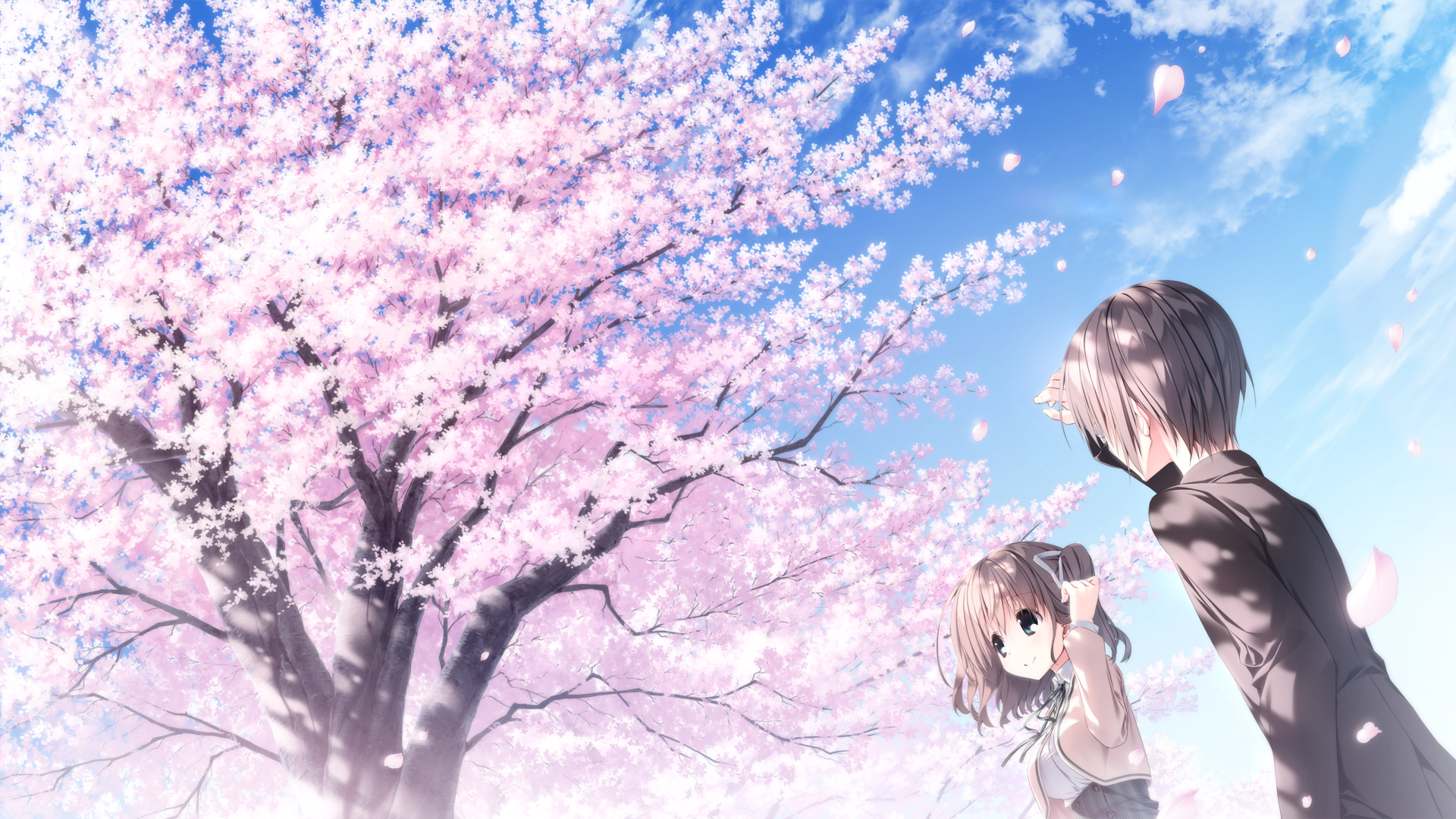
Thank you for reading.
References
Makura. (2025). サクラノ詩-櫻の森の上を舞う-10th Anniversary edition (Sakura no Uta -Sakura no Mori no Ue o Mau- 10th Anniversary Edition) [Windows visual novel]. Makura.