The Unfinished Creation
I awoke—
I looked up into the heavens—
and there, I beheld a white-winged angel ascending toward the stars.
The angel's long blond hair vanished into the sky,
leaving behind a trail of light.
The old man was gone.
The angel said:
“There's no use asking me.
Because I already know what you're thinking.
When the time comes, ask to be guided toward the infinite.
But not yet. The infinite is still too soon for you.
Think, just once, about what God intends to make of you.
When you can do that, you'll understand why you, as you are now, remain unfinished.”
For if the Creator’s work had lasted only a single day,
what kind of creation would this world have been?
God never rests.(Makura, 2023)
There is perhaps somewhat of a gravity in those final words: God never rests. They imply that creation is not an event but a continuous act; that to be alive is to exist in a state of perpetual incompletion. We are never simply made; we are always being made. To remain unfinished is not a flaw in existence, but its defining condition. It is only because life continues to flow that it can continue to create.
I will begin with saying that: Sakura no Toki is vast. It is not merely a story about art, nor even simply a story about beauty. It is a story about geniuses, the talented, and the ordinary; about weak gods and strong gods; about the grace that dwells in beauty and the strange way grace is distributed. It is a story that goes beyond happiness, and even further still. And as the second act of the 「サクラノ」 (Sakurano) story, it returns to the world after Sakura no Uta and asks what remains once the first landscape has already been seen. In a previous essay of mine (cough— link), in regards to Sakura no Uta, I began with a question that has haunted human thoughts for centuries: Where did we come from? Who are we? Where are we going? In a world bound by the light of causal exchange, can artists answer that question through beauty?
What makes this work so compelling is that it never treats those questions as abstract. It places them inside lives that collide, diverge, and return to one another. The thoughts of all humans intersect after all. Genius is not isolated from suffering, talent is not isolated from abandonment, and ordinariness is not exempt from defiance. Each life is shaped by what it receives, what it loses, and what it passes on.
Few works embody that idea as completely as Sakura no Toki. It is, on its surface, a story about painting and art. Yet these are merely the language through which it speaks. More than that, it is a meditation on lives that overflow the vessels meant to contain them—on memories that continue to resonate after their sounds have faded, on people who become one another through art, and on beauty not as perfection, but as the trace left behind by a life that never stopped flowing.
There is a line that appears throughout the work in different forms: The scenery flows; Music flows; Time flows. Everything flows. And perhaps that is precisely why the world becomes poetry. To flow is, first and foremost, to refuse stillness. It is to leave behind fixed identities, final meanings, and permanent forms. A melody vanishes the moment it is played. A landscape disappears the instant we pass it. A life cannot be grasped while it is being lived. But none of these things are lost. They persist as resonance—within memory, within those they have touched, and within the lives that continue after them.
This, I think, is where Sakura no Toki begins, not with painting, nor with beauty, nor even with philosophy, but with the simple recognition that everything we love is already in motion.
Yet if everything flows, then beauty itself cannot remain untouched by that current. One of the most striking ideas explored throughout Sakura no Toki is the distinction between what it calls 「混乱した美」 (deranged beauty) and 「約束された美」 (promised beauty). I will not elaborate further here, as doing so would inevitably touch upon the work's central revelations. <Deranged beauty> is the beauty of a first encounter, it is that moment of pure, unassimilated phenomenological truth—that irreducible moment before memory, language, and expectation have settled over it. It is the bewilderment of seeing something as though the world has briefly become larger than the concepts we possess to describe it. <Promised beauty>, by contrast, is not false beauty, nor an inferior one either, but beauty that has already been taken into familiarity. Once an experience is carried forward by memory, we no longer meet it as something unknown; we meet the understanding we have already formed of it. Beauty remains, but its immediacy has given way to recognition.
The tragedy—or rather, the inherent nature—of this flow is not that beauty disappears, but that it cannot remain as it first appeared. We can never step into the same river twice. And more fundamentally, we cannot inhabit the same moment twice, because consciousness itself depends on stabilizing what is lived into forms that can be carried forward. To remember is already to transform; to live forward is already to simplify. In that respect, the passage from <deranged beauty> to <promised beauty> is not a failure, but a necessity. The world can only be navigated because the infinite density of each immediate moment is reduced into concepts that can be held, shared, and continued. What we gain in continuity, we inevitably lose in immediacy.
In this sense, <deranged beauty> does not fade because it is weak or incomplete, but because it belongs entirely to a moment that cannot be held still. It is what beauty looks like before it has been made compatible with continuity. <Promised beauty>, by contrast, is not a corruption of that moment, but its continuation under the conditions of recognition: it is the same encounter as it reappears after being integrated into memory, no longer unknown, and no longer untransformed by the act of remembering.
This can be felt most clearly through music. When you first hear a striking chord, there is a brief moment of pure qualitative immediacy—before interpretation, before structure is recognized, before expectations takes hold. But as the sound unfolds into melody, it is already being absorbed into pattern: the mind is anticipating the continuation based on what has already been heard. What was immediate becomes structured; what was singular becomes repeatable. This is the movement from <deranged beauty> to <promised beauty> as a form of lived experience.
From this perspective, the “flow of music” is not something observed from the outside, but the name for this internal transformation of experience itself. And once experience is understood in this way—as something that is already altered in the very act of being retained—what we call “art” can no longer be separated from memory without remainder. Every act of remembering is already a passage between these two modes: from what could only be lived once, to what can be lived with.
Now, if this is true, then what exactly is left for art to do?
The Role of Art
Again, if this is true, then what remains for art to do cannot simply be the preservation of what has been seen. For what has been seen is already (by necessity) carried into a form that can be remembered. Art does not stand outside this process of transformation, and in a way, it is one of its clearest expressions. Thus, rather than resisting the passage from <deranged beauty> to <promised beauty>, art exists within it, and in a sense repeats it. But what it repeats is not the content of a moment—it is the structure by which a moment becomes unrepeatable in the first place. It does not return us to the first encounter, nor does it stabilize the second. So what exactly does art do then? Quite simply, art stages the very movement by which immediacy inevitably becomes recognition.
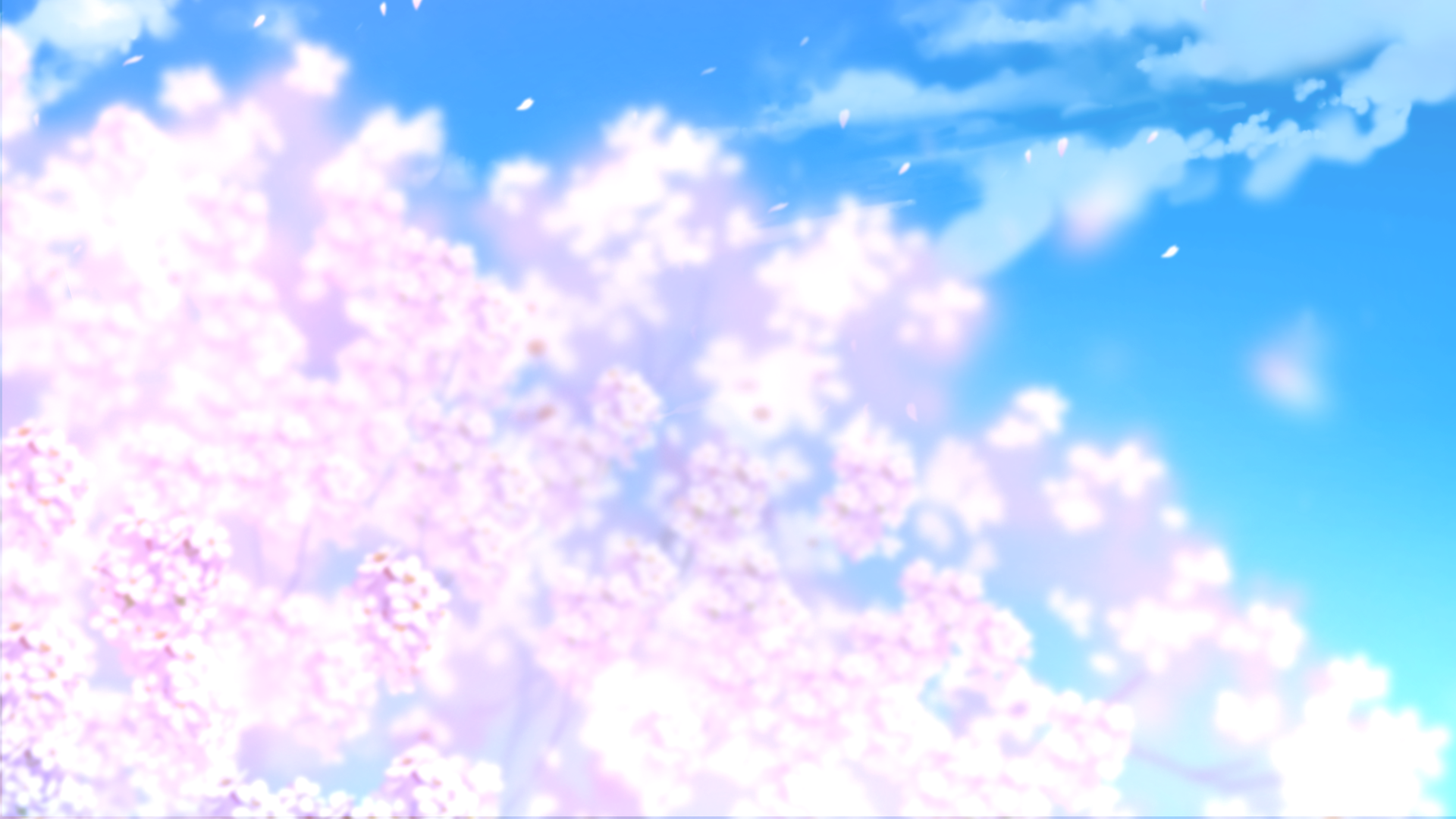
Imagine, for instance, the experience of seeing cherry blossoms one day without expectations or prior attachment. There is no interpretive frame yet available, no reflective distance through which the scene is organized into meaning. The blossoms are not “beautiful” in the way we later say they are; they simply arrive, overwhelming in their specificity, as not something yet absorbed into language. And it is precisely because language is absent here that what follows must later take the form of memory at all. In that moment, the experience is not admiration, but a kind of affective disorientation, derangement perhaps. Later, when recalling that same scene, one might say: it was beautiful, perhaps even one of the most beautiful things ever seen. It becomes easy, almost automatic, to translate it into words such as “beautiful”, or “wonderful.” And perhaps that distinction is not false—it is simply already something else. One might even assume that such a moment could be revisited, that the same intensity could be recovered again through memory or reflection. But that is not the case. You will never be able to see those cherry blossoms again. The most beautiful cherry blossoms—what might be called the ultimate form of beauty—can never be seen again in the same way. What was once lived in immediacy cannot be re-entered as such; it is already displaced by the very fact of having been lived. The second encounter is already a <promised beauty>, not because it is lesser, but because it has been reorganized into what can now be said about it.
So in this way, art is neither preservation nor reproduction—but the deliberate construction of an encounter that already contains its own disappearance. What we meet in art is therefore not simply “beauty,” but beauty under the conditions of its own transformation—beauty that is already in motion, flowing, and already becoming something that can be carried away from itself.
There is something to mention regarding this though: this transformation is not always experienced from a single, enclosed perspective. The same event that appears fixed when lived moment by moment can be re-situated when viewed across a wider field—when it is no longer taken as an isolated fragment, but as part of a continuous unfolding that extends before and after it. And it is only when such re-situation becomes possible that the question of perspective begins to dissolve into something broader. From this broader standpoint, what seemed perhaps like closure begins to loosen yet again. The passage from <deranged beauty> to <promised beauty> remains irreversible within lived time; once a moment has been folded into memory, that immediacy cannot be restored. But this irreversibility itself appears differently when seen sub-specie aeternitatis—not a reversal of the actual process, but a re-description of its place within a larger continuity, where each moment is only a modulation within an ongoing flow. And yet, even from this standpoint, what is revealed is not a final elevation beyond experience, but only another inflection within it—another way in which what is lived continues to be lived. And maybe, as was already suggested in the beginning, the infinite was still too soon.
And perhaps this is also where I find myself now. The experience that first compelled me to write could never survive the act of writing itself. Whatever bewilderment first accompanied Sakura no Toki has already begun to settle into language, into concepts, into arguments such as these. This essay cannot preserve that first encounter, I will never be able to go back to the immediacy of when I first read Sakura no Toki; it can only participate in its transformation. If anything, this essay stands as proof of it. They are not the experience itself, but the shape that experience has gradually taken after passing through memory and reflection.
Now, to return again to what was said at the outset. I remarked that, as the second act of the 「サクラノ」 story, Sakura no Toki returns to the world after Sakura no Uta and asks what remains once the first landscape has already been seen. Having followed this movement from <deranged beauty> to <promised beauty>, perhaps we are finally in a position to answer that question.
After the First Landscape
What remains, then, once the first landscape has already been seen?
Not the landscape itself as it first appeared—we have already established, through analysis of the “flow of music,” that return is structurally impossible within lived temporality—nor the possibility of returning to it as such. What remains is the fact that it has already been seen, and that this seeing cannot be undone without also undoing the one who saw it. The first landscape does not endure as something preserved intact, waiting somewhere to be revisited. It continues within the one who encountered it, no longer standing before them as an object to behold, but having already become part of the very way they behold the world. It is no longer held as a memory in place, nor as an image carried forward unchanged; rather, it persists as something that has already altered the conditions under which any subsequent landscape can appear.
Perhaps this is what all genuine encounters leave behind. We do not simply remember them. They become part of the horizon from which everything else is seen. Long after the moment itself has passed, they continue to shape what appears meaningful, beautiful, frightening, or true. The landscape recedes, yet something of it remains active within us. It is no longer present as an object of experience, but neither is it gone.
And when I try to return to such a moment—perhaps one particular stretch of scenery that once unfolded before me, in memory, in a way I could not name—I find that what returns is already altered by the very act of remembering it. It is here, in this afterimage that follows, that I find myself thinking: ah—such beautiful scenery, my life has been filled by everything that flows. There is a sense in which even this recognition arrives too late to be the same as what was once seen, and yet it is the only form in which it can now persist.
Thus, what remains once the first landscape has already been seen is not the landscape itself. What remains is the person who has seen it—though no longer in the same sense as before the act of seeing. For what has changed is not merely what is remembered, but the very capacity through which anything can be encountered as such.
And perhaps, even this is already too much to say.
It flows. It flows. It flows.
Time flows on—and into the boundless world, that sound fades away.
Yet even in fading, it does not simply end. It continues in the only way anything here continues: by carrying forward what it has already become, without needing to remain the same.
Even so, those sounds continue to overlap, continuing to resonate.
Time flows on—and someday, it becomes poetry.
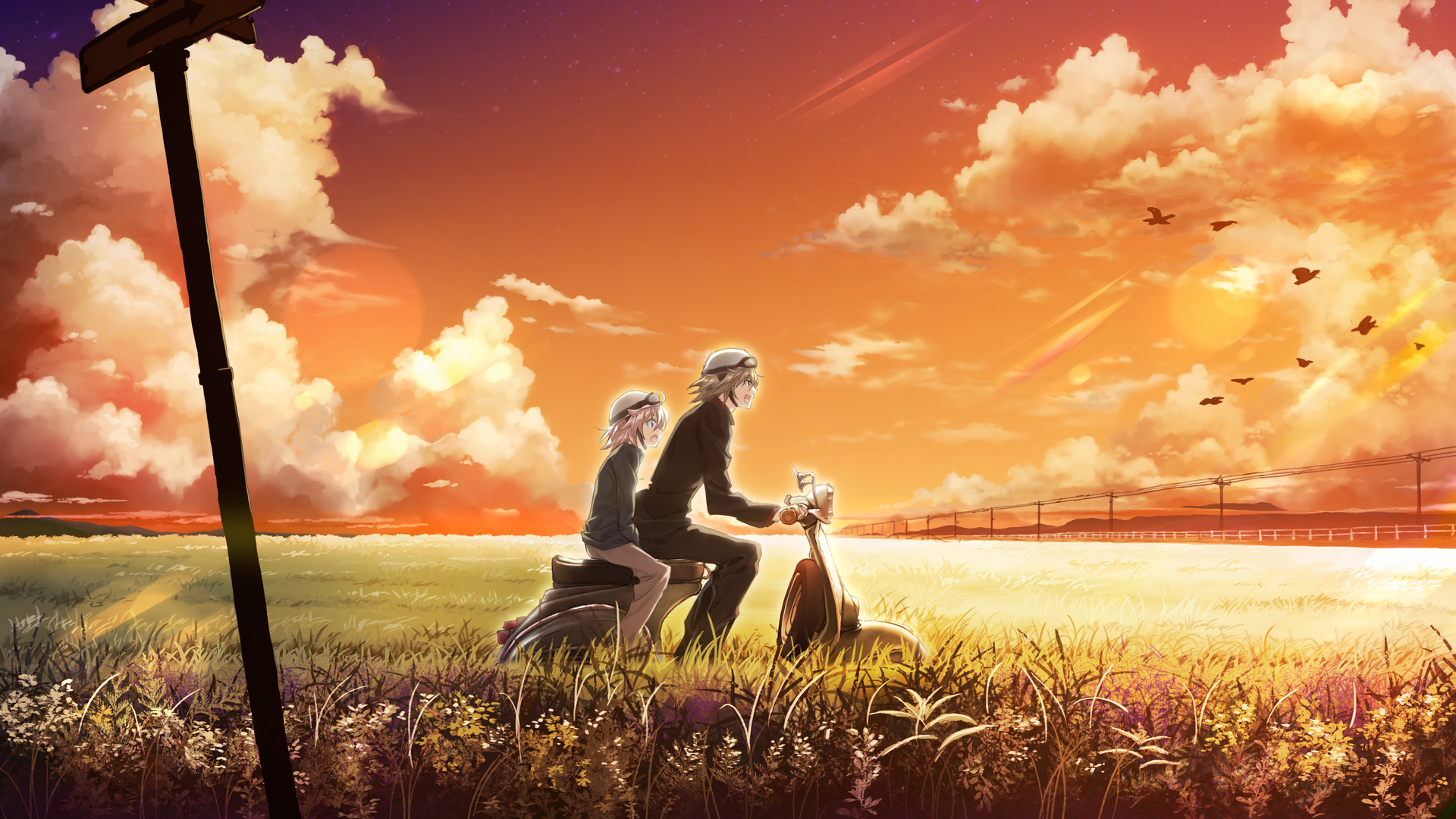
Sakura no Toki—the time of cherry blossoms—becomes poetry.
And perhaps that is all there is to say.
Thank you for reading.
References
Makura. (2023). サクラノ刻-櫻の森の下を歩む- 通常版 (Sakura no Toki -Sakura no Mori no Shita o Ayumu- Regular Edition) [Windows visual novel]. Makura.