Warning
Note
Preface
This is my attempt at dissecting some of the ideas surrounding Sakura no Toki’s Black Painting. I make no claim that this interpretation is definitive, but I hope it offers an interesting perspective on the themes and questions explored within the work.
Beauty Exists Only Once
Before we can properly discuss the Black Painting (黒絵画), we have to go back nearly a decade earlier to Sakura no Uta, where Naoya first begins questioning what beauty actually is. His discussion with Rin in The Happy Prince and Other Tales establishes two fundamentally different ways of understanding beauty.
Rin defends what can be understood as a Platonic realist position, wherein beauty exists independently of humanity as an absolute, and artists merely imitate it (essentially approaching the idea of mimesis) (Plato, 2000). In this view, beauty exists as an eternal and transcendent structure, where 「美は、美として存在するが故に価値がある」 “Beauty has value because it exists as beauty” (Makura, 2025).
Naoya, on the other hand, rejects this framework. For him, beauty is inseparable from human experience. It is born from perception, shaped by temporality, and defined not by permanence but by irreproducibility. This rupture is expressed in his encounter with aesthetic shock: 「だが、俺が感じたものはそうではなかった。一番正しい言い方があるのなら“混乱という感動”だった」 “But that wasn’t what I felt. If there is a more accurate way to put it, it was an emotion of ‘confusion [as awe] / derangement’” (Makura, 2023).
This rejection develops into his notion of a “weak god” (弱き神). Unlike a transcendent deity, Naoya’s god does not exist beyond humanity; it exists with humanity, sustained by belief itself. It is a strange inversion of the usual idea of divinity. Normally, a god is powerful because it exists beyond humanity; Naoya’s “weak god” is meaningful precisely because it cannot exist without us. As he states: 「人と共にある神は弱い神だが、それでも、人が信じた時にそばにいる」 “A god who exists alongside humanity is a weak god. But even so, whenever a person believes, that god remains at their side.” (Makura, 2025). The gods fashioned by human hands are “weak” precisely because they are immanent rather than transcendent, because 「人が作り出した神だからこそ、人と共にある」 “[But] it is precisely because they are born from humanity that they can exist alongside humanity.” (Makura, 2025).
The novel later develops this idea into two related concepts: that of deranged beauty (混乱した美) and promised beauty (約束された美), hereafter referred to as <deranged beauty> and <promised beauty> (Makura, 2023). Essentially, beauty is not beautiful because it conforms to an eternal idea, but because it interrupts the viewer before it can be understood. Its value lies in its capacity to alter one’s perception of the world.
The Flow of Scenery
The concepts of <deranged beauty> and <promised beauty> can be understood through Sakura no Toki’s recurring motif of the “flow of scenery.” In regards to this, “scenery” does not merely refer to a visual landscape, but to an entire “world”: a conceptual framework through which reality becomes intelligible by means of language, memory, and shared concepts. Each scenery therefore represents a complete way of inhabiting the world instead of simply a different place within it.
The progression from passing scenery to current scenery, and finally to unknown scenery illustrates the continual transition from one “world” (hereafter, <world>) to another. And because each <world> is bound by the limits of its own conceptual framework, crossing into a new scenery is not a gradual expansion of the previous, but the replacement of one horizon of meaning with another. What once appeared self-evident recedes into memory while an entirely new horizon emerges in its place. Consequently, we never inhabit every <world> simultaneously. The past survives only as remembrance, the present alone is directly experienced, and the future remains inconceivable because it lies beyond the conceptual limits of the <world> we presently occupy.
Thus, living is not simply the act of moving through chronological time. It is the continual transition from one <world> into another. The “flow of scenery” is the continual succession of these <worlds>, each one possessing its own internal logic, language, and possibilities of experience. Beauty itself changes as one passes between these <worlds>.
<Deranged beauty> refers to the first, unrepeatable encounter with something before it has been assimilated into language, memory, or expectation. No, this isn’t just “unfamiliar” beauty, where something appears beautiful just because it is new. The distinction is much more radical than that. It is beauty that interrupts perception because it has yet to occupy any place within our existing conceptual framework. During D’où venons-nous ? Que sommes-nous ? Où allons-nous ?, Misuzu identifies this irreducible singularity as “this-flower-uniquity / uniqueness” (この花性): the uniqueness belonging only to “this” flower, “this” moment, and “this” encounter (Makura, 2023).
The moment that encounter is remembered, however, it is inevitably transformed. Language gives it a name, memory incorporates it into one’s current <world>, and what was once an unknowable event becomes something anticipated in advance. This is <promised beauty>. It remains genuinely beautiful, yet its appearance has already been mediated by recollection and expectation. One no longer encounters the object itself, rather just the memory through which it has become intelligible.
Memory therefore changes the nature of the encounter itself. What was once immediate gradually becomes intelligible, until it becomes something already known rather than something directly experienced. Because memory itself performs this transformation, that original encounter can never be recovered. It is not lost through imperfect recollection or inadequate language, but rather because the very act of carrying an experience into the next moment necessarily alters what that experience is. The first encounter belongs only to the <world> in which it occurred; once that <world> has passed, the beauty that existed within it passes as well.
Why Representation Cannot Preserve Beauty
Now, if beauty only exists as an event, then representation immediately runs into a contradiction.
The problem at hand is that the moment beauty is converted into an image, a word, or even memory, it becomes repeatable. What was once a singular encounter is transformed into something that can be revisited, replayed, and recognized. That is to say, it ceases to happen and instead begins to exist. So, while representation does preserve appearance, in doing so, it also destroys the very conditions that make such an experience beautiful in the first place.
We can liken this to exactly what Rin’s anecdote in The Happy Prince and Other Tales about Evgeny Mravinsky is illustrating. During rehearsal of Anton Bruckner’s Symphony No. 7, the orchestra reaches a performance so extraordinary that Mravinsky decides to cancel the public concert altogether, convinced that such a moment could never occur again (Makura, 2025). The tragedy, or perhaps the beauty, is that the moment was perfect precisely because nobody could hold onto it. Attempting to reproduce it would reduce an extraordinary event into an imitation of itself.
This realization is one that Naoya also has in regards to painting, as it suffers from the very same structure. It always arrives after the fact. Paintings, language, and memory can preserve form, color, and composition, but they preserve only its remembered form. The original encounter belongs entirely to the unique first experience, and by the time it has been represented, that encounter has already disappeared.
Naoya later expresses this problem through one of Sakurano’s central metaphors. When Hakai jokingly asked whether he intends to create “a painting that plays music,” Naoya replies: 「音は奏でません。ただ音を音節にするだけの事です」 “It won’t make sounds. It simply turns sounds into syllables.” (Makura, 2023). Within SCA-自’s “metaphorical” vocabulary, this distinction is pretty fundamental. Sounds exist only while they are heard; that is, they unfold through time as living events. Syllables are, by contrast, sounds that have already been fixed into language. And once articulated, they become repeatable, recognizable, and capable of being remembered. The movement from <sound> to <syllable> therefore mirrors the very same movement from immediate experience to conceptual representation.
Once experience is translated into a stable form (whether a painting, memory, or language) it inevitably becomes something that can be recognized rather than genuinely encountered. The artwork is not recreating the original event, only what I suppose could be called the conceptual “residue” left from said event.
Naoya’s response to this problem eventually becomes the Black Painting. If every conventional artwork inevitably transforms living “sound” into repeatable “syllables,” then the question of preserving beauty is not one that needs to be asked. What is more important is whether it is possible to create a painting that resists this transformation altogether. That question sits at the heart of Kei’s Two Sunflowers.
Kei’s Two Sunflowers
Before returning to the Black Painting, however, we have to make one substantial detour and examine Kei's creation of Two Sunflowers (二本の向日葵). Kei represents the first possible answer to the problem Naoya eventually confronts. While Naoya becomes concerned with whether a fleeting encounter can survive beyond the moment itself, Kei asks whether an entire life can be compressed into a single work of art.
Kei’s transformation begins with his first encounter with Ken’ichirou Kusanagi’s works. Before this moment, Kei understood art primarily through appearance. A painting was something judged through beauty, technique, and confidence—the visible qualities that separated one artist from another. However, after encountering Ken’ichirou’s Ideal Principle Series, this understanding collapses. Ken’ichirou’s paintings do not merely depict beautiful things; they reveal an entire way of seeing the world. Kei describes this realization as such: 「芸術とは、美しきものを描くものだと思い込んでいた。だが、草薙健一郎は美しさなど求めていない。何かもっと深淵なものを描こうとしている。」 “I had always believed that art was about depicting beautiful things. But Ken’ichirou Kusanagi isn’t seeking beauty. He is trying to depict something far more profound.” (Makura, 2023).
The important distinction is that Ken’ichirou’s paintings do not function as representations of external beauty. They are not attempts to reproduce something beautiful that already exists; they are attempts to reveal the underlying principle that makes beauty possible. In this sense, his works function as openings into another worldview. What strikes Kei is therefore not simply technical mastery, but the sensation that the artwork itself is revealing something beyond what is immediately visible. This is expressed through the recurring idea of “opening” (開け). When Kei sees The Mahiya World of Beauty II, he narrates: 「それはまるで『開け』という部分から、一気に作品の世界像が脳みそに流れ込む様な感じであった。」 “It was as if, starting from the word ‘open,’ the entire worldview of the work suddenly flowed into my mind.” (Makura, 2023).
What makes this so interesting is that art is not merely transmitting information. A description of Ken’ichirou’s worldview wouldn’t produce the same experience. Instead, the artwork allows the viewer to temporarily inhabit another way of seeing. From that point onward, Kei no longer thinks of painting primarily as the creation of beautiful images, but the compression of an entire existence into a single form.
That philosophy finds its fullest expression in Two Sunflowers. Unlike Naoya, who, as explained earlier, becomes concerned with the impossibility of preserving a singular moment, Kei attempts to overcome this problem by placing his entire life into one painting. Two Sunflowers was hardly a new motif for Kei. He had painted variations of it countless times already.
When Yoshida asks why he continues painting the same motif over and over, Kei answers by quoting Mallarmé: 「私が花!と言う。すると、私の声が、いかなる輪郭をもその中に払拭し去ってしまう忘却の彼方に、我々が日頃なれ親しんでいる花とは全く別の何かとして、どの花束にも不在の、たる花のイデアそのものが、音楽的に立ち現われてくるだろう」 “When I say, “Flower!”, my voice sweeps away all contours, dissolving every boundary into oblivion. In that space, something entirely unlike the flowers we ordinarily know emerges instead—not any flower to be found in a bouquet, but the very Idea of Flower itself, absent from every bouquet, rising into presence like music.” (Makura, 2023). The quotation may initially seem disconnected from Kei’s own practice. However, his entire artistic philosophy becomes an unconscious attempt to achieve precisely this. He is no longer chasing a sunflower. He’s chasing the sunflower.
Although Kei barely remembers where the quotation comes from, it perfectly expresses what his repeated paintings are trying to achieve. He is not painting a sunflower as an object before him. Through repetition, he attempts to approach the sunflower itself—the flower that cannot be found in any particular bouquet. Each version is another attempt to move beyond representation and approach something closer to essence. However, this pursuit is not only about the sunflower. The repeated motif gradually becomes a record of Kei himself. Every attempt, every failure, and every layer of paint becomes part of the work’s existence. The sunflower is no longer merely the subject of the painting; it becomes the point where Kei’s entire life converges. This connects directly to the philosophy he expresses earlier, 「俺は、絵画以外のすべてを捨てた。それは、ゴッホの言う、無知な人となって仕事をするためです。」 “I abandoned everything except painting. It was so that I could become the ignorant person Van Gogh spoke of and work.” (Makura, 2023). For Kei, becoming an “ignorant person” does not mean lacking knowledge. (Though, as Sakura no Uta repeatedly demonstrates, it also turns him into a bit of an idiot outside the studio.) More precisely, (just like Van Gogh,) it is an act of abandoning every distraction until only one thing remains. The artist does not divide their existence among countless possibilities; they allow everything they are to converge upon a single pursuit.
When Kei later narrates the creation of Two Sunflowers, he does not describe copying an external object. Instead, he is describing an act of total concentration: 「ずっと、籠もりっきりでさ、昼も夜も分からず、ぼんやりした意識の中で、俺はつかまえたんだ。」 “I had been shut away, unable to distinguish day from night, and in that hazy state of consciousness, I caught it.” (Makura, 2023). The important word isn’t created. It’s caught. Kei genuinely doesn’t speak as though he invented the painting. He speaks as though he finally managed to encounter something that had always been there. Kei does not believe he invented the sunflowers. Rather, after countless repetitions and layers of accumulated experience, he reaches a moment where the painting emerges as the inevitable expression of everything that came before it.
Note
だって、あの絵には、俺の生涯すべてが詰まっているんだもの。
“Because that painting contains everything about my entire life.”どんな天才だって、俺が生きたすべてを圧縮させたあの“向日葵”には勝てないんだよ。
“No matter how much of a genius someone may be, they cannot surpass that ‘Sunflower’ that encapsulates everything I have lived through.”お前はいつか言っていた。時間には濃度があるって。そうだよ。時間には濃度がある。俺はただ、描くだけの人生だった。だって、俺は一つのことしか目に入らないのだから。俺は、無知な人となって仕事をした。無知な人となって、絵の具を重ねていった。気の遠くなる様な時間の濃度で、俺は何かを成し遂げるためだけに筆を動かした。
“[Naoya] You once said that time has density. That’s right. Time has density. I lived a life devoted only to painting, because I could see nothing but that one thing. I worked as an ignorant person. Becoming an ignorant person, I continued to layer paint upon paint. With an overwhelming density of time, I moved my brush solely for the purpose of accomplishing something.”これで終わりだとしたら、一瞬の様な人生だった。
“If this is where it ends, then my life felt like it ended in just a moment.”でもさ、瞬間の様な刻だったからこそ、俺はそれらを、すべて描き込む事が出来たんだよ。
“But precisely because it was a moment that passed like an instant, I was able to inscribe all of it into the work.”(Makura, 2023).
Looking back, this is also why Two Sunflowers ends up becoming such an effective foil for the Black Painting. As Kei’s final painting, Two Sunflowers represents a different answer to the problem of representation. Kei does not attempt to preserve an external object or a single past moment. Instead (influenced by Ken’ichirou’s paintings) he creates a work in which the accumulated totality of his existence becomes inseparable from the painting itself: his consciousness, his history, and his entire way of seeing become inseparable from the finished work. However, this does not completely eliminate the problem Naoya faces. Kei’s painting succeeds because his entire existence has been concentrated into that single moment of creation. The artwork carries the trace of the entire density of experience that made that moment possible.
The Failure of the First Black Painting
Naoya unveils an enormous canvas consumed almost entirely by black. And at its center stands two sunflowers, a direct reference to Kei’s Two Sunflowers. Rather than awe, however, the painting is met with almost universal condemnation. Hakai essentially dismisses it as “mediocre,” Housai calls it an empty shell devoid of life, and even Misuzu concludes that the work is nothing more than an endless repetition of black paint. To every observer, the painting appears as little more than an enormous monochrome canvas surrounding an inferior imitation of Kei’s masterpiece.
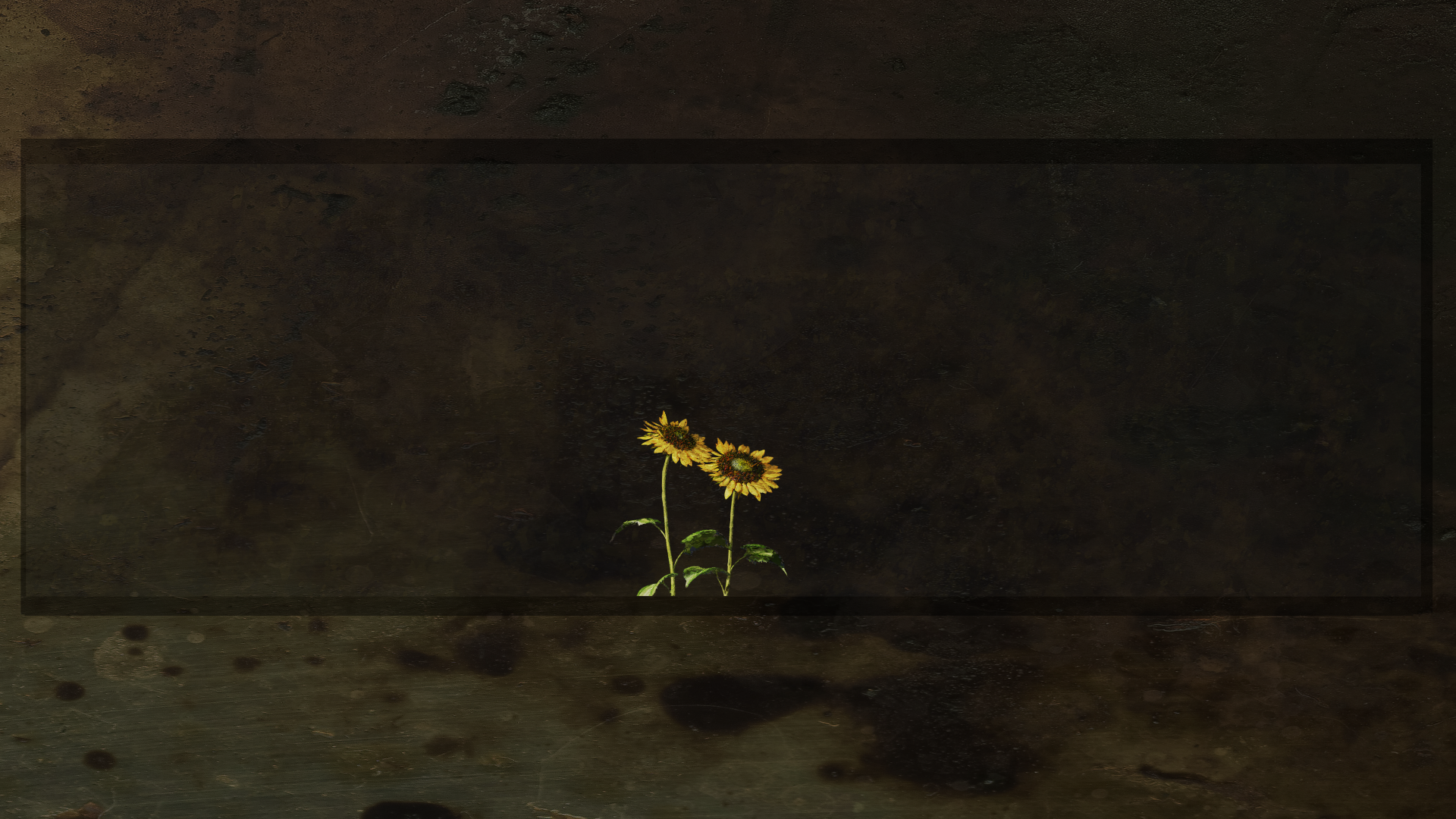
Yet this apparent failure is precisely the point. Naoya did not simply produce an inferior painting by accident, nor had he suddenly lost the artistic ability that earned him such overwhelming expectations. Rather, the first Black Painting is the inevitable consequence of the problem he has been wrestling with ever since encountering Kei’s Two Sunflowers. In a sense, it succeeds precisely because it demonstrates the very thing it sets out to prove: that conventional representation cannot recover the beauty of a singular encounter.
Naoya’s conversation with Misuzu makes this impossible to ignore. When she asks whether he had simply painted “without thinking” (考え無し), Naoya immediately questions the distinction itself. Whether one calls it “acting without thought” or “empty-mindedness” (無心), both are fundamentally concepts imposed by language a priori.
「無心も考え無しも、言葉によって指し示されたものでしかない」
“Both ’empty-mindedness’ and ’acting without thought’ are nothing more than things indicated by words.” (Makura, 2023).
From here, Naoya returns to the problem of immediate experience and representation. Language does not merely describe emotion; it gives emotion a predetermined form. Once an experience has been named, remembered, and conceptualized, it has already entered the domain of memory. The unique shock of the original encounter (the original encounter that transformed one’s world) cannot simply be repeated through representation.
Ironically, this is exactly what happened with Kei’s Two Sunflowers. Naoya spent ten years copying the painting until he felt he could reproduce “even the sound of their breathing.” Yet the closer he came to Kei’s painting, the further he drifted from the experience that had once overwhelmed him. Without realizing it, he had not rediscovered Kei—he had lost him.
The “inferior” sunflowers therefore aren’t a mistake at all. They are the inevitable outcome of Naoya’s experiment. If representation can preserve only the memory of beauty, then faithfully reproducing Kei’s masterpiece can only result in a painting that feels lifeless. The first Black Painting demonstrates, through its own failure, that the original encounter can never be recovered. Once beauty has passed into language, memory, and representation, the “first shock” is gone forever.
Heidegger’s Incompleteness
By this point, Naoya has arrived at an impasse. If every artwork gradually becomes something recognized instead of encountered, then painting seems fundamentally incapable of preserving what first moved him. Representation isn’t simply difficult—it appears self-defeating.
Interestingly, Heidegger ends up approaching almost exactly the same problem, albeit from a completely different direction. In The Origin of the Work of Art, he argues that the essence of an artwork does not lie in delivering a completed meaning, but in preserving a tension between what is revealed and what remains concealed (Heidegger, 1971).
The connection to Heidegger isn't merely an external comparison, however. In Night on Bald Mountain, Sakura no Toki itself introduces The Origin of the Work of Art as a philosophical counterpart to Naoya's artistic theory. However, Housai immediately notices that while Naoya's vocabulary resembles Heidegger's (especially through concepts such as “world” and “earth”) the underlying structure has been reoriented. Naoya does not adopt Heidegger's ontology directly; rather, Sakura no Toki reinterprets similar vocabulary through Naoya's own struggle with whether art can preserve a disappearing encounter.
“The work-being of the work consists in the instigation of strife between world and earth.” (Heidegger, 1971).
For Heidegger, a work remains alive precisely because it cannot be completely exhausted by interpretation. A painting that reveals everything becomes merely an object of knowledge; a painting that continues to resist complete understanding maintains an openness between itself and the viewer. His answer is therefore surprisingly different from Naoya’s conclusion. While Naoya sees representation as something that inevitably transforms immediate experience into recognition, Heidegger argues that a work can preserve something of its “original power” precisely by refusing to close itself into a single, predetermined meaning (Heidegger, 1971).
An artwork survives not because it perfectly preserves a past experience, but because it continues creating the possibility of new experience.
The Second Black Painting Attempt
The first Black Painting failed because Naoya misunderstood what had made Kei’s miracle possible. He believed the overwhelming experience could somehow be recreated if he reproduced its external conditions closely enough. But Kei’s miracle never existed inside the painting alone. It belonged to a particular encounter that could never happen twice. Once Naoya accepts this, the entire project changes.
This is represented most clearly when he asks Reika to cut down the burned canvas into a much smaller size. For everyone around him, it appears absurd because the original Black Painting was constructed around its overwhelming scale, requiring a massive canvas reinforced with steel. Its size was almost inseparable from its identity as a monumental work. But Naoya explains, 「そもそもあの絵は大きすぎたんだ」 “That painting was too large to begin with.” (Makura, 2023). At first, it sounds almost disappointingly mundane. But it really isn’t. The gesture carries a much deeper meaning. Naoya is rejecting the idea that artistic value exists in the external form of the artwork. Consider the exhibition reveal of Kei’s painting Two Sunflowers in The Happy Prince and Other Tales. They were not powerful because they were technically impressive, physically large, or created through extraordinary materials. Its power came from the moment it was encountered: the same overwhelming impression that seized Naoya when he first saw the painting, and that extended to everyone standing before it.
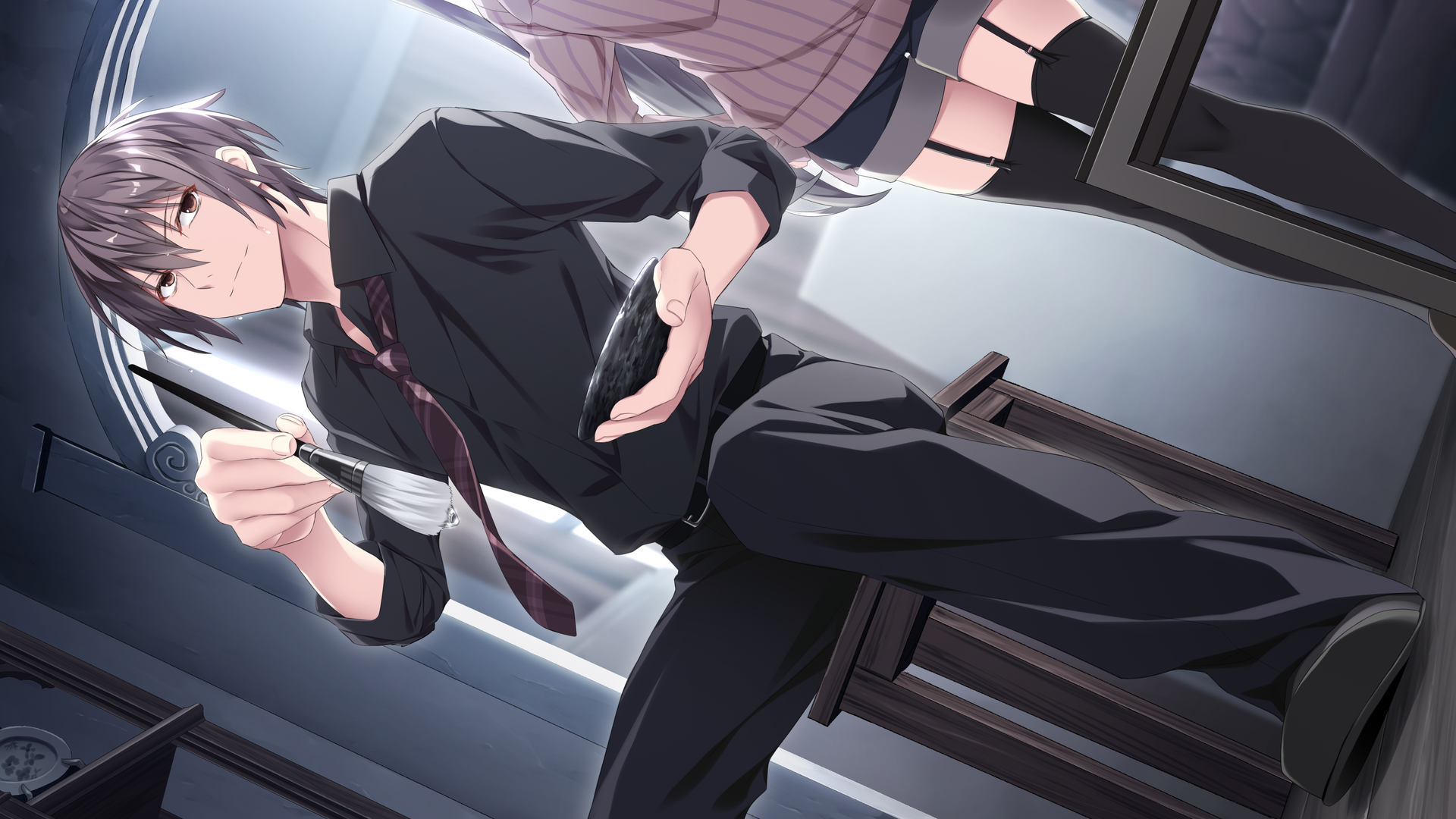
In other words, Naoya finally abandons the assumption that drove the first Black Painting. As discussed in the earlier Heidegger section: an artwork does not preserve a past experience by freezing it into a perfect form. It survives because it continues to create the possibility of new experiences. The second Black Painting therefore abandons preservation altogether. It is no longer trying to recover what has disappeared, but to make another encounter possible. That shift, however, leaves one important question unanswered. If the painting is no longer preserving a moment, what exactly is being carried forward? Ken’ichirou answers that question by pushing the discussion beyond art entirely. Before asking what a painting contains, he asks what a person contains.
Memory, Identity, and Consciousness
Ken’ichirou approaches the problem from an entirely different angle.
According to him, in Mon Panache!, the self possesses no permanent substance. That is, what we call “I” is merely a temporary continuity maintained through memory. As Ken’ichirou concludes, 「自分という存在は、瞬間瞬間で明滅する現象であり、それは記憶によって同一性を保っているだけである」 “My existence is a phenomenon that flickers from moment to moment, maintaining its identity only through memory” (Makura, 2023). On the surface, this idea may seem almost absurd. After all, most of us instinctively feel that there must be some stable “me” persisting underneath our changing experiences. Ken’ichirou’s point is precisely to question that intuition. Without memory, even one’s past self becomes indistinguishable from another person. The continuity we take for granted does not arise from an enduring substance, but from a story continually reconstructed through recollection. Hence, identity is not an object but an ongoing phenomenon.
If you’ve encountered Buddhist philosophy before, this resemblance is probably already ringing some bells. It bears a strong resemblance to the Buddhist concept of “Anatta” or “non-self” (無我) (Harvey, 2013). As Ken’ichirou himself remarks, 「“我”なんて実体はない。同じ様に“他”なんて実体もないわけだ。あっても鏡みたいに、映し合う関係だな」 “There is no substantial ‘self.’ Likewise, there is no substantial ‘other.’ If anything exists, it is only a mirror-like relation of mutual reflection” (Makura, 2023). The metaphor of Indra’s Net is especially fitting here (Cook, 1977). Each consciousness continuously reflects every other consciousness, endlessly generating new perspectives without any singular center. If even the “self” has no stable form, then preserving human experience through fixed images becomes fundamentally impossible. Art therefore has to preserve something deeper than representation alone: the movement of consciousness itself.
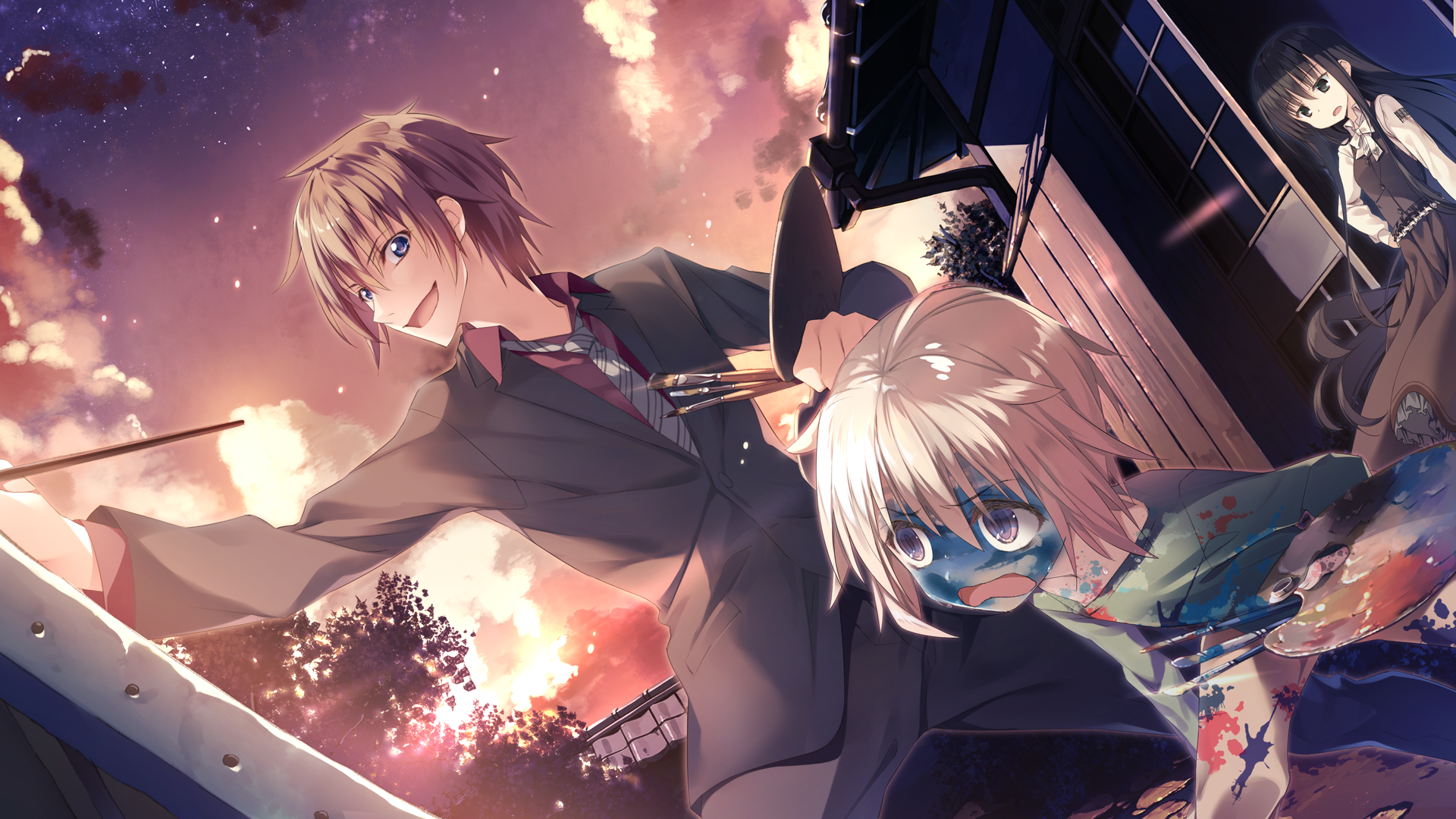
This is why Ken’ichirou argues that great paintings contain the artist’s entire existence. Not because neurons—or souls, for that matter—“literally” reside inside dried paint, but because the experiences condensed into the work are capable of “blooming” inside another consciousness (like it did for Kei). As he explains, 「画家がキャンバスに塗り込んだ記憶が他の人間の中で花開く。その時に、どこか他の誰かは画家自身になる瞬間がある」 “The memories the painter embedded into the canvas blossom within another person. In that moment, someone else becomes the painter himself” (Makura, 2023). In a way, the boundary between artist and viewer begins to dissolve.
Which brings us back to Kei. Although Ken’ichirou reaches this conclusion through philosophy rather than artistic creation, in the end, they arrive at the same place. Art becomes an exchange of consciousness rather than an exchange of information. The painting does not merely communicate ideas; instead, it allows experience to be partially recreated within another consciousness. This is perhaps why great works of art often feel strangely personal. They somehow give the impression that they reveal another person’s inner life while simultaneously speaking directly to our own. The viewer simultaneously feels they are seeing the artist while also believing that the work was created specifically for them. And in that fleeting moment, we can say that the “self” and “other” become like two perspectives reflecting one another instead of two opposing categories.
Dream Water and the Dissolution of the Isolated Self
Inside Kei’s old home at the Nakamura estate, Naoya begins painting. The transformation of the second Black Painting through the Dream Water vessel further develops this idea by challenging the very notion of the artist as an isolated creator. At first glance, this almost feels like the novel contradicting itself. If Naoya has rejected the attempt to artificially reproduce Kei’s miracle, then why is he relying on a supernatural medium capable of turning dreams and emotions into physical material? It looks like the novel is contradicting itself here. But it really isn’t. Instead of granting Naoya some external power of creation, it gathers the accumulated feelings, memories, and prayers of others. When Reika asks whether Naoya is the reincarnation of Hakuki, he rejects this: 「俺はただの人間さ。この器を満たしているのは俺の力じゃない」 “I am only human. What fills this vessel is not my power.” (Makura, 2023). The Black Painting moves beyond the expression of a single genius imposing their vision upon the world. It becomes the point where countless lives converge.
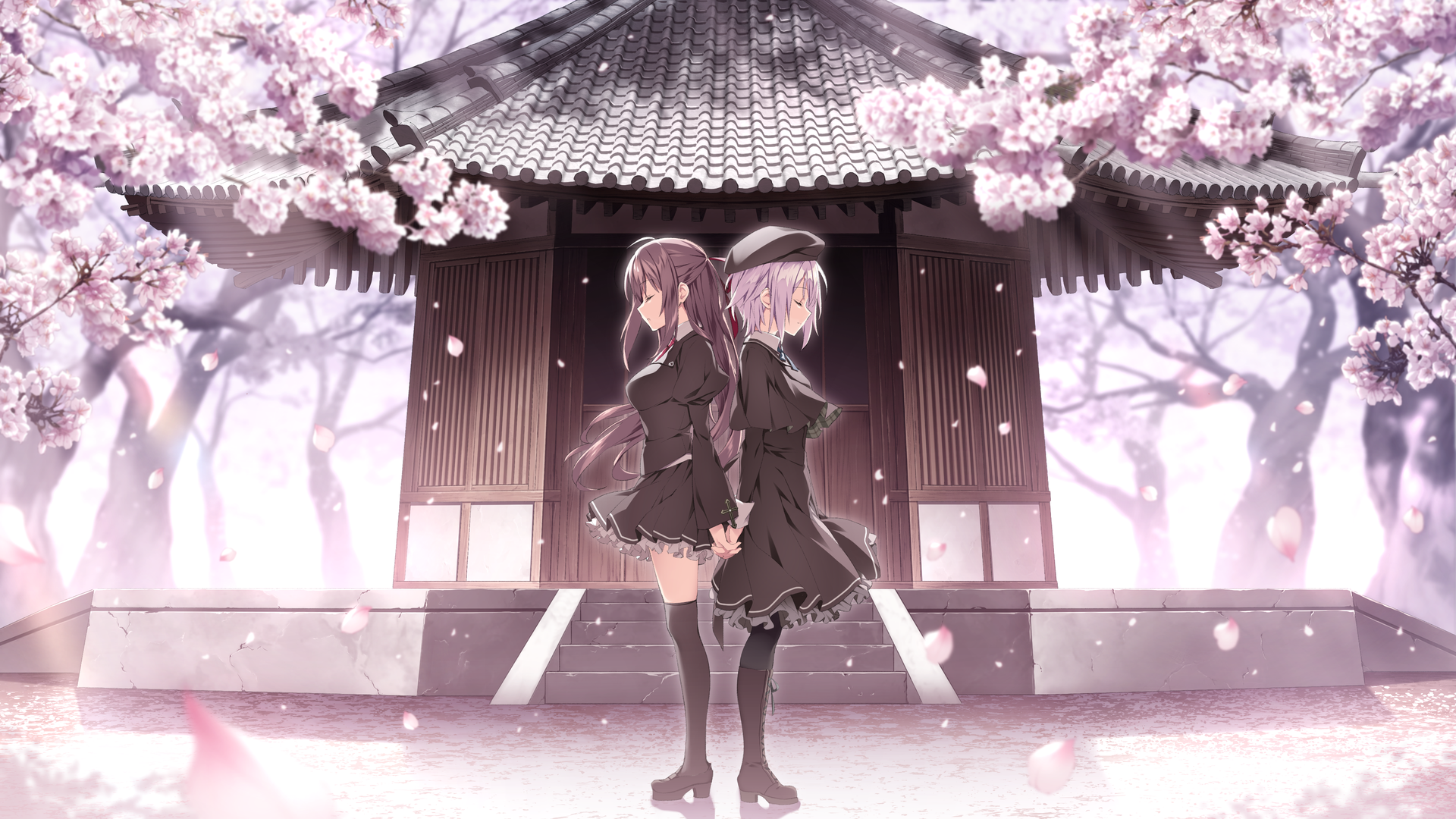
The act is physically destructive because the pain he experiences comes from something deeper than the use of a supernatural ability: the attempt to contain the emotions of countless others within a single consciousness. Hakuki herself, despite existing beyond ordinary humanity, could not bear the weight of absorbing too many feelings and eventually shattered. Naoya understands that a human being attempting to carry such a burden should be impossible. Yet he does not reject this suffering, because the pain itself becomes proof of connection. 「俺が、俺として、ここにいる事を、知らせてくれている」 “It tells me that I am here—as myself.” (Makura 2023). The paradox is that the self is not preserved through isolation, but through its relationship with everything that surrounds it.
The dissolution of self therefore does not mean the disappearance of individuality. Instead, it reveals that individuality was always intertwined with the world. A person is shaped by the memories, emotions, and influences of others; the self is not a sealed container but a meeting point where countless histories intersect. In the same manner, the artist is not a solitary creator standing above the world; they are a place where the world gathers.
The Unfinished Brush
With that, the final sequence begins. With the situation at the Nakamura estate already beyond delay and his painting already at the venue, Naoya takes only the essentials (the Dream Water vessel and a brush) and leaves immediately. And Thomas makes an absurd return with his bizarre racing machine, tearing down the road at speeds that were quite literally illegal, and when that finally reaches its limit, Ai appears to carry him the rest of the way. Even Akashi, who had spent years watching Naoya’s journey from behind the camera, refuses to let him stop at the final moment. And one by one, the people who witnessed Naoya’s ten-year struggle push him forward until, at last, he begins running toward the venue of Rin and Naoya’s final painting exhibition.
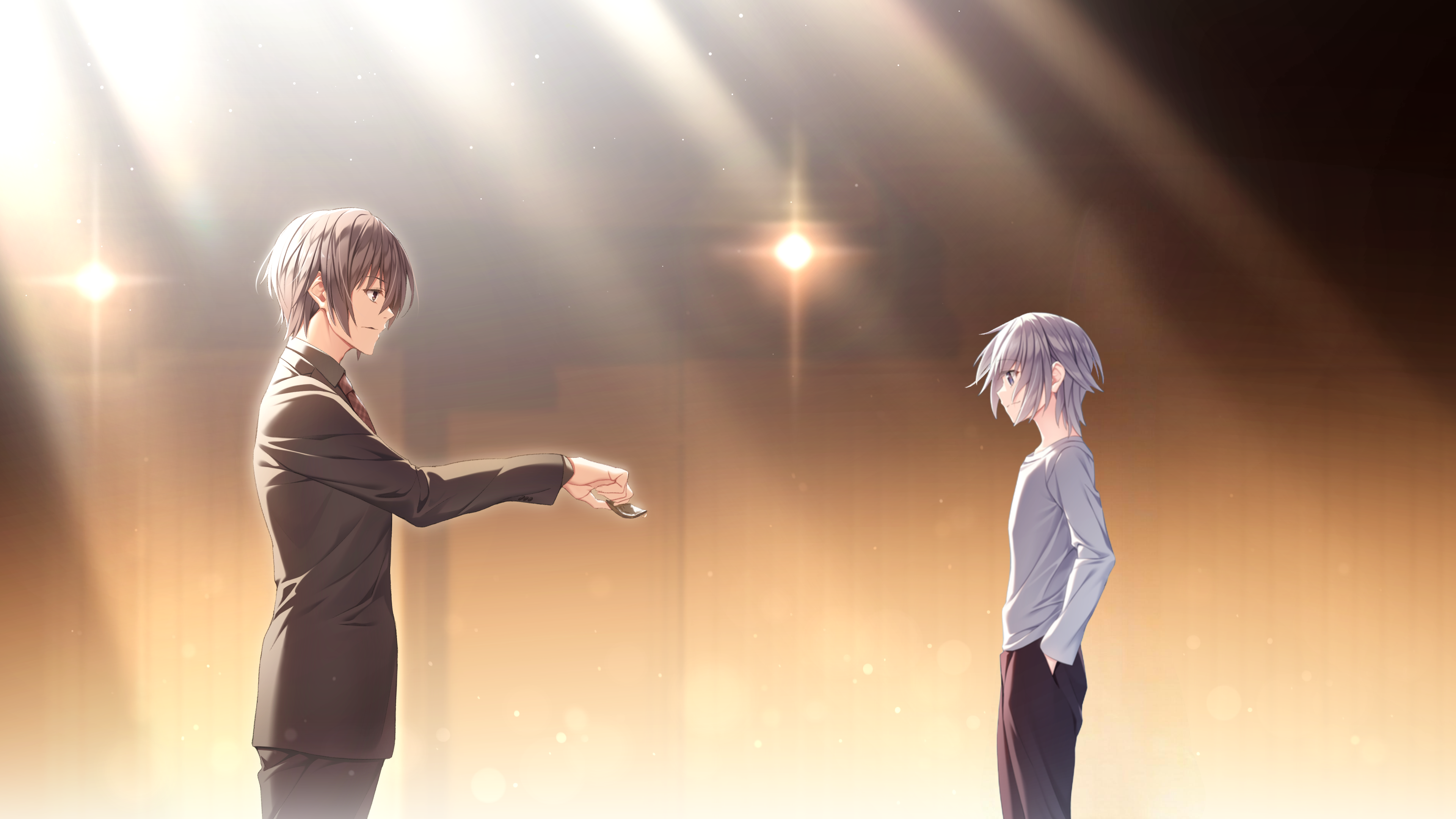
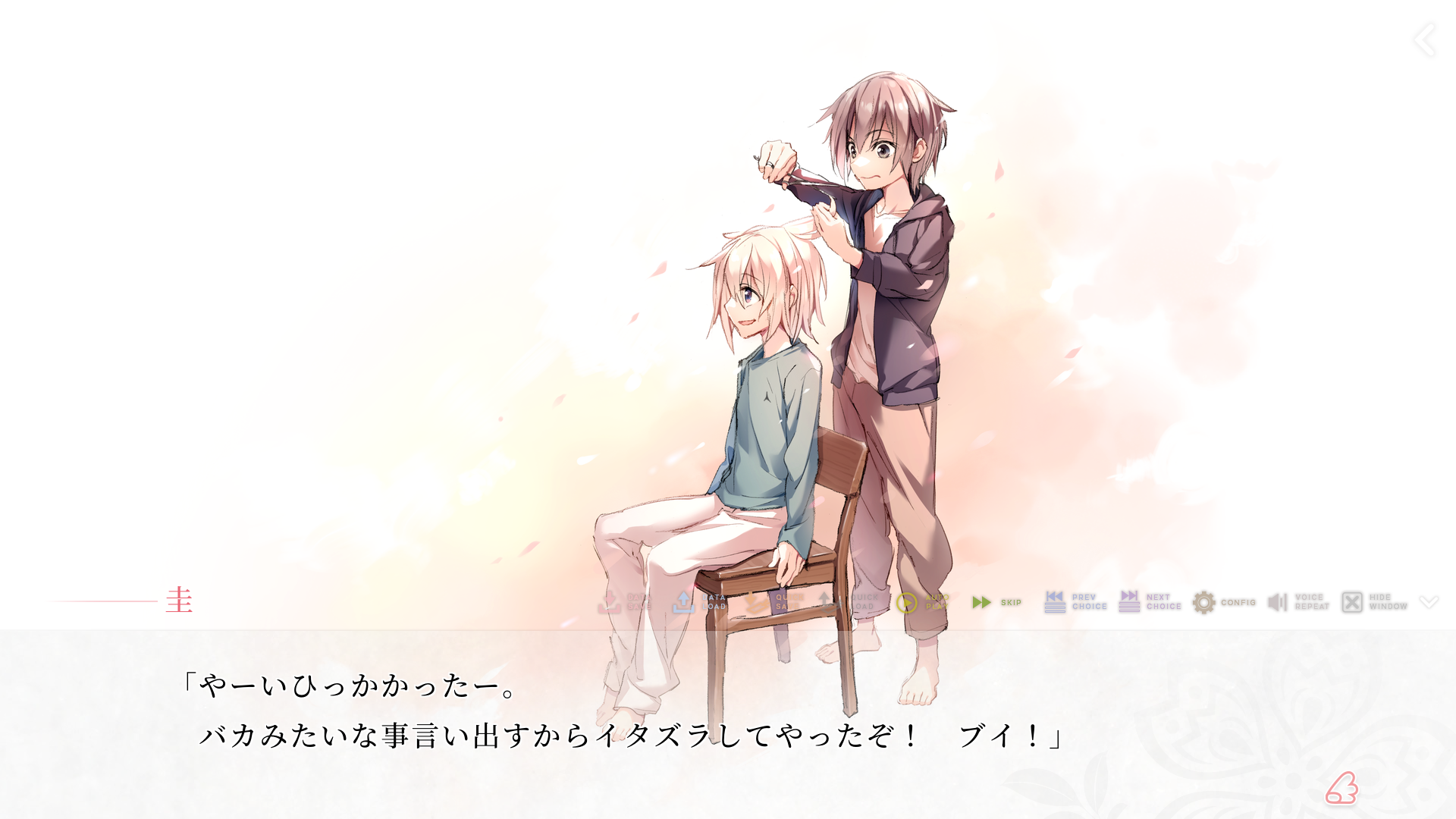
As Naoya runs, he recalls a conversation he had with Kei years ago. As Naoya cuts Kei’s hair, Kei speaks about abandoning everything to pursue a single goal. He describes himself as “an artist who throws things away” while calling Naoya “an artist who collects things.” He believed that Naoya had the ability to gather even the smallest fragments of light and transform them into something greater: 「俺は捨てる芸術家。お前は集める芸術家」 “I’m an artist who throws things away. You’re an artist who collects things.” (Makura, 2023). Although Naoya finds himself remembering such a seemingly trivial moment at the edge of his final challenge, the memory gives him a sense of weightlessness, allowing him to keep moving forward.
As Naoya continues running, the memory of Kei gradually transforms into something beyond recollection. Kei is gone, yet the image of his back remains vividly before him. In that liminal space, Naoya confronts the same existential questions that haunt Gauguin’s Where Do We Come From? What Are We? Where Are We Going? (1897) before calling out to Kei himself:
もうその姿は見えないのに、それでも俺には見えている。[...] 俺がどこから来たのか知らない。俺が何者であるか分からない。それでもさ――
“Even though I can no longer see his form, I can still see him. [...] I do not know where I came from. I do not know who I am. Even so—”「圭! 俺は、お前を、一時たりとも、忘れた事はないぞ!」
“Kei! Not for even a single moment have I ever forgotten you!”
[...]
俺は目がさめ――空を見上げていて――星の方へのぼってゆく白い翼の天使を認めた――天使の長いブロンドの髪は――天空に――光の尾のようなものを残して消えた――
“I looked up into the heavens—and there, I beheld a white-winged angel ascending towards the stars. The angel’s long blond hair vanished into the sky, leaving behind a trail of light.”ゴーギャンの文章が脳裏をよぎる。
“Gauguin’s words pass through my mind.”天使は言う。わたしに訊ねても無駄だよ。だって、俺は、お前の考えが分かっているのだからさ。そのうち、無限が案内してくれるように頼むがいいさ。でも、まだ、お前に無限は早いよ。神さまが、お前をどうするかって一度は考えてみろよ?それが出来たら、今のお前がどういう意味で未完であるか分かるよ。
“The angel says: ‘There’s no use asking me. Because I already know what you’re thinking. When the time comes, ask to be guided toward the infinite. But not yet. The infinite is still too soon for you. Think, just once, about what God intends to make of you. When you can do that, you’ll understand why you, as you are now, remain unfinished.’”だからさ。直哉。お前は奔り続けられるよ。お前の、未完な筆は、無限を目指す翼だ。どこまでも未完成だからこそ――俺すらも追い越していく。
“So... Naoya. You can keep running. Your unfinished brush is like a wing that reaches toward infinity. Because it remains endlessly incomplete—it surpasses even me.”それでも、俺はいつまでも、お前のそばにいる。お前の未完の筆は――俺の未完の魂でさ。お前の筆が奔る先に、必ず俺の魂が宿るんだよ。
“Even so, I will remain forever at your side. Your unfinished brush is—nothing less than my own unfinished soul. Wherever your brush runs, my soul will surely reside.”だからさ、何度でも言うよ。行けよ。ヒーロー。奔れよ。ヒーロー。お前は俺が信じたヒーローだ。そして、俺はお前が信じたヒーローだ。
“So let me tell you again. Go on. Hero. Run forth. Hero. You are the hero I believed in. And I am the hero you believed in.”俺達の未完の筆は、虚空すら色彩で埋め尽くす。それが櫻と向日葵だろ?
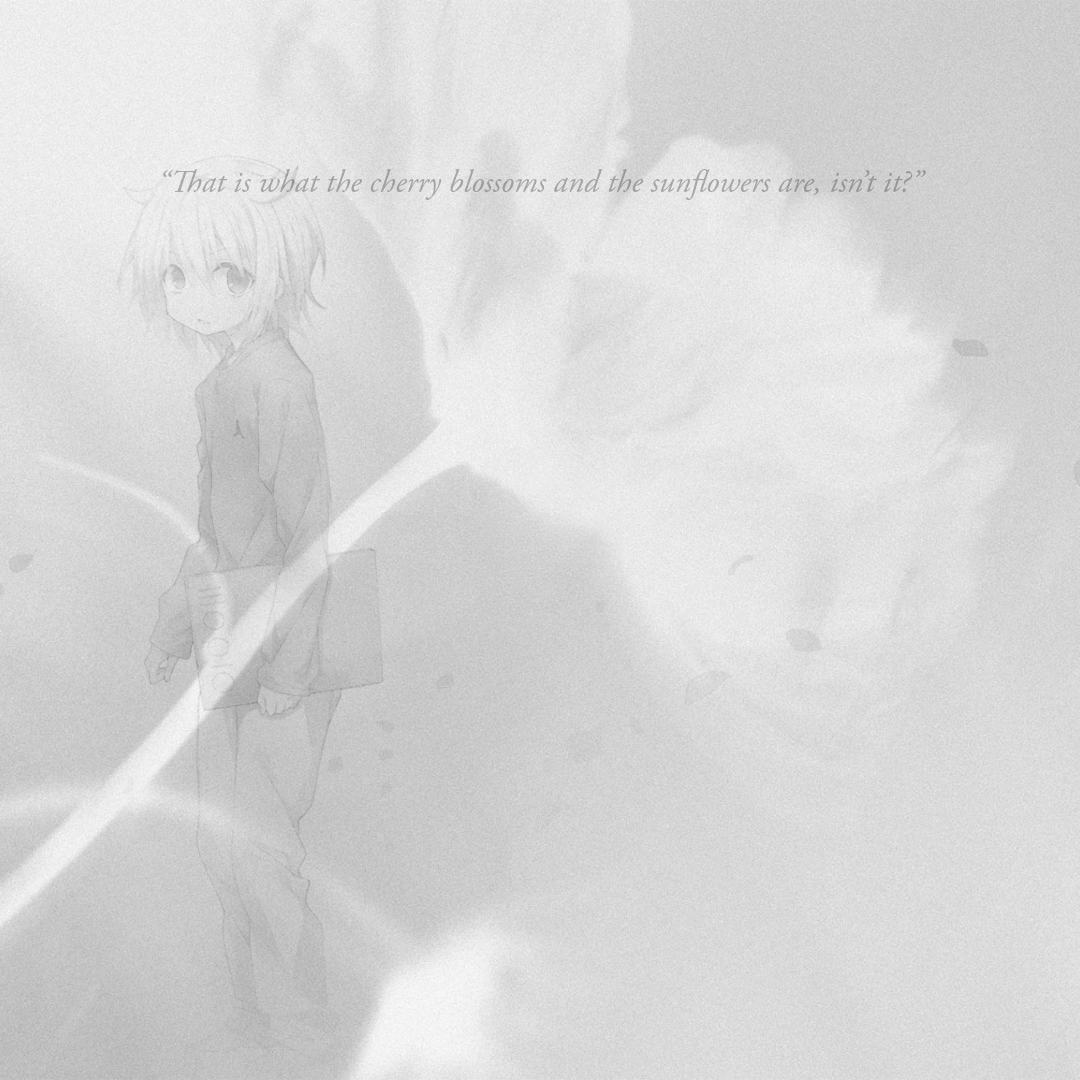
“Our unfinished brushes will fill even the empty heavens with color. That is what the cherry blossoms and the sunflowers are, isn’t it?”(Makura, 2023).
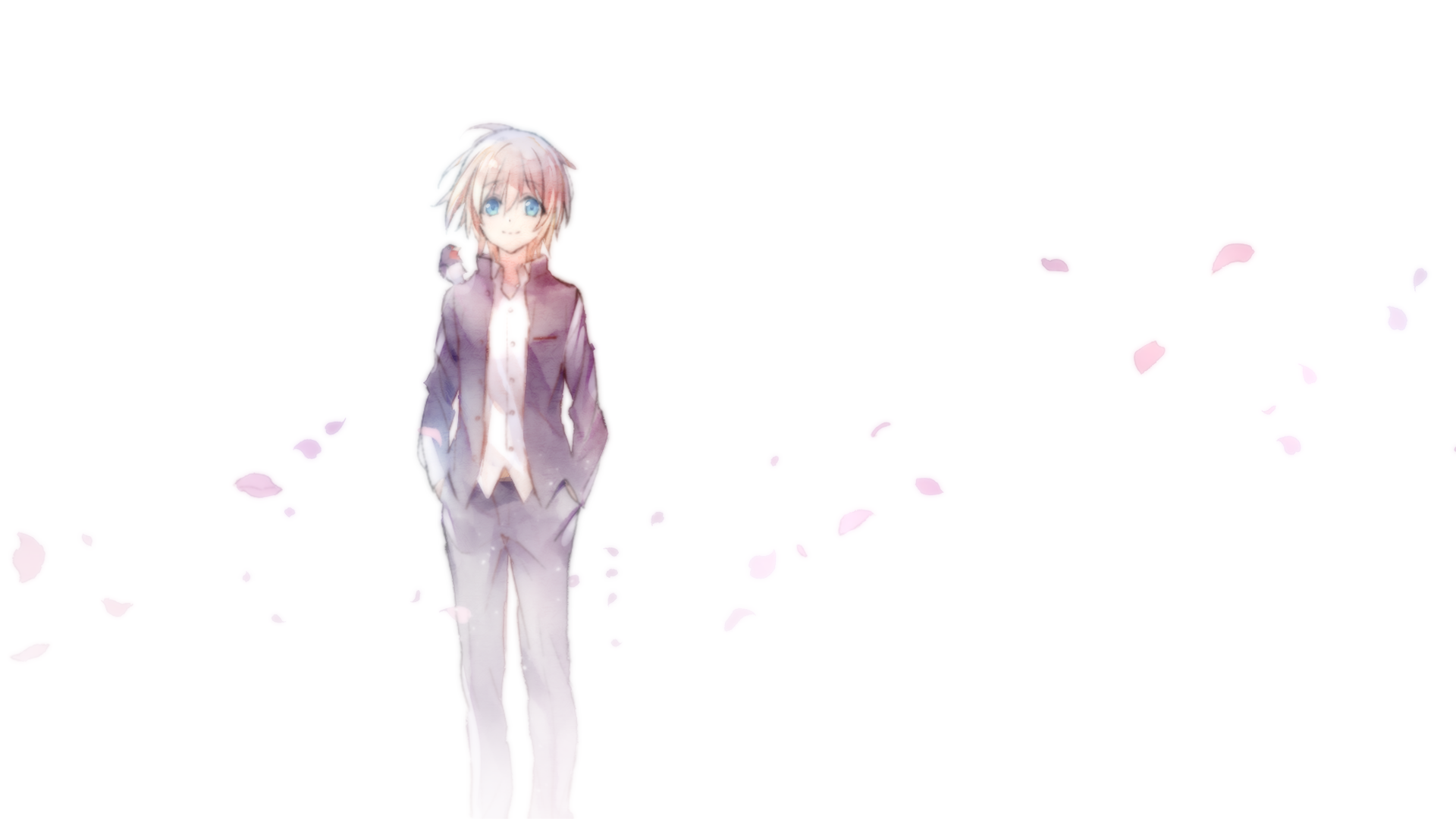
The vision brings Naoya back to the question that has followed him since the beginning of the Black Painting. Gauguin’s question—Where Do We Come From? What Are We? Where Are We Going? (1897)—remains unanswered, yet Kei’s response reframes the problem entirely. Rather than searching for a final answer, Naoya is told to keep running because he is still “unfinished”: 「お前の、未完な筆は、無限を目指す翼だ」 “Your unfinished brush is like a wing that reaches toward infinity,” while Kei promises, 「お前の未完の筆は――俺の未完の魂でさ。お前の筆が奔る先に、必ず俺の魂が宿るんだよ」 “Your unfinished brush is—nothing less than my own unfinished soul. Wherever your brush runs, my soul will surely reside” (Makura, 2023).
The unfinished brush therefore becomes such an appropriate symbol. A finished work is usually thought of as the endpoint of creation, the moment where the artist finally reaches what they were trying to express. But Naoya’s brush represents almost the opposite idea: the value of creation comes from the fact that it never truly ends. There is always another encounter, another interpretation, another person who can continue the movement. This is where Heidegger’s idea of artwork as an ongoing truth becomes relevant, truth emerges through ongoing tension between concealment and unconcealment. Naoya’s brush continues moving forward because its meaning is found within its continual becoming.
At the same time, Kei’s words bring together the central ideas woven throughout both Sakura no Uta and Toki. The artist who “collects” has finally reached the point Kei once thought he would: Naoya’s strength lies in his ability to allow encounters, memories, and moments to converge within creation. The Dream Water vessel, Ken’ichirou’s understanding of consciousness, and the idea that art survives through renewed encounters all meet here. Although, what gathers within Naoya’s painting is not a collection of preserved fragments. The moments that shaped him do not become permanent objects contained within the canvas. They become a temporary harmony—a place where countless experiences can meet, resonate, and take form before eventually passing away. Like music, their disappearance does not erase the fact they were heard.
Standing before the canvas one final time, Naoya arrives carrying the movement that has defined his entire journey: an unfinished process of creation that continues beyond himself.
The Final Brushstroke
And finally, we have come to the final brushstroke.
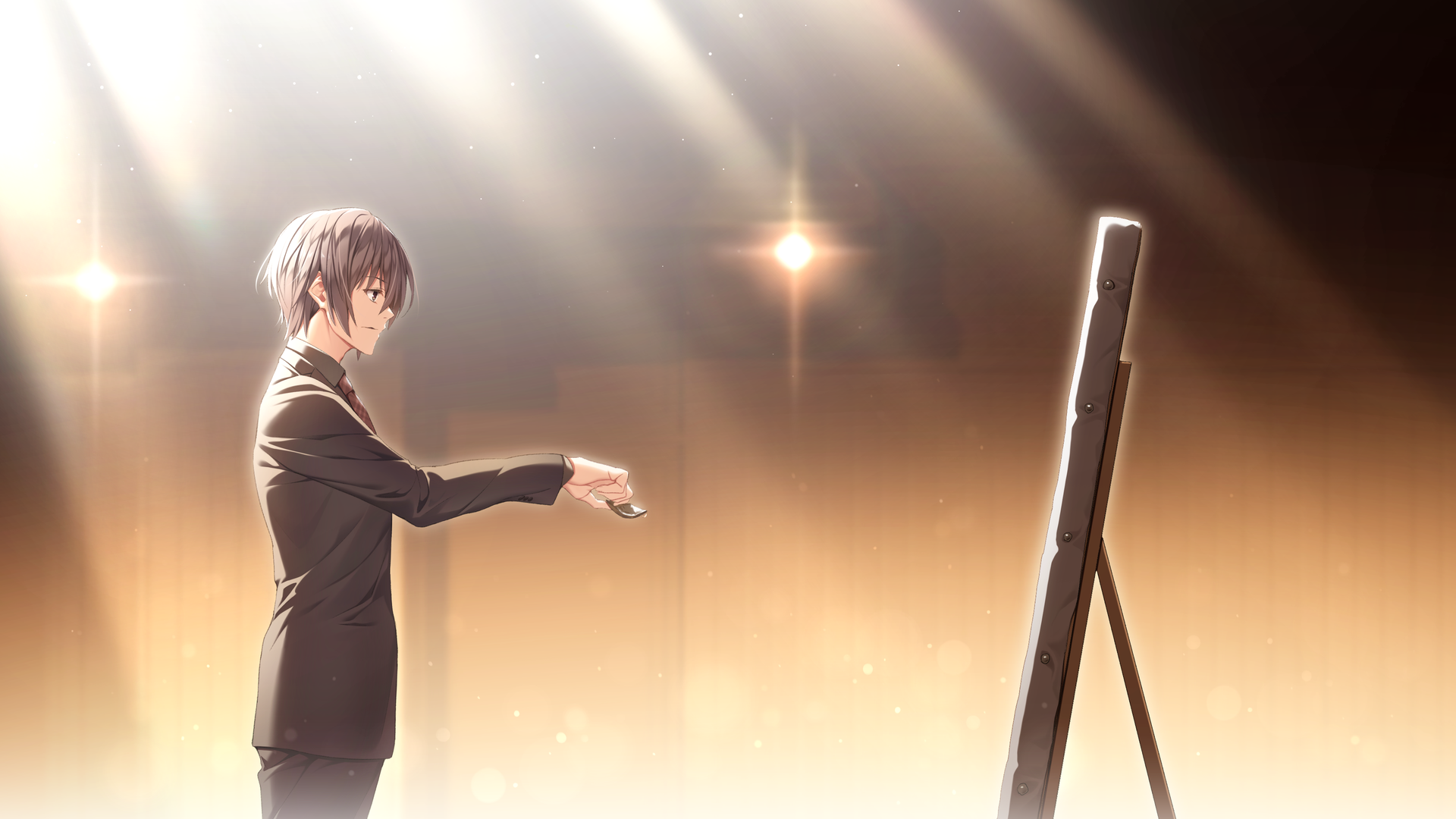
The final painting begins with Naoya accepting the disappearance of everything he had spent the Black Painting trying to preserve. Throughout his journey, the central question was whether a singular encounter could survive beyond the moment it occurred (that is, whether the movement from <deranged beauty> into <promised beauty> could somehow be stopped). Kei’s Two Sunflowers represented the overwhelming density of a life compressed into a single work, whereas the first Black Painting revealed the impossibility of recreating that same encounter through repetition. A moment cannot be carried forward unchanged. Once it passes beyond the current <world>, it becomes a part of the scenery that has already disappeared.
But standing before the canvas, Naoya realizes he has been asking the wrong question all along. He recalls how time has taken everything away: the people who shaped him, the moments that defined him, and the experiences that could never happen again.
「時の流れは残酷で、それこそどんなに轟音で奏でた音楽ですら、無限の大地に霧散してしまう。音があった場所には、ただ大地があるだけであり、大空がぽっかりと永遠をたたえている。俺達の旋律なんて小さなものだ。だって、この世界は無限なのだからさ」
“The flow of time is cruel, for even music played with overwhelming force eventually scatters across the infinite earth. Where the sound once existed, there is only the earth, while the vast sky above quietly holds eternity. Our melodies are insignificant. After all, this world is infinite.” (Makura, 2023).
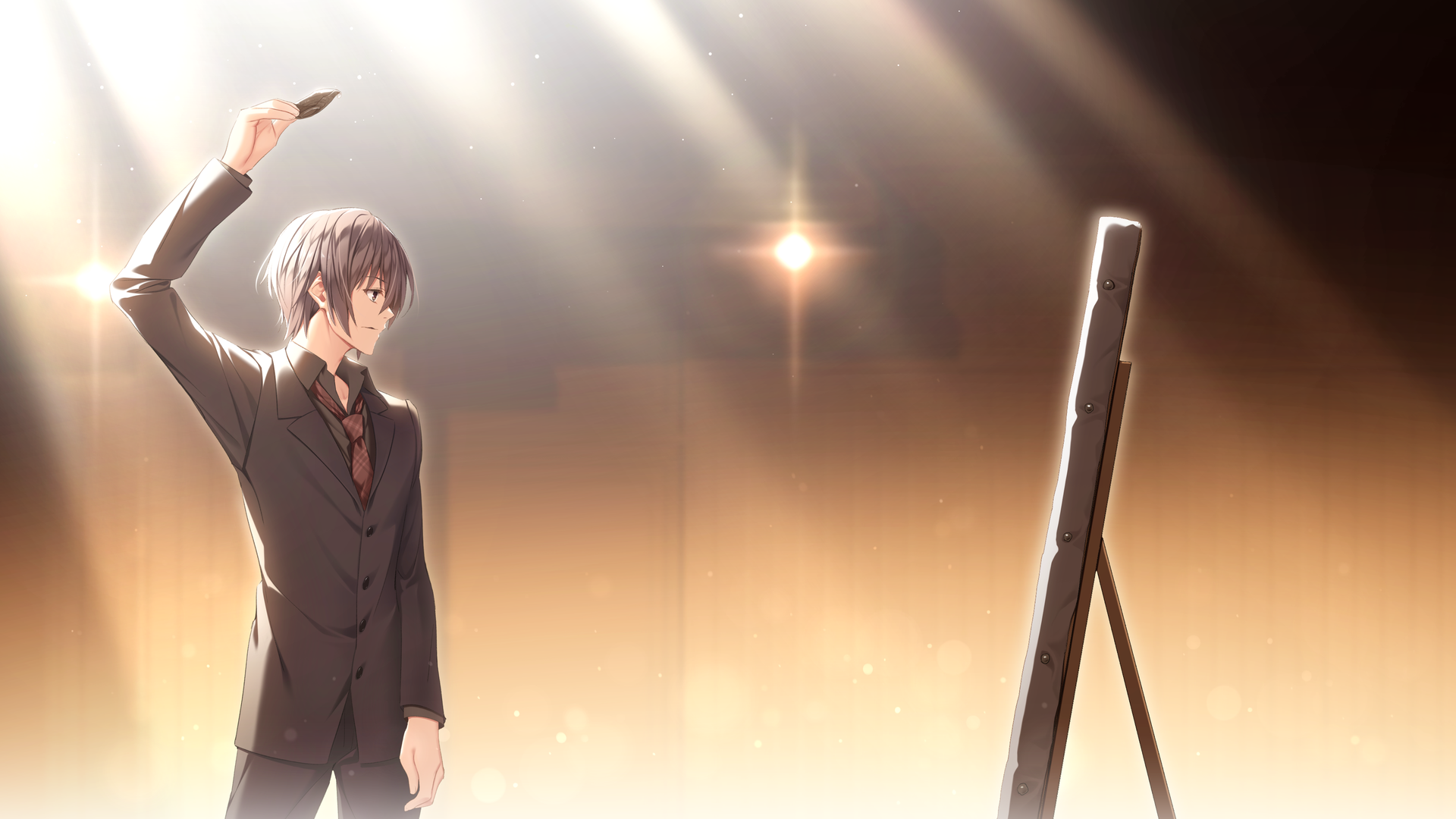
These words seem to suggest an almost overwhelming sense of insignificance. Every human experience is temporary. Every voice eventually fades. Every melody, no matter how powerful, eventually disappears into the vastness of time. The world does not preserve the traces of those who lived within it, and no artwork can prevent the passage of time itself.
However, Naoya immediately rejects this conclusion: 「けどさ、けど違うんだ。永遠をたたえた大空で、消えてしまったはずの音達は、それでもたしかにあったんだ。そのすべてが、今、ここにあったんだ」 “But still, it is different. Within the sky that holds eternity, those sounds that should have disappeared nevertheless truly existed. All of them were here, right now.” (Makura, 2023). The final painting is born from this realization. Time may erase the presence of a thing, but it cannot erase the fact that it existed. A song does not become meaningless because it ends. A life does not become empty because it passes away. What matters is not that a moment continues forever, but that it was lived at all. This is also why the final canvas no longer needs the enormous scale of the first Black Painting. Naoya once believed his journey required an equally immense vessel, something capable of containing every memory, every encounter, and every emotion that had brought him this far. After the destruction of that canvas, however, he realizes that its scale was never what gave it meaning.
「だからこそ、この大きさでいいんだ。圭が選んだキャンバスのサイズ。あいつが向日葵を描いたキャンバス。それぐらいの大きさで十分だ」
“That is why this size is enough. The size of the canvas Kei chose. The canvas where he painted his sunflowers. A size like this is enough.”「人の頭は1400cc程度だけど」
“A human brain is only about 1400cc…”「それでも、それは、無限とつながっている」
“And yet, it is still connected to infinity.”(Makura, 2023).
The human mind is finite, yet it can still reach toward something infinite. A single consciousness can contain an entire world. It does so through its capacity to encounter, remember, and recreate experience rather than by preserving every moment unchanged. This follows the same principle behind Ken’ichirou’s understanding of art: memories embedded within a work awaken again whenever they encounter another consciousness.
Naoya’s final painting therefore becomes the culmination of everything that preceded it. Kei’s Two Sunflowers carried the trace of a life condensed into a single work. Ken’ichirou’s paintings demonstrated that art could allow one person’s existence to reach another. The Dream Water vessel revealed that creation itself is shaped by countless connections beyond the individual artist. All of these ideas converge here, within one final act of creation.
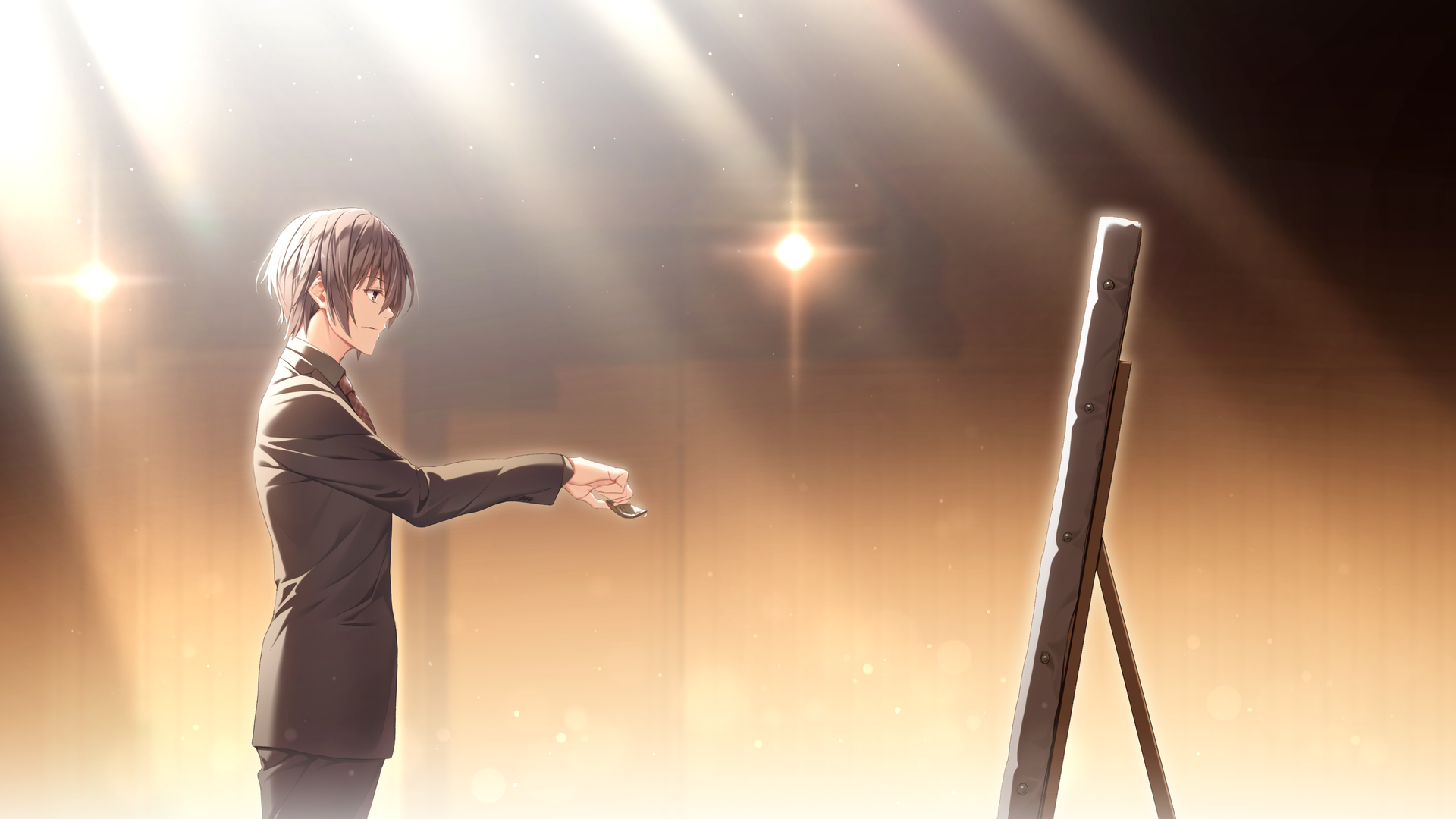
Naoya takes the fragment of Hakuki’s vessel and makes a single stroke across the canvas.
俺は一振り、器の欠片でキャンバスに血と夢水を描き込む。最後の想い。稟、そして雫、これが俺の最後の筆だ。
“With a single stroke, I paint blood and dream-water into the canvas using a fragment of the vessel. My final wish. Rin, and Shizuku—this is my final brushstroke.”夢水と俺の血がキャンバスに染みこむと――約束された奇跡が起こる。これは、あらゆる魂がその人生を賭して生み出した、実らなければならない奇跡。
“As the dream-water and my blood seep into the canvas—the promised miracle occurs. This is a miracle born from every soul that staked their life upon it, a miracle that had to come to fruition.”(Makura, 2023).
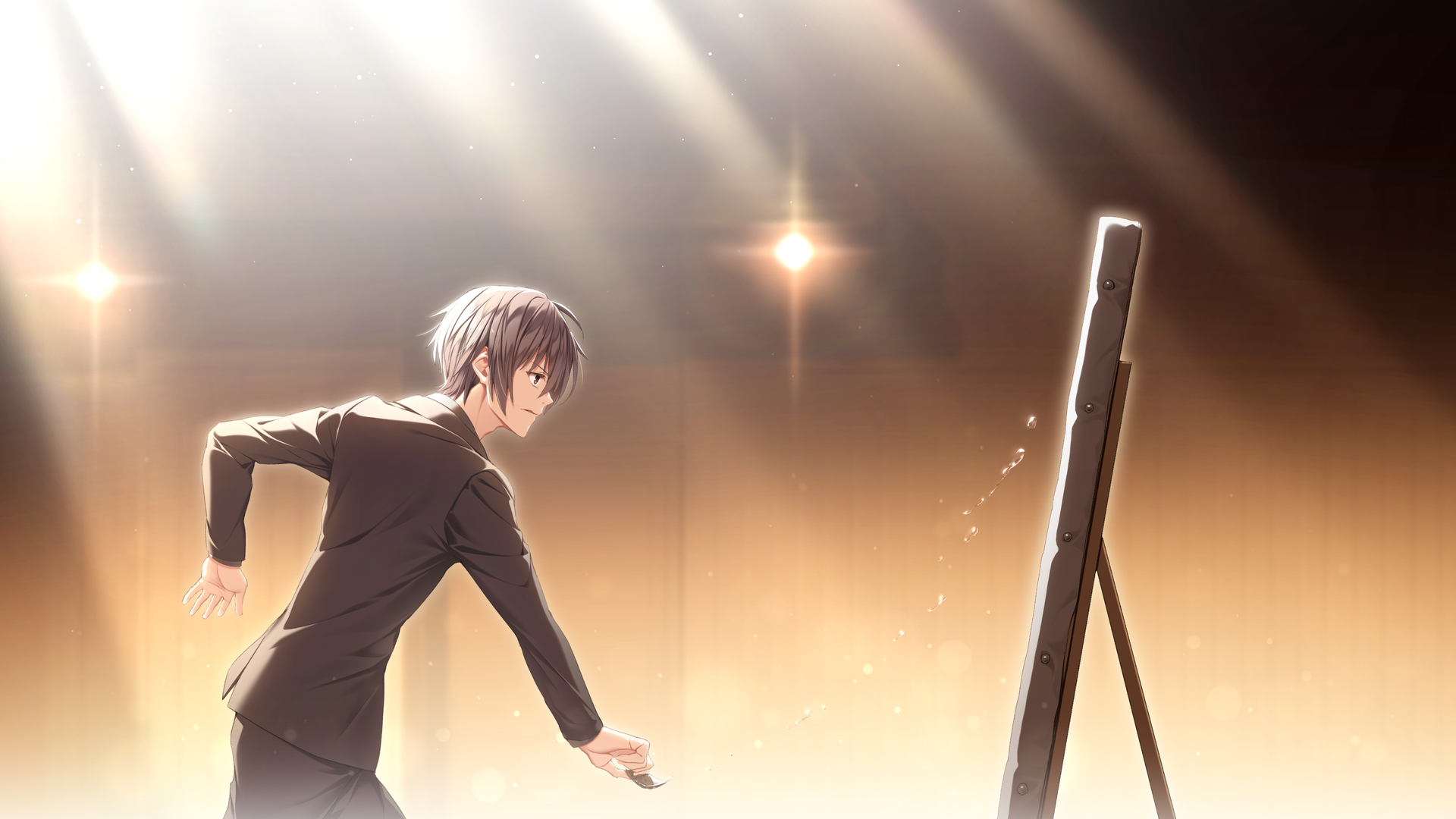
The miracle is not that a perfect moment has somehow been preserved. It is almost the exact opposite. It is that every moment leading to this one continues to live through the act of creation itself. Kei’s brush, Rin’s brush, Shizuku’s devotion, and Naoya’s own journey converge within a single stroke. None of them remain unchanged, yet none of them disappear either. They continue as parts of a living movement that reaches beyond any individual life.
The Black Painting began with a single question: could beauty survive beyond the instant of its appearance? Naoya’s answer ultimately moves beyond the question itself. Beauty survives because it is encountered, remembered, and continually recreated. Like a melody fading into silence, its ending never invalidates the fact that it was heard. The painting therefore exists much like a person does: as a temporary convergence of countless influences, forever unfinished, forever becoming. And perhaps that is why the final painting is possible. It does not capture infinity. It reaches toward it.
Afterword
After spending so long trying to preserve what disappears, Naoya finally arrives at a paradoxical conclusion: beauty cannot be preserved by removing it from time.
Throughout this analysis, I have explored the many threads that compose the Black Painting: Naoya’s relationship with Kei, the nature of artistic creation, the meaning of the Dream Water, the memories entrusted to him by those around him, and the question of how something finite can reach toward something infinite. These initially appear to be separate ideas, yet they all lead toward the same realization: nothing can truly be preserved by being removed from time. A moment that is frozen ceases to be the moment it once was. Like a beautiful specimen preserved after death, a perfectly fixed work may endure forever, but what remains is only the form of what once lived, not the movement that gave it meaning. Beauty cannot survive through permanence because permanence would destroy the very movement that allowed it to exist.
This is why Naoya’s realization that 「幸せな日々なんて、形にしない方がいい」 “It's better not to give happy days a shape” (Makura, 2023) becomes the final resolution of his journey. A fixed form inevitably belongs to time, and everything belonging to time eventually decays. To preserve something perfectly would also be to imprison it, severing it from the encounters, memories, and changes that first gave it meaning. Those happy days never derived their value from permanence. Like music dispersing across the infinite earth, their disappearance does not erase the fact that they were once heard. The cherry blossoms fall precisely because they bloomed; their transience is not a failure of existence, but the condition through which their beauty becomes possible. Thus, this final painting is a convergence of every encounter that shaped Naoya. With each brushstroke, the canvas absorbs not only his emotions, but the countless emotions entrusted to him by others. Thomas, Akashi, Hikawa and Kawachino, Makoto Toritani, Shizuru Toritani, Saki Toritani, Ai Natsume, Kotoko Natsume, Mizuna Natsume—all of these lives flow into the canvas, emerging like an improvisational performance created by countless existences: 「数え切れない想い達は――吹き上がる音と絵画の即興劇。――桜の詩を奏でる」 “The countless emotions become an improvisational performance of sound and painting, playing the poem of the cherry blossoms.” (Makura, 2023). Even the cypress appears among the cherry blossoms, carrying Rina’s will and the symbolism of death and rebirth. It blooms alongside every other memory Naoya has carried with him, becoming part of the single composition formed by countless lives.
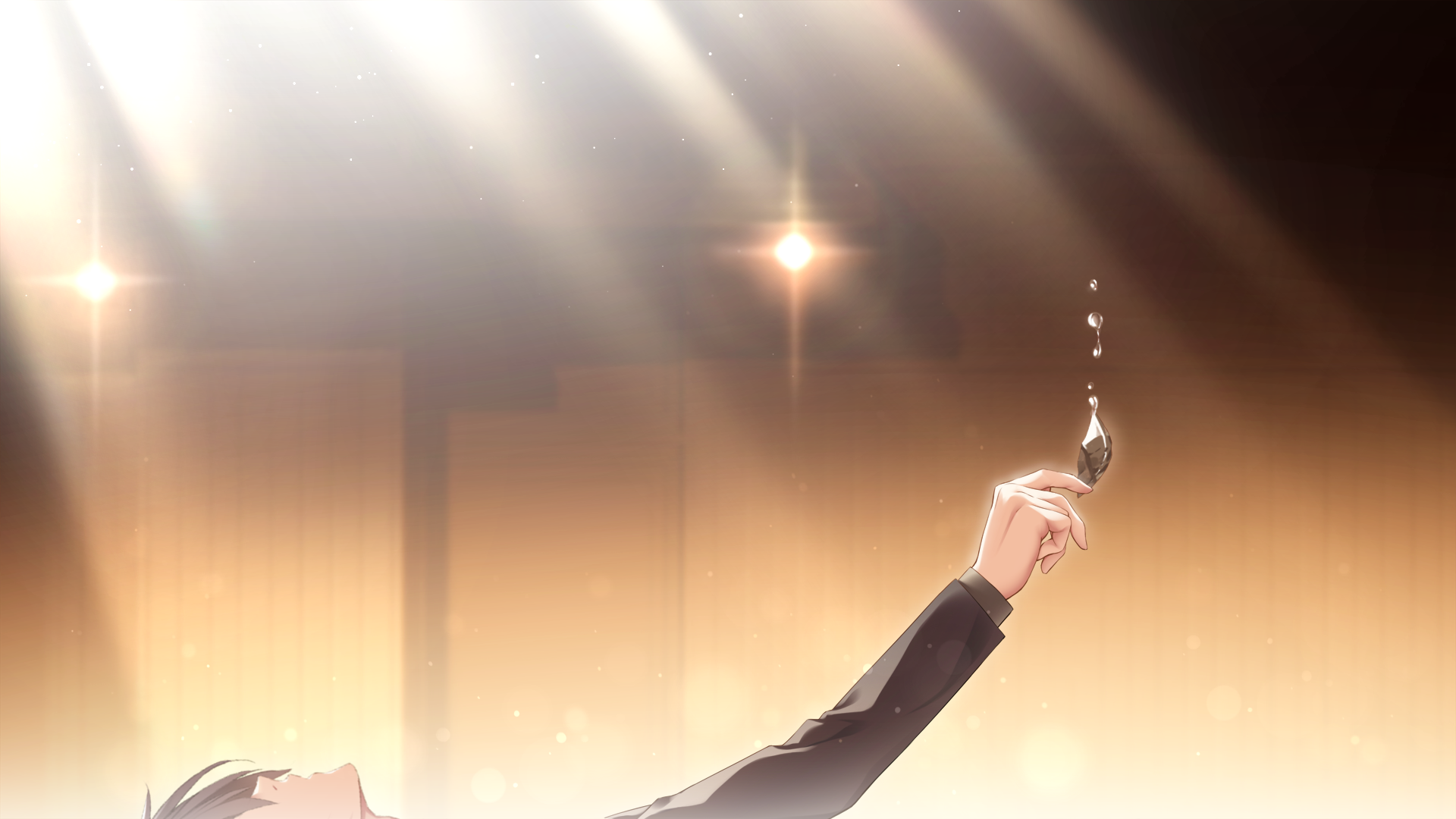
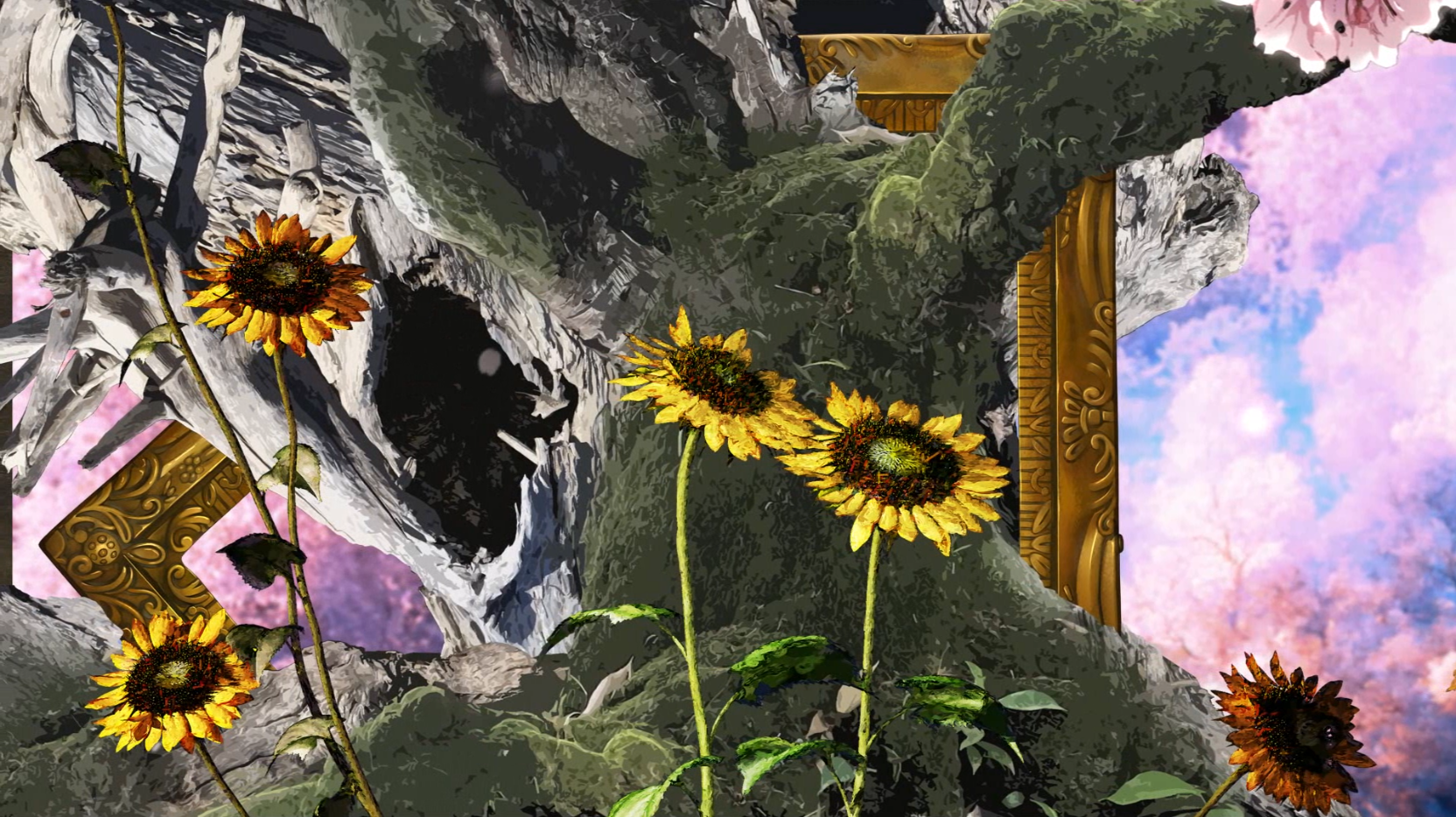
This is reflected most clearly when the Seven Aspects of Cherry Blossoms (櫻七相図) finally blooms within the Black Painting. The work that Naoya once painted as an epitaph for his father, the very piece that Ken’ichirou would later call “A Nice Derangement of Epitaphs,” reappears within the canvas at the culmination of his journey. The painting that once served as a monument to a single life now becomes one part of the larger convergence formed by countless lives. 「偉大な芸術家草薙健一郎の墓碑銘。その記憶がキャンバスで開花する」 “The epitaph of the great artist Kusanagi Ken’ichirou. That memory blooms upon the canvas.” (Makura, 2023). Yet even this epitaph cannot escape the movement of time. The blossoms eventually scatter, the light fades, and 「だが――その墓碑銘すら消えていく」 “But even that epitaph eventually disappears.” (Makura, 2023). After this disappearance, the only things left upon the canvas are the sunflowers. 「まるで刈られてしなびた太陽の様であったが。向日葵」 “They were sunflowers, like a sun that had been cut down and withered.” (Makura, 2023). These sunflowers are Kei’s final trace within the painting—the origin of Naoya’s journey returning at the very end. 「お前のはじまりが、この絵画の終わりなんだな」 “Your beginning became the end of this painting.” (Makura, 2023).
「圭――」
“Kei...”桜ではじまった絵画は、向日葵によってその焼身を終える。
“The painting that began with cherry blossoms completes its final burning through sunflowers.”(Makura, 2023).
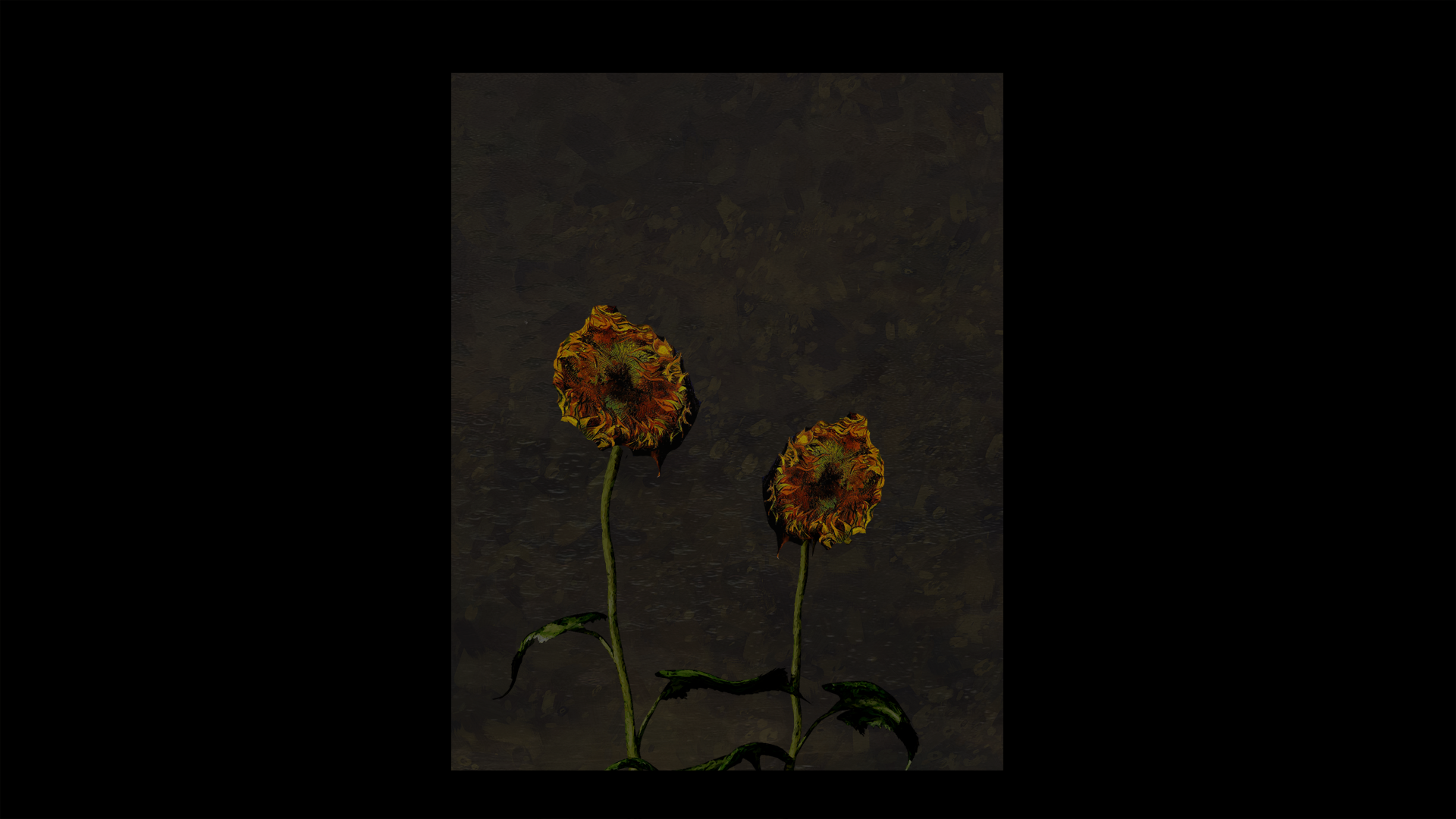
The final painting does not preserve the past by freezing it into permanence. It allows the past to bloom once again, to be witnessed, and to return to the infinite flow of time. Put differently, the Black Painting does not represent eternity. Rather, it represents the brief intersection where countless finite existences meet. Kei’s life, Rin’s memories, Shizuku’s devotion, the emotions gathered through Dream Water, and Naoya’s own ten-year journey do not become preserved objects trapped within the canvas. They become a moment of pure harmonic resonance: separate lives encountering one another and creating something that exceeds any individual existence. Just as Ken’ichirou described the self as a phenomenon that flickers from moment to moment, maintained through memory and relation, the painting itself exists as a temporary convergence of countless influences, continually reconstituted through memory, relation, and encounter. It is incomplete, and precisely because it remains incomplete—it is complete.
The final painting therefore does not overcome the flow of scenery. It accepts it. Because scenery continues to change, new encounters remain possible. Because beauty cannot be repeated, every encounter can become genuinely new. Because the self remains unfinished, it can continue reaching beyond itself.
The conclusion Naoya reaches is therefore almost a reversal of his original pursuit. The Black Painting was never meant to depict eternity. It was meant to depict a single moment in which countless lives, countless emotions, and countless possibilities briefly converged before continuing into the infinite. Not as a monument to what has already disappeared. As the beginning for everything that has yet to be encountered.
Thank you for reading.
References
Cook, F. H. (1977). Hua-yen Buddhism: The Jewel Net of Indra. Pennsylvania State University Press.
Gauguin, P. (1897). Where Do We Come From? What Are We? Where Are We Going? [Painting]. Museum of Fine Arts Boston.
Harvey, P. (2013). An Introduction to Buddhism: Teachings, History and Practices (2nd ed.). Cambridge University Press.
Heidegger, M. (1971). The Origin of the Work of Art. In A. Hofstadter (Trans.), Poetry, Language, Thought. New York, NY: Harper & Row.
Makura. (2023). サクラノ刻-櫻の森の下を歩む- 通常版 (Sakura no Toki: Sakura no Mori no Shita o Ayumu — Regular Edition) [Windows visual novel]. Makura.
Makura. (2025). サクラノ詩-櫻の森の上を舞う-10th Anniversary edition (Sakura no Uta: Sakura no Mori no Ue o Mau — 10th Anniversary Edition) [Windows visual novel]. Makura.
Plato. (2000). The Republic (G. R. F. Ferrari, Ed.; T. Griffith, Trans.). Cambridge University Press. (Original work published c. 375 BCE).