Warning
For my ratings.
- 10/10 Final Rating (my 2nd 10/10 ever)
- Top 1 Visual Novel
- Top 1 Work in Fiction
It is a work that has truly touched my heart.
For my thoughts.
It is the poem and time of cherry blossoms.
Although I finished this duology quite a while ago, it has lingered in the recesses of my mind, never quite fading from my thoughts. If I were to distill the work into a single sentence, it would be this: Sakurano is ultimately a story about living. It is a “story beyond happiness.” And, perhaps paradoxically, it is a story deeply concerned with happiness, pain, love, loss, memory, art, relationships, aging, and the cruel passage of time. More than any of these, however, it explores what it means to continue living, even when everything we cherish is inevitably changing. It is here, I think, that the idea of a “story beyond happiness” lies.
A story beyond happiness. Beyond happiness? What lies beyond it? Pain? Certainly. Whatever lies beyond it, we must account for it all: loss, regret, loneliness. But also memory, love, beauty, friendship, creation. Is happiness really something that stands on one side while all of these things stand on the other? Or are they all part of the same movement?
Whatever side one finds oneself on, the question remains: what does it mean to live? To live is to feel pain; to feel bitterness, suffering, and joy alike. Suffering and happiness are one and the same; they differ only in degree. To be blinded solely by the ecstatic light of happiness—to drown in one’s own Whisky of Happiness—and be cut off from the full range of one’s senses, is to lose sight of the fullness of life itself.
In its construction, the two-act story of Sakura no Uta and Sakura no Toki unfolds across eighteen chapters and routes. The “True” route runs through them all, carrying the canonical events of the story. Uta first follows Naoya through the encounters and relationships that shape his youth, before Walking Beneath the Cherry Blossom Forest finds him ten years later, his path having seemingly stopped short with Kei’s death all those years ago. Kei, the swallow to Naoya’s Happy Prince, fulfills the title of The Happy Prince and Other Tales in his death. Toki then continues from this point, following Naoya as he comes to terms with his distance from art and his life as a teacher, before returning to the world of art once more in D’où venons-nous ? Que sommes-nous ? Où allons-nous ? Across both works, his life traces a movement from youthful and artistic ambition, through loss and stagnation, toward a return to art and to the flow of life itself. Both Sakura no Uta and Sakura no Toki return to their own titles. From Sakura no Uta—The Poem of Cherry Blossoms—being heard, the reader is carried through the maelstrom of lives, losses, relationships, and scenery until Sakura no Toki—The Time of Cherry Blossoms—becomes poetry. What began in 2015 ends in 2023: two acts, eighteen chapters, and one long walk through the life of Kusanagi Naoya.
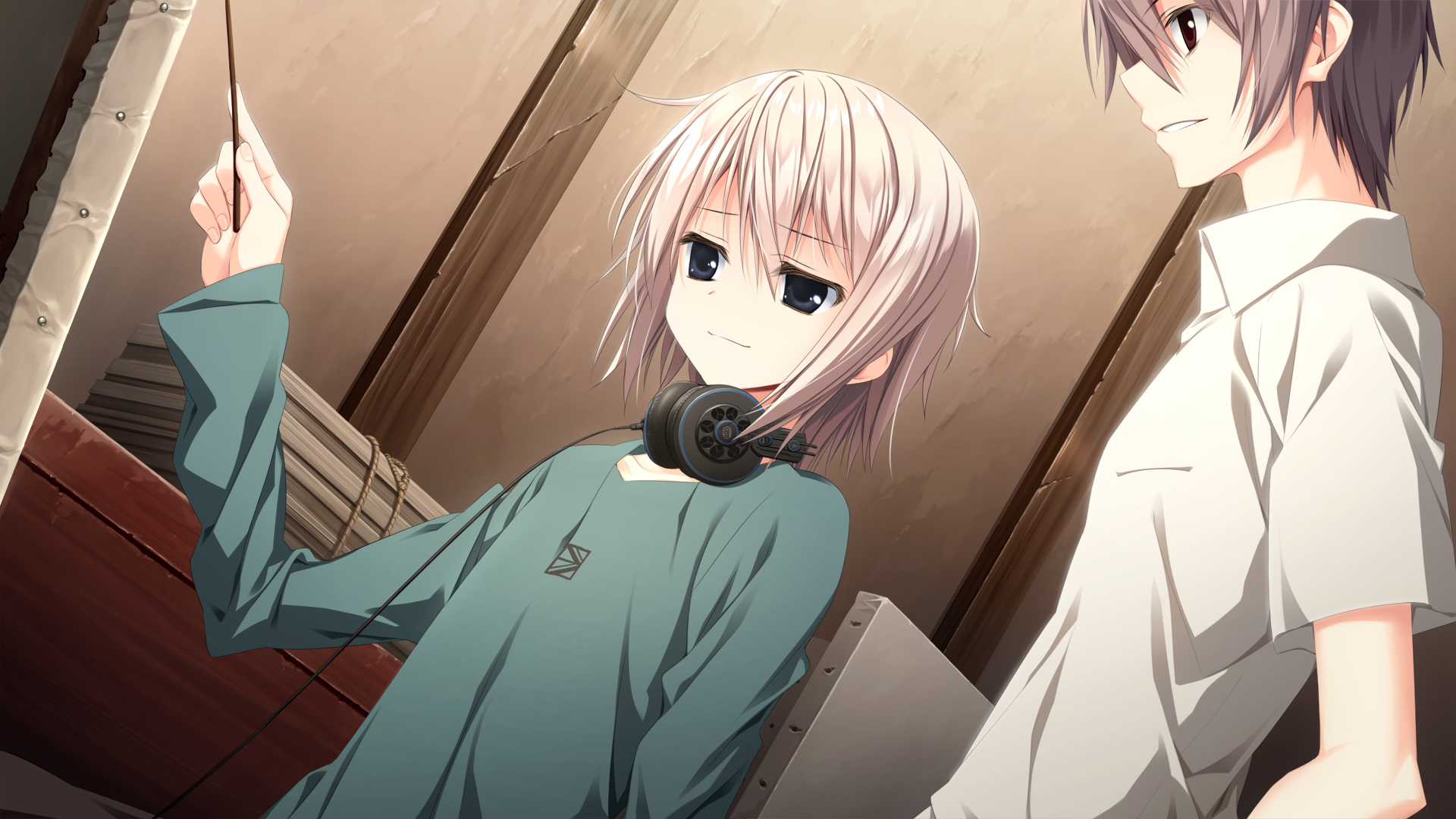
Let us consider “beyond” again. Maybe “beyond” doesn’t mean somewhere higher. It could simply mean further along.
Happiness is fleeting, it is “like a sky full of the illusory colors of spring.” Memories fade. People leave. Beautiful moments cannot be preserved forever; any attempt to give them a permanent shape only exposes their fragility. Thus, it is better not to give those happy days a shape. Tangible things are bound to break. You shouldn’t treat happy days as something fixed and identical to itself, because the meaning of those happy days comes from the fact that they were lived, passed through, and could never occur in exactly the same way again. One moment becomes another; one season gives way to the next. The cherry blossoms fall, summer arrives, autumn follows, winter comes—and eventually, somehow, it is spring again. It is merely the cycle of life.
Yet impermanence gives life its poignant color. Flowers of beauty bloom in wild profusion around us; they wither, rot, and eventually crumble into decay—and still, they are beautiful; their beauty is no less real for having been temporary. To stand among these decaying flowers, knowing that each of them will eventually disappear, and to experience their beauty while we are here—perhaps that is what living is. We form attachments knowing they may someday be lost in the annals of time; the ebb and flow of time keeps us moving, and so we move forward even knowing that the past cannot be regained.
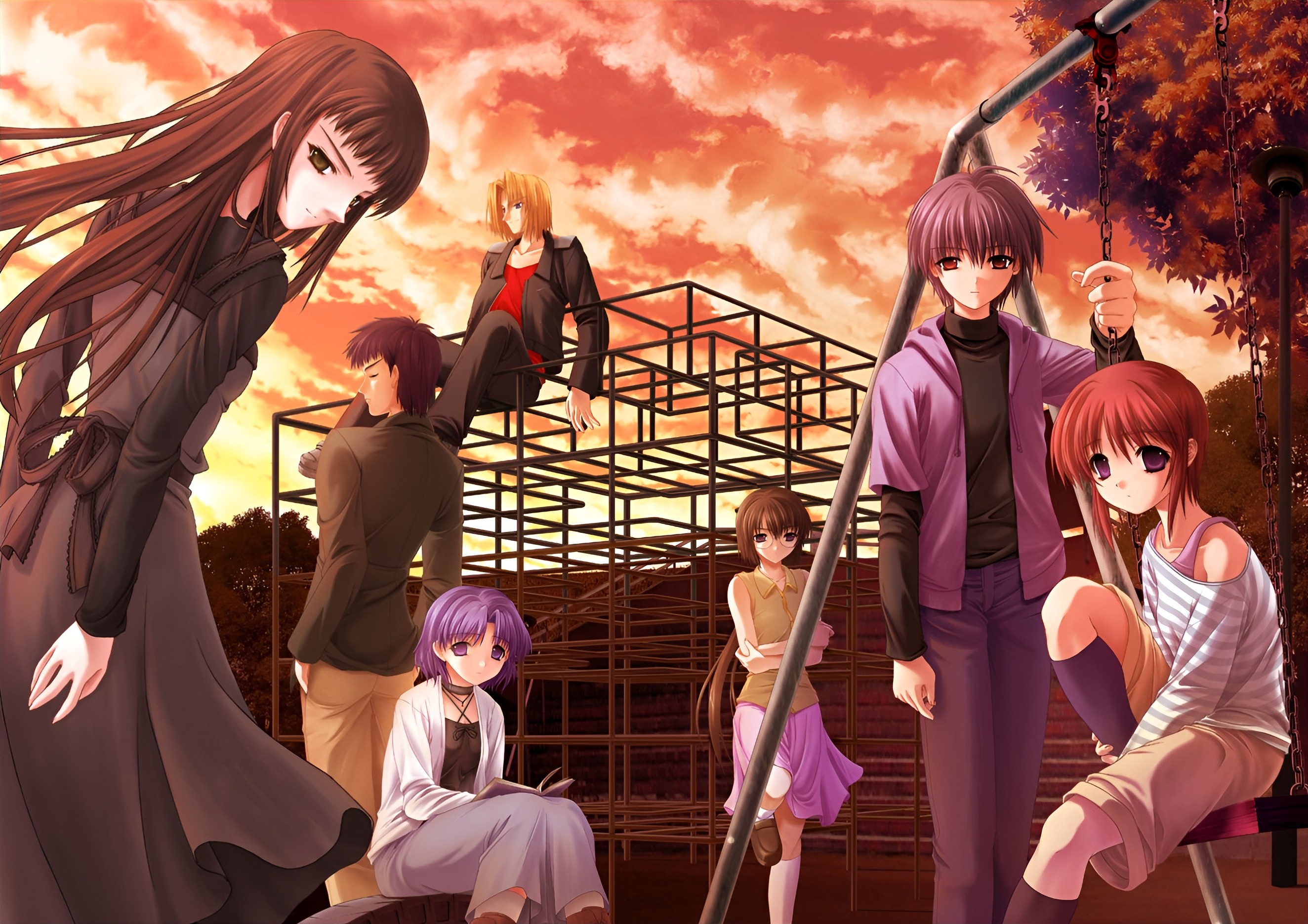
The philosophy of living is given its human shape through the macrocosm of Sakurano. Figures such as Naoya, Kei, and Ken’ichirou form its central pantheon, surrounded by Ai, Misuzu, Makoto, Shizuku, Rin, Rina, Yuumi, Kana, and the many people whose lives intersect with theirs. Around them are teachers, students, artists, family members, friends, and countless passers-by, each entering and departing the landscape of Naoya’s life. Together, they form a constellation of “strong” and “weak gods.” And through it all runs the Flow of Scenery—the force carrying every person, relationship, and moment onward.
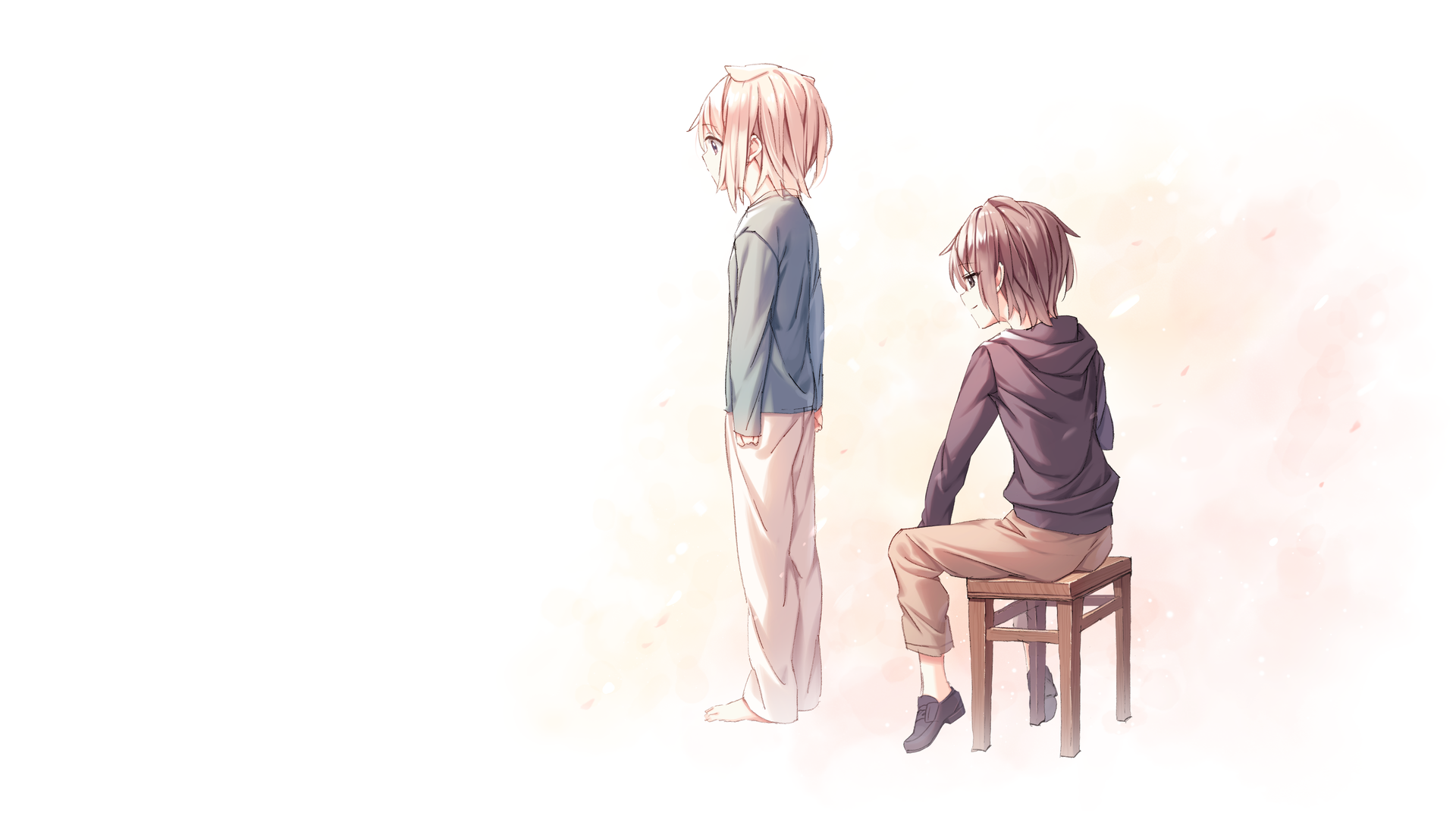
I think it is beautiful that a work of fiction can teach us such profound lessons on life as it is lived. Stories allow us to experience ideas through the lives of others. Ideas that might otherwise remain abstract (that of beauty, art, happiness, suffering, memory, loss, love, death, God, identity, transience, creation, etc.) acquire weight through the characters, becoming tangled with their private histories, everyday conflicts, and the mundanity of existence.
Throughout Sakurano, its themes gradually deepen as the characters’ lives become more intertwined, with its philosophical questions emerging quite naturally just from the ordinary.
There are also myriad references intermingled throughout the work: painters like Van Gogh and Gauguin, writers such as Oscar Wilde, Kafka, and Emily Dickinson, philosophical ideas drawn from Heidegger and Mallarmé, and works such as The Moon and Sixpence and The Happy Prince and Other Tales are but a few among the many other poems, paintings, stories, allusions, quotations, and other intertextual threads in the work. At times, you may even be offered lessons in the history of art, ranging from the Greeks and Romans, through the Middle Ages and Renaissance, Neoclassicism, Romanticism, Realism, Impressionism, and modern art, from the Lascaux cave paintings to Duchamp’s Fountain—the work’s artistic horizons extend remarkably far…
There is far more that could be said about each of these references and their place within the work, although what matters is that they never feel detached from the work’s own concerns; they become part of the work itself, intertwined with its characters, narratives, ideas, and broader conception of Beauty. Its intertextuality becomes something like an oceanic cocktail: countless ingredients mixed, seasoned, and stirred together until they cease to exist as isolated elements, while retaining their individual character within the whole. What begins as a Van Gogh, a Wilde, a Heidegger, a Gauguin, or The Happy Prince becomes part of the very fabric of the story. We could truly say that Sakurano is a work about art in the fullest sense of the word.
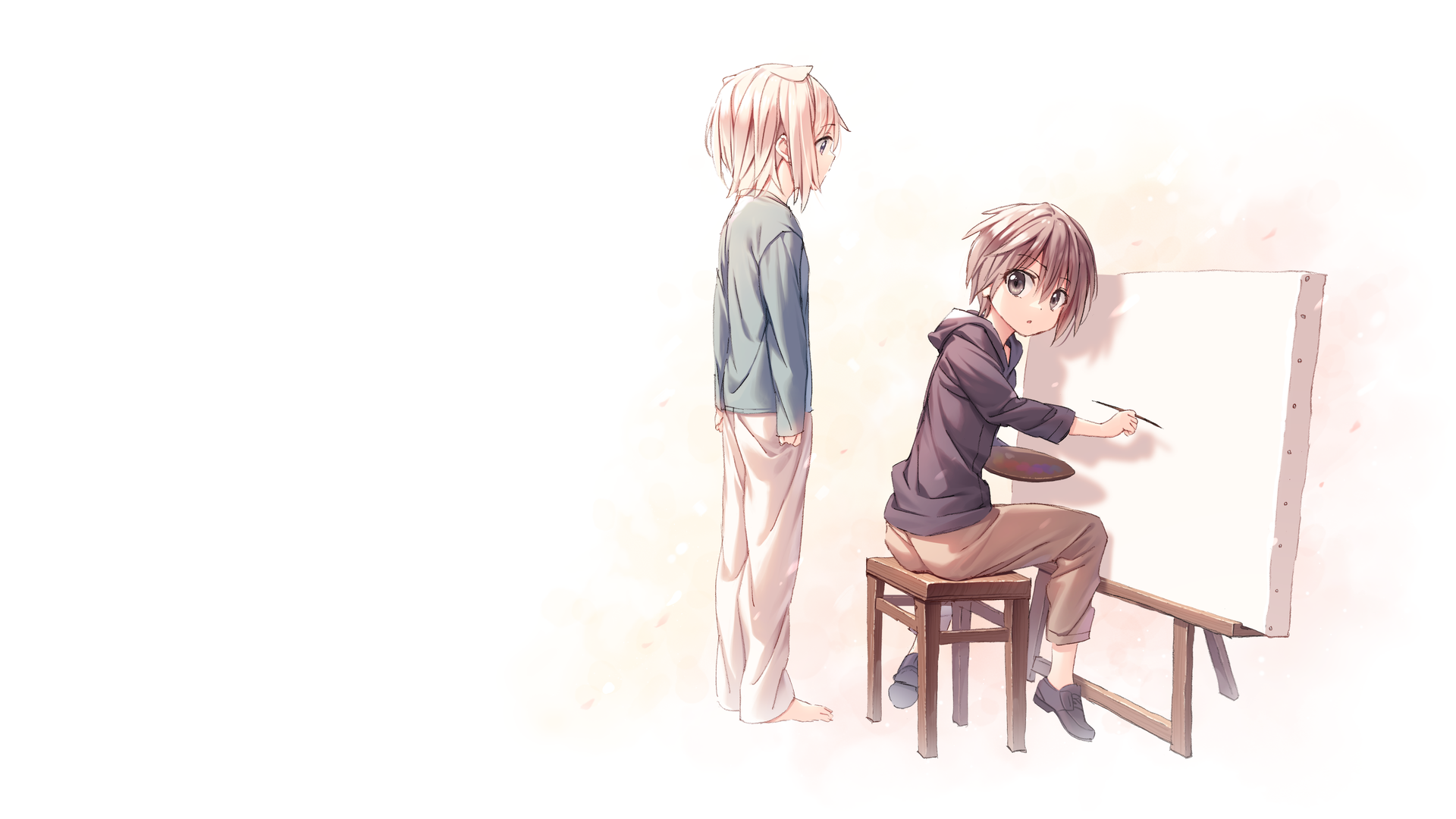
Nevertheless, to return to the matter at hand, I could not say that the story is simply about “art,” or “happiness” alone. I call the genre of the Sakura story a “Slice-of-living” because its many concerns ultimately converge upon the act of living itself. Art becomes its most searching instrument: through it, Sakurano explores the impossible desire to regain that which has already passed, to reach the irreducible moment before it flickers away like a syllable of light. The moments that constitute us are transient, yet it is through their movement that we perceive the world, time, and ourselves. Without that flickering, even existence would become emptiness; it is because these moments come and go that we can experience them at all—they coincide briefly, then disappear into the infinite, one might say. Happiness and unhappiness, beauty and ugliness, joy and suffering become the individual sounds through which our lives take form. To exist within the flickering is to exist within something perpetually passing away, each moment vanishing as another takes its place. And perhaps, somewhere within that ceaseless movement, lie the questions inherited from Gauguin and posed anew by Toki’s “final” (penultimate) chapter. Where do we come from? What are we? And where, exactly, are we going?
We must run forth, into whatever comes next.
Just as life has become art, so art has become his way of living. Across more than a hundred hours, Sakura no Uta and Sakura no Toki have gathered Naoya’s memories, losses, relationships, dreams, and all the scenery that has flowed past him into a single work—and from everything that passes, fashioned what I consider to be a timeless masterpiece.
Thank you for reading.