Note
Saihate no Ima is, well, probably one of the most deranged visual novels I've ever had the pleasure of reading.
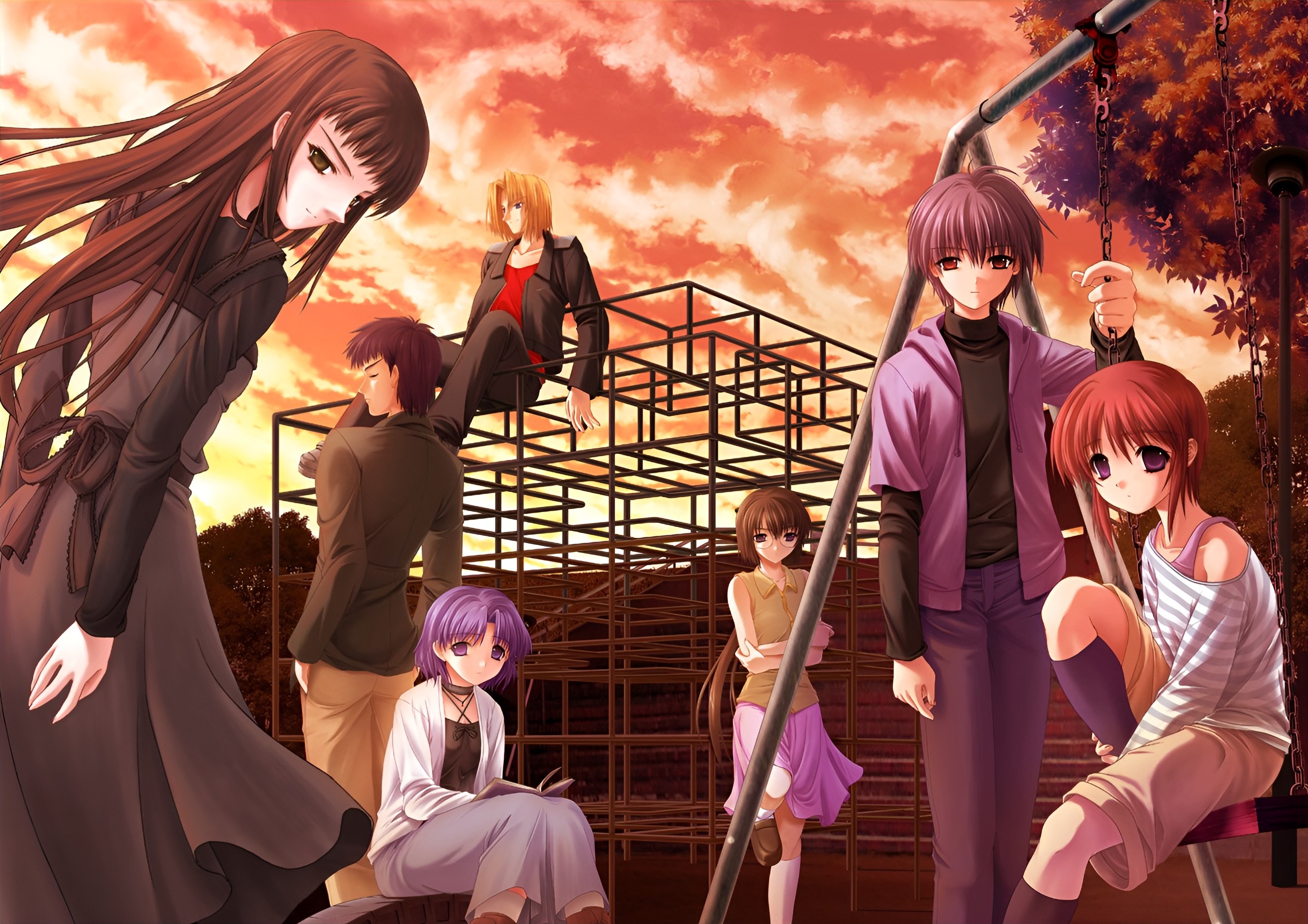
They were always seven.
Cherishing even the smallest scraps of time, they would gather at an abandoned factory on the outskirts of town.
A forgotten rectangular structure, carrying rust and dust within its womb.
Though barren and unadorned, it possessed a certain charm.
The traces of human life that had once filled it had long since dried away,
leaving behind a faint melancholy that lingered in the air.
As though inviting one to reflect upon its former glory...
it could strike a chord deep within the heart of whoever beheld it.
The young people, however, saw it differently.
To them, this forgotten world was a territory without an owner.
The young inherit what has grown old.
Following that principle—
the principle the world has repeated without end throughout its history—
they found a place to gather.
A place of rest that was neither home nor society.
A place someone once called a “sanctuary.”
The world is filled with falsehood, and betrayal.
People wound one another.
No matter how intimate the bond, conflict cannot be avoided.
And yet—
even if contact between people means wounding one another,
that very pain is proof that the other person truly exists.
And that is precisely why bonds between living, flesh-and-blood people
become something irreplaceable...
Puzzle pieces scattered into a thousand fragments.
May they, somehow,
be arranged with gentle hands————Saihate no Ima OP 1
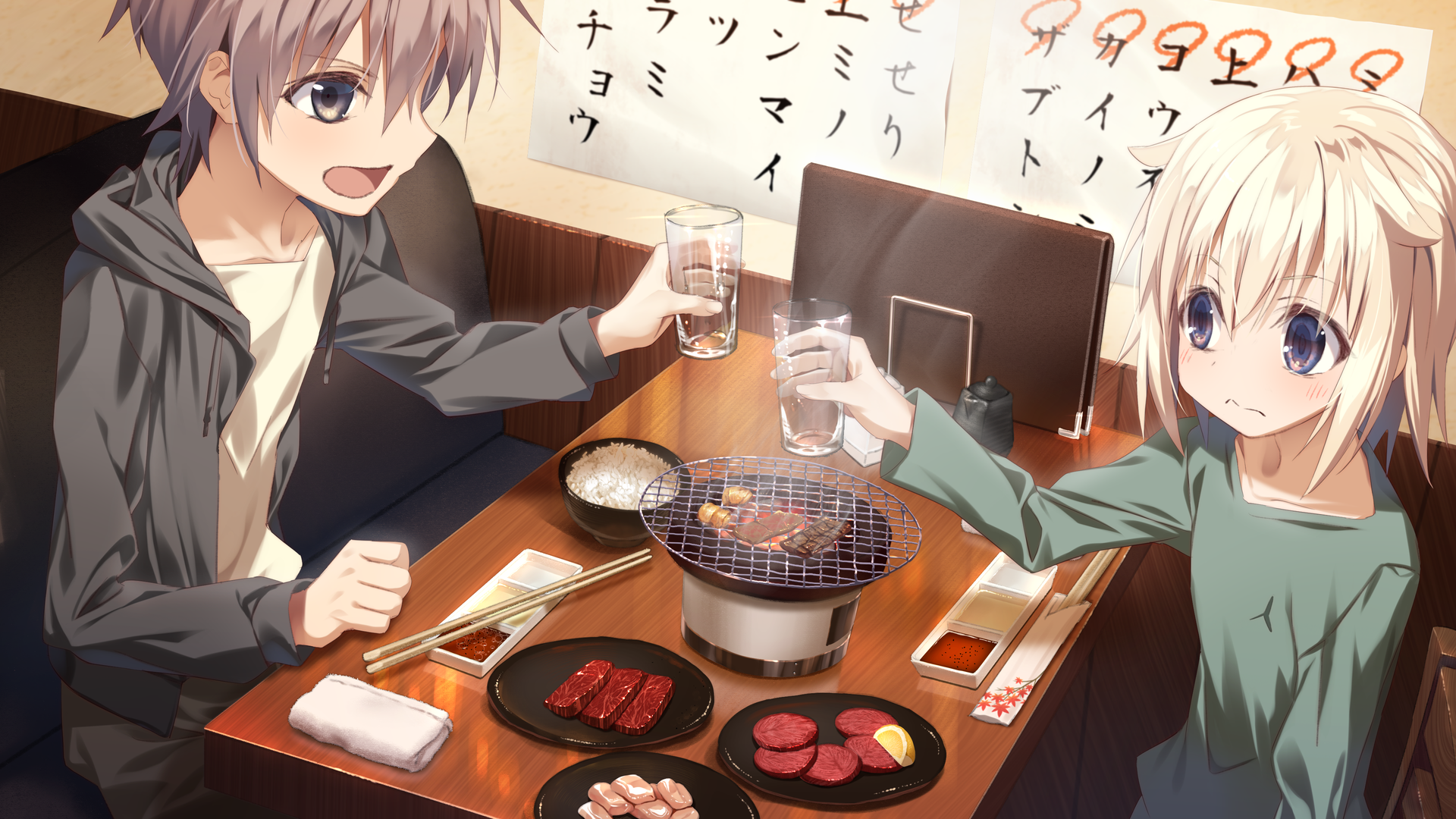
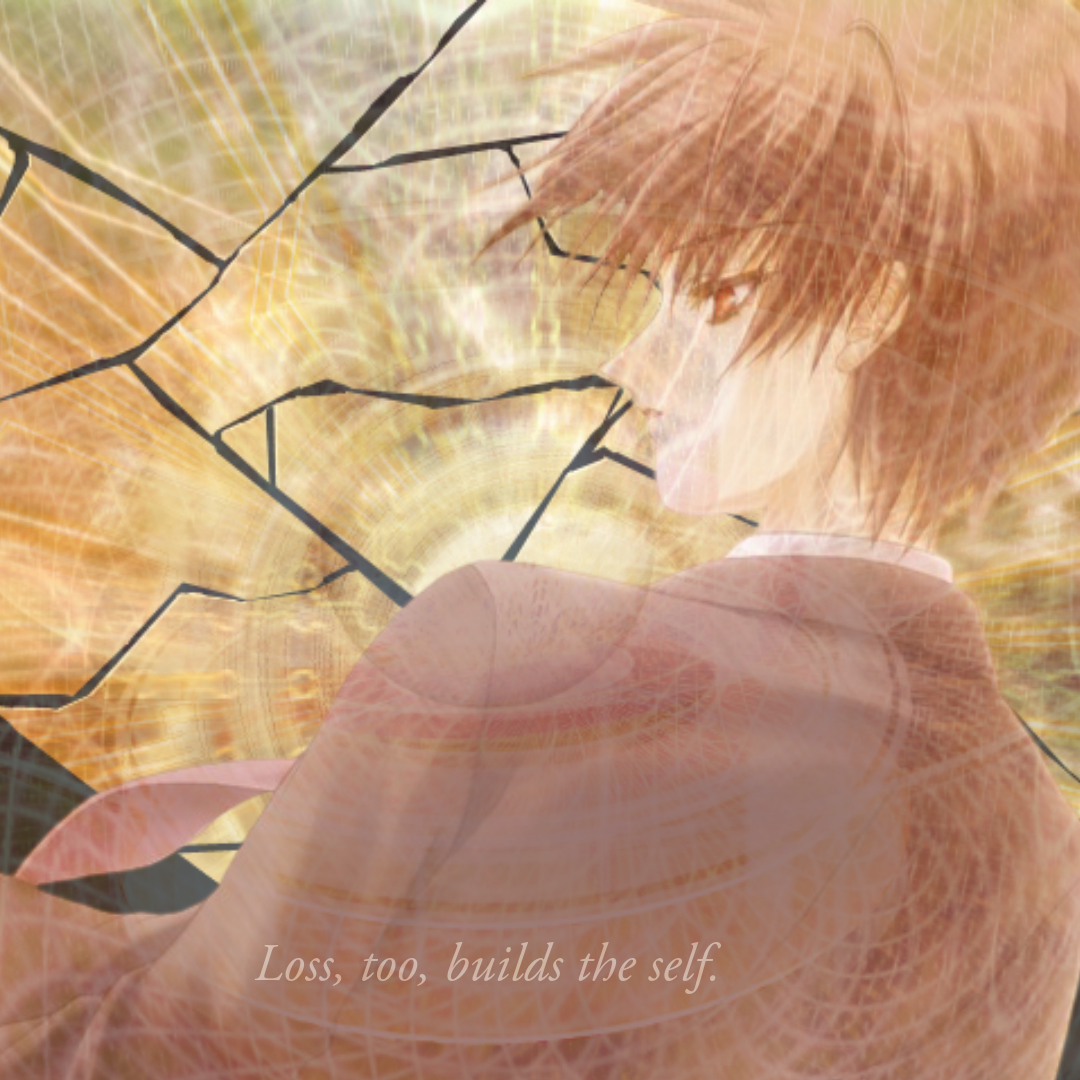
Saihate no Ima (interpretively, "Farthest End of the Heart") is a 2005 visual novel developed by Xuse and written by Tanaka Romeo. It follows seven friends who find solace in an abandoned factory on the outskirts of their town, a place separate from both home and society, and a place they eventually come to call their sanctuary.
I won't get into much spoilers in this review (I finished it a few months ago, so it isn't as fresh in my mind as one would like), and describing what the VN is actually about is quite hard anyway. The easiest way to put it without spoilers is that it is literally a story about seven friends, their relationships, and the time they spend together in their little sanctuary away from the rest of the world.
But of course, if only it were as simple as that.
One of the difficulties you may have while reading this work comes from its structure. It is quite avant-garde, perhaps too-garde in some way; the story is fragmented across different points in time, perspectives, scenes and conversations, documents, and an absurd number of digressions (especially during 戦争編, which was of a completely different magnitude of difficulty from everything that preceded it—oh well, it seems I am following in Tanaka's footsteps with my own digressions). You can be reading a completely normal conversation one moment, and then suddenly you're reading about some philosophical idea, a piece of music, medicine, history, politics, biology, more philosophy, or whatever else Romeo happens to feel like talking about.
And then there's the quintessential trademark of this VN: hyperlinks.
The yellow hyperlinks scattered throughout the novel function almost like another layer of narration. They reshape the way you experience the story itself, turning information that would normally exist outside the narrative into part of the act of reading. A link can pull you away from the immediate scene and into another memory, explanation, conversation, document, or some completely unexpected corner of the world.
(For your information, reader, you do not need to look up any "guides" for this Visual Novel. Merely click every hyperlink you see and you are set.)
There are moments where these digressions feel almost like Romeo simply opening a door into his own interests and inviting you to look inside. One moment, Shinobu might simply be going through an ordinary part of his day, only for a hyperlink to lead into an extensive explanation of medicine, public health systems, or the history of some obscure concept. Another link might lead into a more personal fragment—a memory, a conversation, or some small moment from the past that suddenly adds another layer to a character. Then there are stranger ones, where Romeo's curiosity seems to take complete control. A passing mention of a piece of music might lead into a hyperlink explaining its background, only for that explanation itself to contain another link taking you even further. For example, a record player might be playing Erik Satie's Gymnopédie No. 1, which prompts a hyperlink about the piece, only for that same hyperlink to contain another link leading into a digression-within-a-digression exploring Satie himself—his early compositions, his involvement with the Rosicrucian movement, his relationship with other artists, and the development of his unusual musical philosophy. It is the kind of information that has no immediate obligation to the plot at hand (and I won't tell you what obligation it has either), yet somehow contributes to the strange "texture" of the world Saihate no Ima creates.
Another thing I really like is how Romeo takes real concepts and gives them a completely different life within the setting. To give two examples, you get Dawkins' concept of the meme from The Selfish Gene, but instead of simply referencing it as an academic idea, the VN builds its own fictional interpretation around it. The same goes for "nanophenomenology," which draws from real phenomenological traditions while becoming its own fictional concept within Saihate no Ima. There are plenty of other examples, but going into them would get into spoiler territory. It's one of the things that makes the VN's endless information dumps so interesting to me; Romeo isn't merely explaining an idea for its own sake. He takes these concepts apart, puts his own spin on them, and then makes them part of the world he's building.
And the way he executes all of this is honestly a sight to see. How he even came up with some of the stuff happening in 心海, 人類結合, or イマ is just amazing, and looking back on the VN after finishing it is something else entirely.
So, should you read it? Well, I would say yes, but at the same time, I do think this novel has a pretty severe barrier to entry; it borderline gates itself. There is an absurd amount of material interwoven throughout it, and reading some of those hyperlinks in 戦争編, which can reach the level of academic papers and then just keep going, is quite something if you're not already acclimated to that kind of writing. Even so, its complexity is not there for its own sake. The narrative structure, literary ideas, philosophy, science, and countless other subjects all end up intertwined with the characters and the story itself.
Well, I suppose that may be the point. Saihate no Ima says it in the first OP: it is a story that asks you to piece together all these scattered fragments—people, memories, ideas, and connections—and see what kind of picture they form when brought together. Beneath all the digressions, strange concepts, and ridiculous amount of information, there is something much simpler at its center.
It is, after all, said in the description:
"This is a story that describes the heart. A story that describes the thing located at the farthest end of a heart."
Thank you for reading.
References
Xuse. (2015). 最果てのイマ -COMPLETE- ダウンロード版 (Saihate no Ima -COMPLETE- Download Edition) [Windows visual novel]. Xuse.