Warning
PREFACE
I am making this to offer a reading of a specific moment in Sakura no Toki: D’où venons-nous ? Que sommes-nous ? Où allons-nous ?—the so-called encounter with Kei, or cherry blossoms and sunflowers sequence—with particular attention to its ambiguity, especially in its final lines.
Specifically, I want to look at the recurring motifs of 空の器 [the ‘empty vessel’] and 未完の筆 [the ‘unfinished brush’], alongside Stéphane Mallarmé’s ideas of le Néant [the ‘void’] and Gauguin’s The Empire of Death from Avant et Après [Before and After], as well as several related ideas surrounding the broader symbolism of the ‘cherry blossoms and sunflowers.’
I also want to address several questions raised by the scenes discussed in the relevant sections. To do so, I will trace these connections, with some summarization where necessary to establish the initial links, before explaining how I personally read them. And obviously, as always, this is not definitive, only my reading.
The Promise
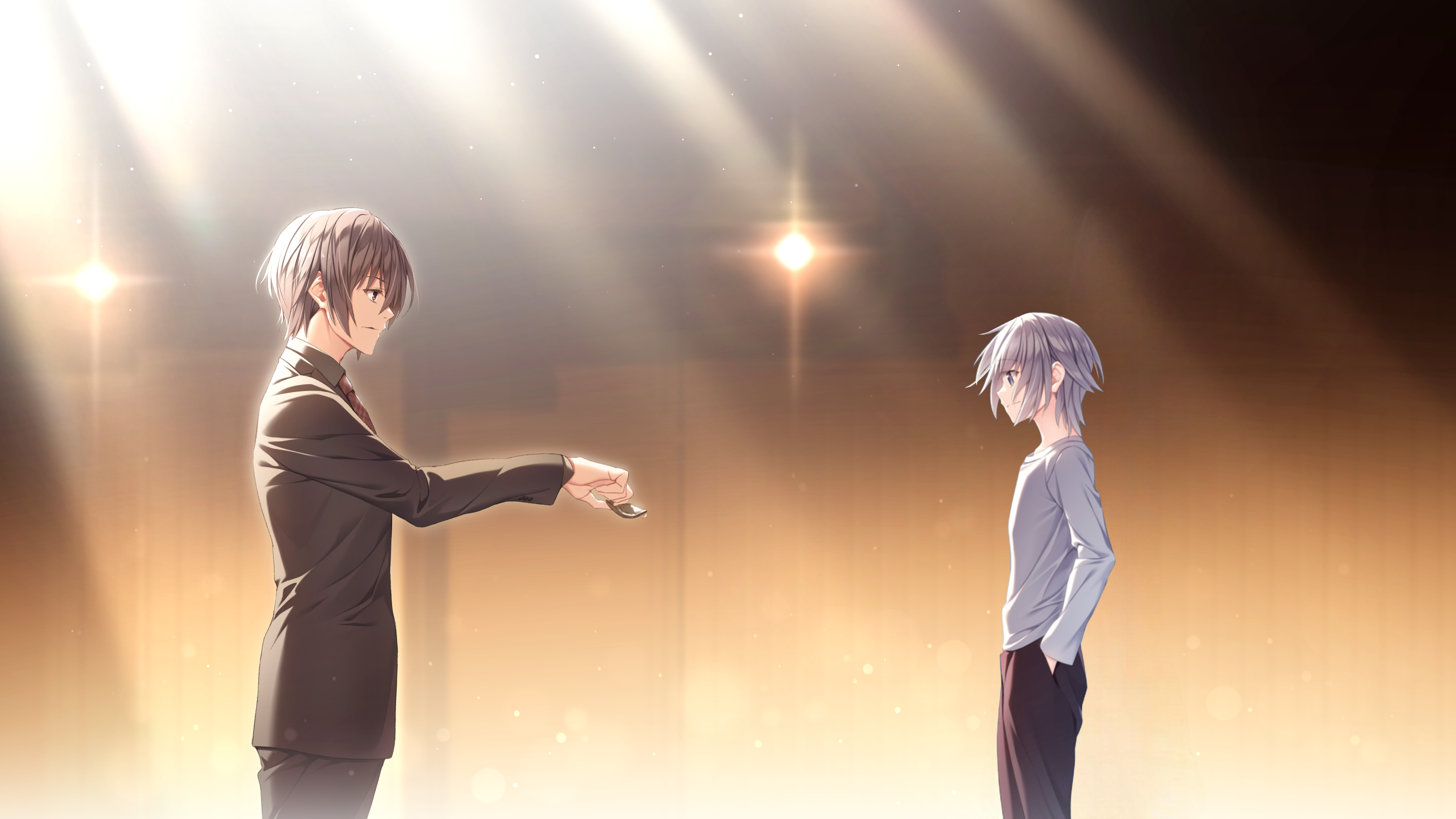
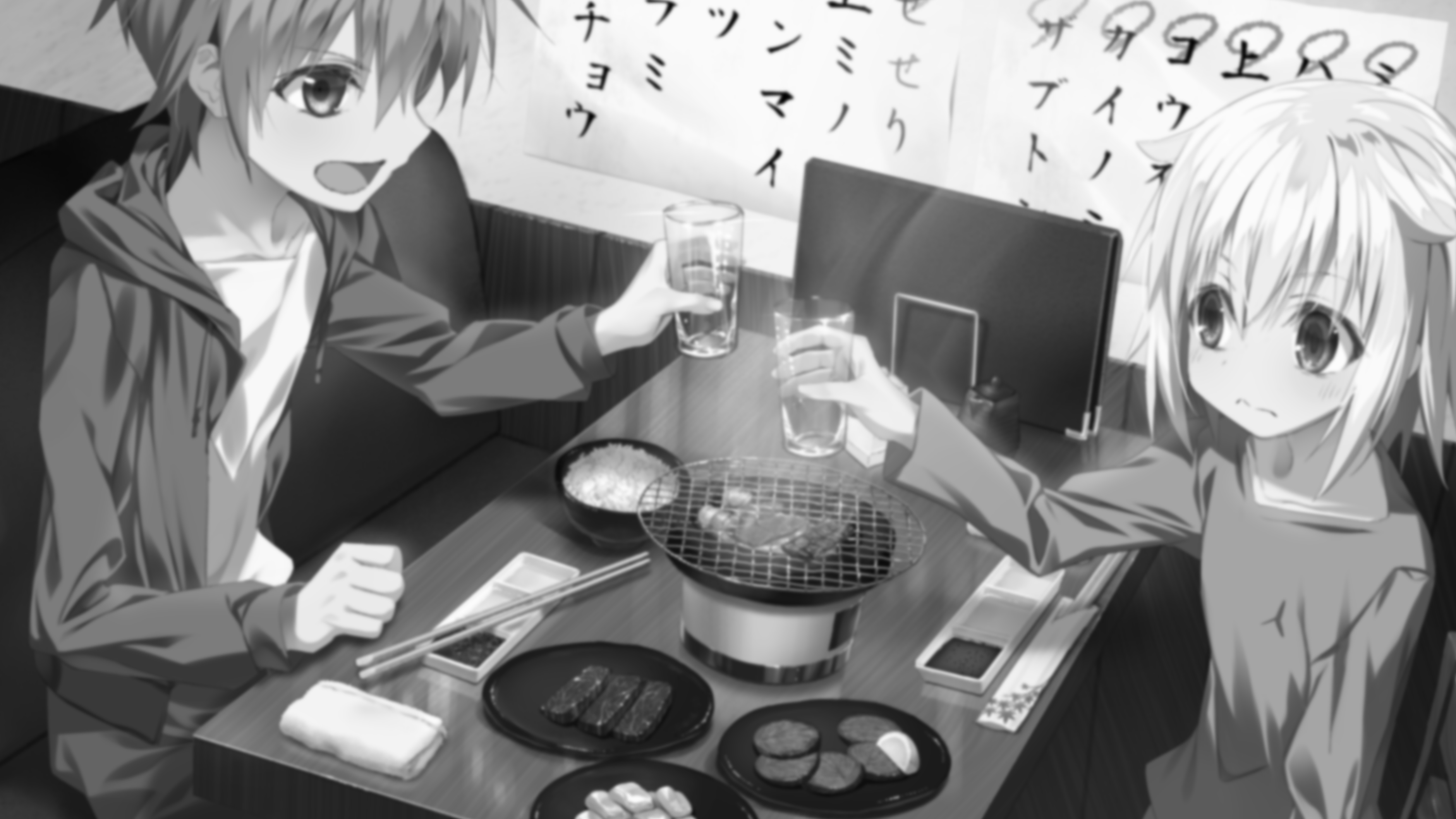
During Mon Panache!, which takes place chronologically during Kei and Naoya’s childhood, Kei is dragged to a restaurant by Naoya. Near the end of the conversation, Naoya introduces the idea of 空の器を満たす様な芸術 [art that fills an empty vessel], with the vessel being the world.
The most significant aspect of this exchange lies in its language of 空の器 [the empty vessel]. The world is conceived as a vessel whose artistic possibilities have yet to be realized, its contents awaiting form through their art. Naoya’s repeated use of 俺たち [we/us] also makes this more than an individual artistic ambition: it is a promise shared between the two of them. Their art is what will eventually fill the vessel.
At this point, of course, neither of them has fulfilled that promise. The ‘empty vessel’ therefore represents a world in which their artistic possibilities remain unrealized, awaiting the art that will give them form. Yet the scene also complicates the very image of fulfillment. When they raise their empty glasses, Kei finds the resulting resonance beautiful; for a moment, the sound seems to fill the entire world, only to disperse and leave it empty once again—満たされた世界はふたたび空っぽになってしまう [the filled world becomes empty once again]. Even here, what fills the world is ephemeral; beauty gives their experience brief form before it passes back into the larger flow of time.
「コップを掲げろよ。夏目圭」直哉はコップを掲げる。それに従い、俺も同じようにしてみる。「こ、こうか?」直哉は頷くとこう言った。
[“Raise your glass, Natsume Kei.” Naoya raised his glass. I followed suit and raised mine as well. “L-Like this?” Naoya nodded, then said:]
「コップには何も満たされていない。だからこそ、俺たちはこの器を満たす様な芸術を作りあげる」
[There’s nothing filling these glasses. And precisely because they’re empty, we’ll create art that can fill this vessel.]
「空の器を満たす様な芸術——」
[Art that fills an empty vessel…]
「ああそうだ。空の器は世界だ。それを満たすのは俺たちの芸術だ」
[Yeah. That’s right. The empty vessel is the world. And it’s our art that will fill it.]
「では、その芸術に対して」
[Then, to that art—]
「乾杯!」
[Cheers!]
「か、乾杯」
[C-Cheers!]
The Vessel Filled?
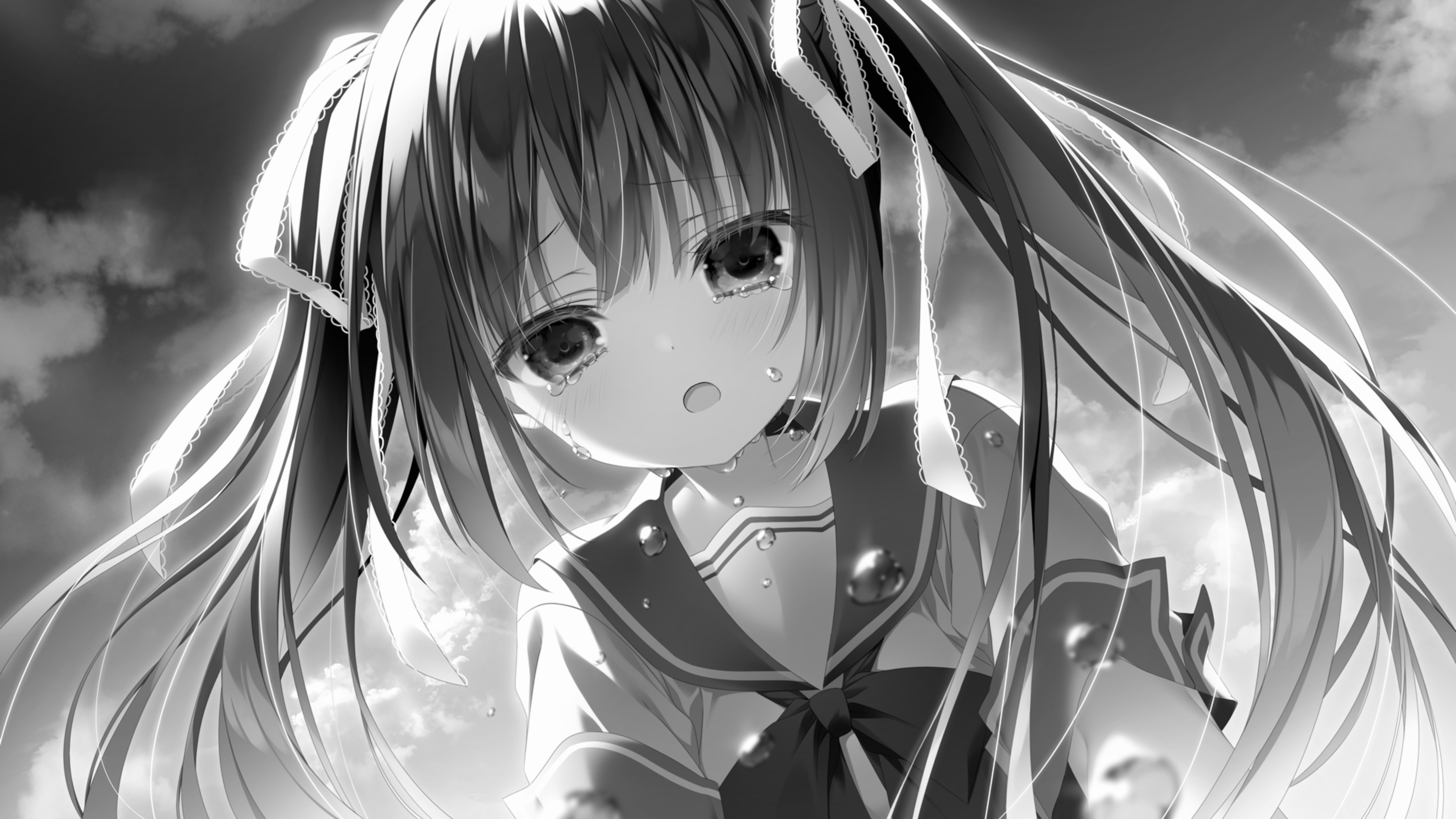
Kei’s path, however, would be cut short. In his final moments, while speaking to Misuzu, Kei alludes to the promise he and Naoya made, and the language of the ‘empty vessel’ returns, now with an important change. After telling Misuzu that the wonderful time she received from him was enough because “that moment itself is eternity,” he explains that the cup which was once empty has become 満杯の幸福 [filled to the brim with happiness].
This shift in wording is significant insofar as Kei no longer speaks of the vessel as something awaiting fulfillment. He instead looks back upon it as something that, in his experience, has already reached fullness. The progression from an ‘empty vessel’ (空の器) to something “filled to the brim with happiness” (満杯の幸福) gives the earlier promise a form of resolution: what they once imagined their art would accomplish has, in Kei’s eyes, come to be realized through his experience. The vessel has reached this state of fullness, which Kei identifies with 美 [beauty].
「いやです! そんなの!まだ私には分かりません! 教えてください!」
[No! That’s not enough! I don’t understand yet! Please tell me!]
「そうだな。簡単に言えばさ」
[Well then, to put it simply—]
「簡単じゃなくて、丁寧に教えてください!」
[Not simply! Explain it properly!]
「もっと、もっと、時間をかけて、丁寧に、私に教えてください!!」
[Take your time and explain it to me properly!!]
「コップには何も満たされていなかった」
[The cup was empty.]
「はい」
[Yes.]
「だからこそ、俺たちはその器を満たそうとした」
[So we tried to fill that vessel.]
「はい」
[Yes.]
「空の器を満たす様な芸術——」
[An art that fills an empty vessel—]
「はい」
[Yes.]
「それがすべてだった」
[That was everything.]
「はい」
[Yes.]
「だけれども、今ではその器には満杯の幸福が詰まっている」
[But now, that vessel is filled to the brim with happiness.]
「はい」
[Yes.]
「それを人は、『美』と呼んだんだ」
[That is what people call ‘beauty.’]
Mallarmé’s Crisis
So, what does this idea of an ‘empty vessel’ actually have to do with Mallarmé? To get there, it helps to look at Mallarmé’s own struggle with the idea of le Néant, or the Void. During his time teaching at Tournon in 1866, he underwent an intense personal and artistic crisis, during which he came to describe himself as having encountered le Néant (Pearson, 1996).
Mallarmé’s encounter with the Void was closely tied to a crisis in his understanding of poetry and artistic creation. This crisis has often been understood as involving the collapse of his earlier religious and metaphysical assumptions, leaving him confronted with what he described as a kind of ‘absolute nothingness.’ In his letters from around 1867, he speaks of attempting to experience this le Néant pur—the ‘pure Void’—as something that could be grasped and preserved as an indelible idea (Mallarmé, 1867/2019).
Mallarmé’s relevance to Kei lies partly in the way his ideas have become embedded in Kei’s conception of art, even after their source has ceased to be consciously remembered. In Mon Panache!, Kei recites a passage concerning the Idea of the Flower, only for Yoshida to identify it as a quotation from Mallarmé (specifically, the phrase l’absente de tous bouquets). Kei admits that he has forgotten most of what he has read and simply repeats the words that have remained with him. His language surrounding 虚無 [void or nothingness] and 美 [beauty] provides a further instance:
「虚無を見出した後で、美を見出した俺だけど、さらにその先で、虚無は姿を消してしまった。 そして、俺の元には、美だけが残った。」
[Only after I found the void did I discover beauty—but beyond that, even the void itself eventually vanished. And in the end, only beauty remained with me.]
Significantly, Kei uses the word ‘void’ to describe his own artistic development. More importantly, he describes a progression from Void to Beauty: the Void is encountered, Beauty is discovered through it, and then the Void disappears, leaving Beauty behind. This gives Kei’s language of emptiness a distinctly Mallarméan resonance, particularly in light of Mallarmé’s own confrontation with le Néant. His progression from ‘void’ to ‘beauty’ also parallels the earlier image of the 空の器 [empty vessel], which Naoya imagines their art eventually filling.
Taken together, these passages establish a recurring relation between emptiness, artistic creation, and beauty. Mallarmé provides a conceptual framework for understanding this relation; Kei then unconsciously reproduces part of it in his own language of Void and Beauty, while the earlier image of the ‘empty vessel’ gives the same idea a concrete artistic form. This makes Mallarmé’s Néant particularly relevant when we later return to the imagery of emptiness—and, ultimately, to the significance of the cherry blossoms and sunflowers sequence.
Gauguin’s Empire of Death
“[...] I have begun to think, to dream rather, about that instant when everything was absorbed, asleep, overwhelmed, in the original slumber, in potentiality. Invisible, indefinite, unobservable principles all, at that time, because of the primeval inertia of their virtuality, without one perceptible or perceiving act, without any reality, either active or passive, therefore incoherent, all of course sharing only one characteristic, that of nature in its entirety but lifeless, expressionless, dissolved, reduced to nothing, engulfed in the immensity of space which, as it was utterly formless and void, and as night and silence penetrated to its remotest depths, must have been like a nameless abyss. It was the chaos, the primeval nothingness, not of Being but of Life, which afterward is called the Empire of Death, when the life which had flowed from it returns to it.
…And in my dream an angel with white wings came to me, smiling. Behind him, an old man holding an hourglass in his hand:
‘It’s no use questioning me,’ the angel said, ‘I know what you are thinking....Ask the old man to lead you later to infinity and you will see what God wants to do with you and you will feel that today you are remarkably incomplete. What would the Creator’s work be if it were done in but one day? God never rests.’
The old man disappeared and, awaking, I raised my eyes to the heavens and saw the angel with the white wings ascending toward the stars. His long blond hair seemed to leave a trail of light in the firmament.” (Gauguin, 1996).
This excerpt comes from the final passage of Paul Gauguin’s Avant et Après, depending on the edition. The first half of the dream imagines a primordial condition preceding the emergence of life: an “original slumber” characterized by “primeval inertia” and potentiality. Gauguin describes these principles as invisible, indefinite, and unobservable, possessing “virtuality” prior to any perceptible or perceiving act. Gauguin calls this le néant primordial—the “primeval nothingness” (Gauguin, 1920)—and describes the subsequent return of life to this state as the “Empire of Death.”
The arrival of the angel and the old man with the hourglass interrupts this static condition. Against this background of inert potentiality, the angel tells Gauguin that he is “remarkably incomplete,” connecting this incompletion with infinity and the Creator’s continual work. This establishes a distinction between the inert potentiality of the néant primordial and the angel’s vision of existence as perpetually unfinished and still becoming.
The Empire of Death passage recurs at several points across Uta and Toki. In Uta, Ken’ichirou invokes it near the end of What is mind? No matter. What is Matter? Never mind., recounting the angel and old man with the hourglass, while Kana later discusses Gauguin and the excerpt’s history with Naoya in The Happy Prince and Other Tales following Kei’s death.
In Toki, the passage becomes directly associated with Kei through Naoya’s memories of him. During a conversation Naoya and Ai had beneath the night sky at the school’s empty pool, Naoya explains that after Kei’s death, 「それから夜空を見上げるたびに思ったよ」 [after that, whenever I looked up at the night sky, I thought of it (him)], followed by the recurring image of a white-winged angel ascending toward the stars, whose long blond hair leaves a 光の尾 [a ‘trail of light’] across the firmament. The image becomes a recurring, involuntary memory through which Naoya experiences Kei’s absence, while the Great Curve of Spring (春の大曲線) provides a celestial image for that same luminous trail.
The crux of the discussion is Gauguin’s connection between incompletion and infinity, a connection that reappears almost verbatim in Kei’s final monologue. The Empire of Death thus provides another conceptual layer through which Kei’s language of the unfinished and his movement toward infinity can be understood.
The Artist, the World, and Beauty
In Der Dichter spricht—or The Poet Speaks—I focus on two discussions that are particularly relevant to the work’s conception of the relationship between the artist, the “world,” and beauty: Naoya’s internal monologue right before confessing to Misuzu, and Reijirou’s meeting with Ken’ichirou at the hospital. Although they approach this relation from different directions, together they develop a conception of the ‘artist–world–beauty’ circuit as mutually constitutive.
Naoya begins by considering how the existence of the self is inseparable from its relation to others and to the world. With the thought that 自分以外の“誰か”の言葉がなければ、人は死ぬ。“誰か”という存在があるから、私の世界が形作られる。 [without the words of a “someone” other than oneself, a person dies. It is because there exists a “someone” that my world takes shape], he establishes the self as constituted through its openness to the world surrounding it. This is quite similar to Hegel’s account of self-consciousness through recognition in the Phenomenology (particularly the master-slave dialectic) (Hegel, 1977), although Naoya can be read as extending this relation to the constitution of the world itself: 世界の限界とは私の限界である。 [the limits of the world are my limits], so “the world and I” become identified with one another in a sort of circular relationship. This circularity extends in turn to his understanding of beauty. In this conception, beauty is not simply something already contained within the world; 美は、私によってもたらされる。 [beauty is brought forth by me], meaning that what exists as a phenomenon in the world is aesthetically apprehended and brought forth through art. Yet the artist is also shaped by the world, so the process is reciprocal: (world → artist → aesthetic apprehension → beauty → art → world → artist…).
Naoya can therefore also say that 美も世界と循環している。 [beauty, too, circulates with the world]: the world gives the artist their particular perspective, while the beauty they bring forth becomes part of that same world. The artwork therefore belongs to the world as its material manifestation, even though, in this conception, the beauty and artistic act that give rise to it cannot themselves be reduced to the phenomenon.
Ken’ichirou, by contrast, approaches the same relation through the transient nature of phenomena. He conceives of the world as a continual “flickering,” where individual sounds appear and disappear, yet within their succession we perceive music (i.e., a single note vanishes, but its relation to the notes around it allows us to perceive a melody); individual moments may arise and vanish, yet it is through their movement that we perceive time and the world itself. In this perspective, art acts as a catalyst through which we become conscious of what is ordinarily concealed within this succession of phenomena. The phenomenon itself is therefore not simply what is perceived, but part of a process through which something irreducible to it becomes perceptible.
Ken’ichirou makes this clearer in his subsequent answer to Reijirou about what ‘beauty’ actually is to him:
「美もまた、世界に属していません。世界の中にあるうつくしさとは、現象としてのうつくしさが明滅しているに過ぎない。だが、その明滅は本質ではありません。美は現象ではないのです。現象としてみられる美とはあくまでも、世界で明滅する光に過ぎない。だからこそ、人がそれを受け取った時に、比類無い瞬間を手に入れる。消え去る光の中にこそ、我々は永遠を手にするのです」
[Beauty, too, does not belong to the world. The beauty that exists within the world is merely beauty as a phenomenon, flickering in and out of existence. But that flickering is not its essence. Beauty is not a phenomenon. The beauty that can be perceived as a phenomenon is ultimately nothing more than light flickering within the world. And precisely because of that, when a person receives it, they attain a moment unlike any other. It is within the light that is vanishing that we attain eternity.]
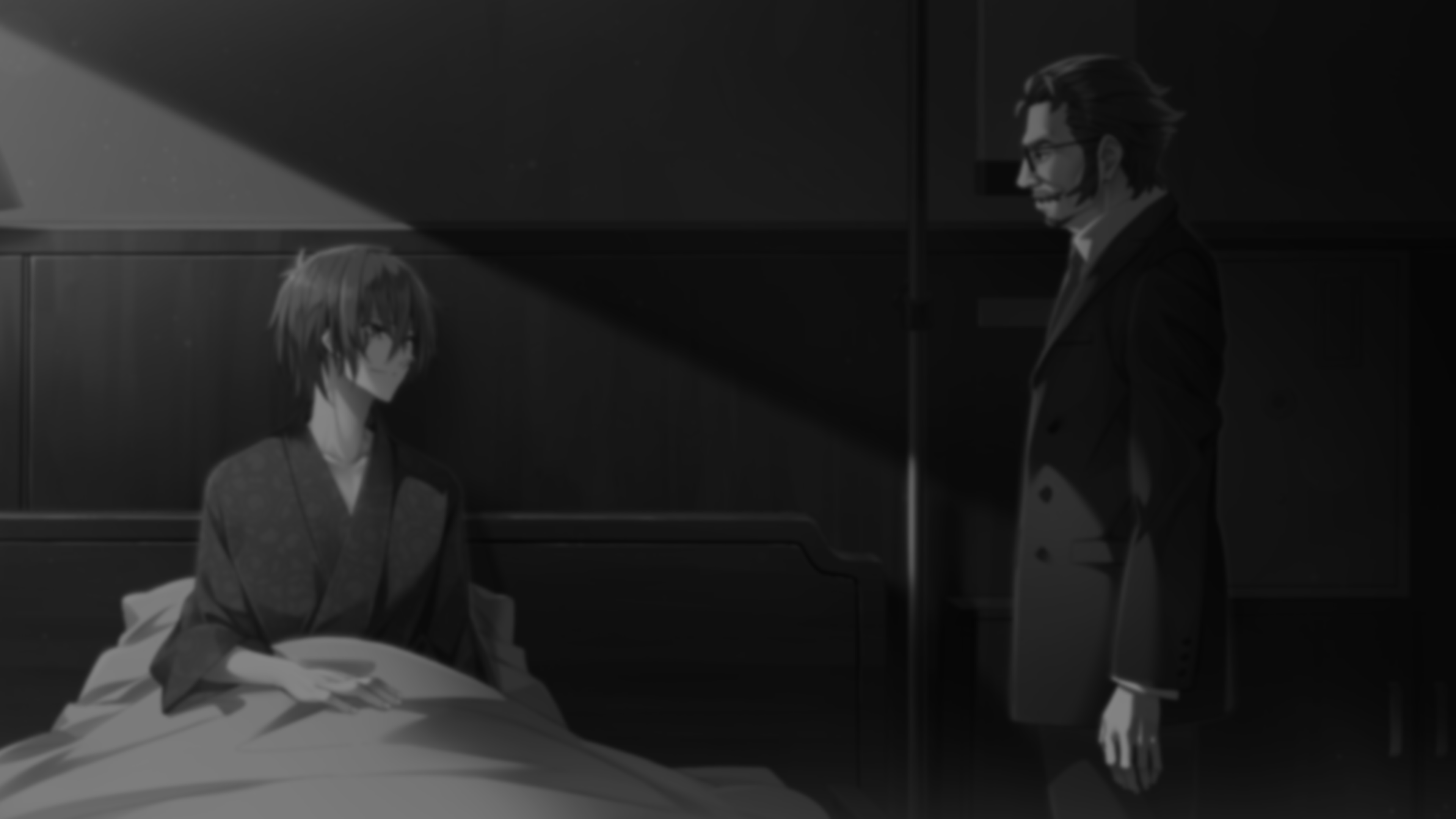
Ken’ichirou formulates this as 「美とは、外側にあるものですよ」 [beauty is something that exists outside]. Beauty therefore exceeds the world as a phenomenon, while its particular manifestations remain within it. What appears within the world is therefore only a temporary manifestation through which ‘beauty-in-itself’ becomes perceptible; beauty exceeds the particular form through which it appears. The disappearance of a beautiful phenomenon is consequently not incidental to beauty itself; its ephemerality is part of what allows ‘beauty-in-itself’ to disclose itself through such manifestations (as with a sunset, whose beauty is inseparable from the fact that the particular light we perceive will soon disappear). Hence Ken’ichirou concludes that “it is within the light that is vanishing that we attain eternity.” The vanishing phenomenon thus becomes the point at which the transient and the eternal meet, allowing “eternity” to be apprehended within a finite moment.
Taken together, these discussions establish a conception of art in which neither the artist nor beauty can be understood as wholly independent of the world. Naoya describes a constitutive circularity—a circuit in which the world shapes the artist, who brings forth beauty through art, which then re-enters the world. Ken’ichirou adds that beauty manifests through the world’s fleeting phenomena, which may thereby disclose something beyond themselves. This in turn casts the earlier image of the ‘empty vessel’ in a different light, for if the artist and world are constitutive of one another, the vessel can also be understood inwardly—the artist who was imagined as filling the world with beauty is themselves continually filled by it.
The Encounter with Kei
The preceding sections have established the ideas and intertextual connections most relevant to the sequence. I can now turn to the cherry blossoms and sunflowers sequence itself and consider how these strands converge. In particular, I want to address what seem to me its central ambiguities: Kei’s shift from the singular to the plural “unfinished brushes,” what the “world” or “empty heavens/void” refers to, how the scene relates to the promise between Naoya and Kei, and whether Kei’s appearance functions as a deus ex machina …
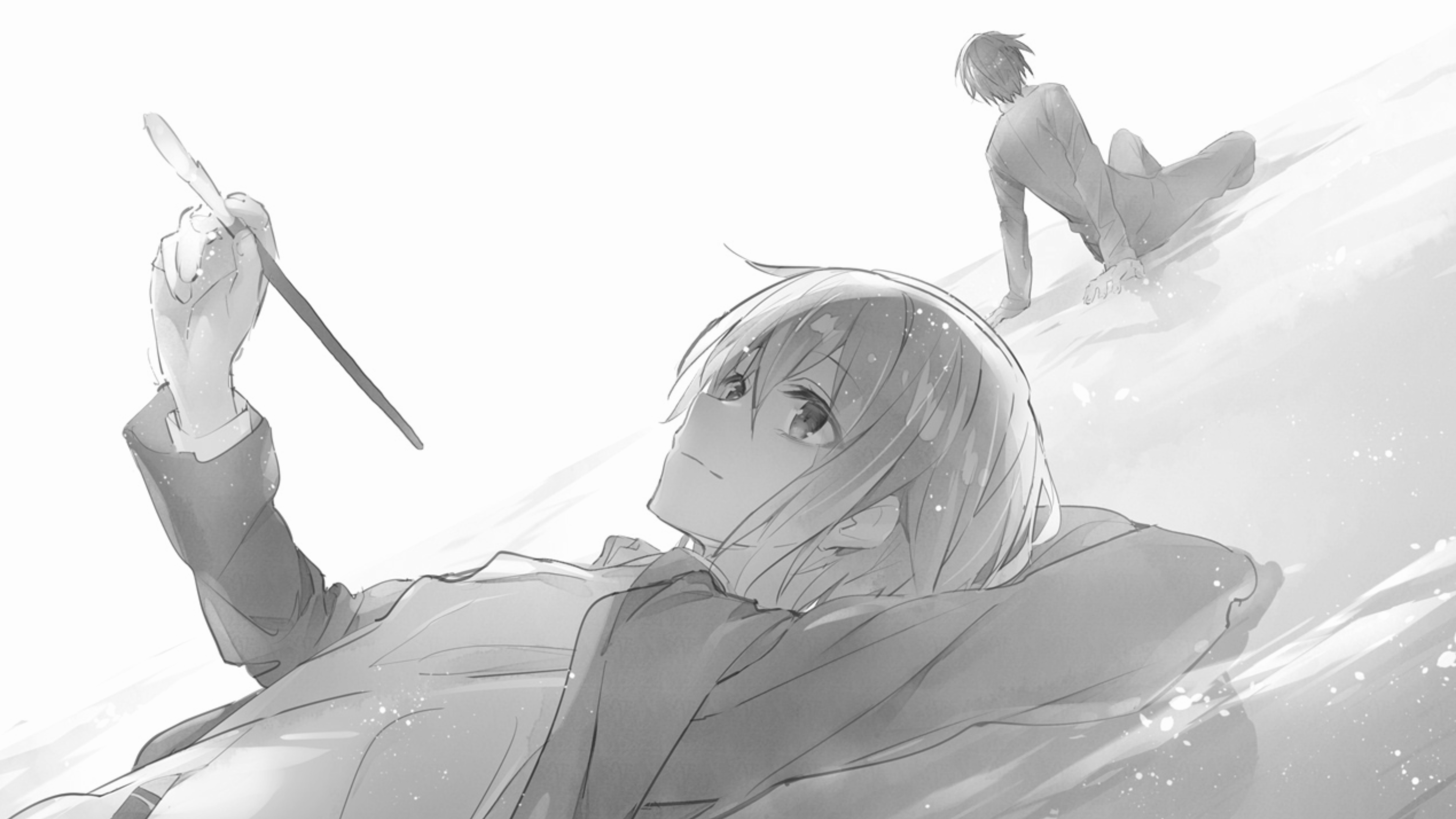
もうその姿は見えないのに、それでも俺には見えている。 俺は目がさめ——空を見上げていて——星の方へのぼってゆく白い翼の天使を認めた——天使の長いブロンドの髪は——天空に——光の尾のようなものを残して消えた——ゴーギャンの文章が脳裏をよぎる。
[Even though I can no longer see his figure, I can still see him. I woke up—I looked up into the heavens—and there, I beheld a white-winged angel ascending towards the stars. The angel’s long blond hair vanished into the sky, leaving behind a trail of light. Gauguin’s words pass through my mind.]
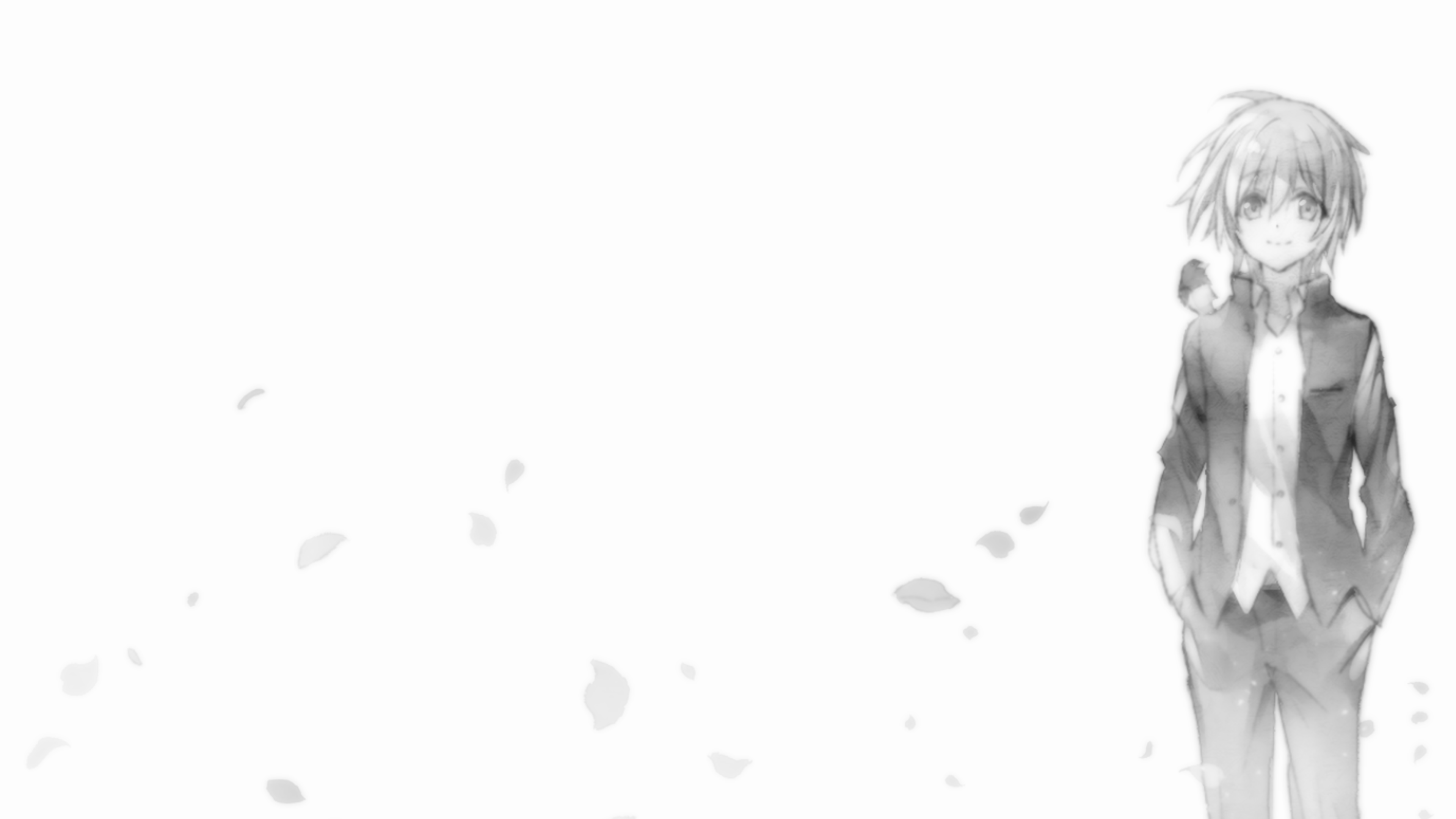
The sequence brings us into a flashback of Naoya and Kei talking as children/teenagers, only for that flashback to gradually transform into an “angelic encounter.” The involuntary memory (アホかよ。こんな時に思い出す様な光景か? なんで、あいつのくせっ毛切る時の事なんて思い出しているんだよ。 [“Am I an idiot? Why am I remembering something like this at a time like this? Why am I thinking about cutting his unruly hair?”]) gradually gives way—俺は目がさめ [I woke up]—to Naoya turning toward the heavens, where he once again sees the white-winged angel ascending toward the stars, its long blond hair leaving a trail of light behind. The point becomes clearer in the order of the recollection: Naoya recalls Gauguin’s words only after seeing the image, making the correspondence between Gauguin’s The Empire of Death and his experience precede his conscious recognition of the work as its source.
Gauguin’s description of the speaker as “singulièrement inachevé” [remarkably unfinished/incomplete] (1920) becomes relevant here. In The Empire of Death, the angel directs the dreamer (Gauguin) toward infinity while revealing the incompletion of his present state. Here, Kei appears through the same angelic imagery, assuming the role of the figure who directs Naoya toward infinity while revealing, in turn, his [Naoya’s] unfinished state. This connection is reflected in Kei’s description of Naoya’s “unfinished brush” and, later, his identification of that brush with himself. The singular brush can thus be read as linking Naoya’s artistic trajectory with Kei’s continued presence:
だからさ。 直哉。お前は奔り続けられるよ。
[So… Naoya. You can keep running.]
お前の、未完な筆は、無限を目指す翼だ。
[Your unfinished brush is a wing that reaches toward infinity.]
どこまでも未完成だからこそ——俺すらも追い越していく。
[Because it remains endlessly incomplete—it surpasses even me.]
それでも、俺はいつまでも、お前のそばにいる。
[Even so, I will remain forever by your side.]
お前の未完の筆は——俺の未完の魂でさ。
[Your unfinished brush is—nothing less than my own unfinished soul.]
お前の筆が奔る先に、必ず俺の魂が宿るんだよ。
[Wherever your brush runs, my soul will surely reside.]
Kei’s angelic appearance also reverses the significance the image previously held. When Naoya previously looked toward the night sky, the white-winged figure belonged to his memory of Kei’s disappearance. Here, that same image becomes the form through which Kei speaks to him: だからさ。 直哉。お前は奔り続けられるよ。 [So… Naoya. You can keep running]. The figure associated with Kei’s departure becomes the means through which he urges Naoya onward, following the path that will eventually carry him beyond Kei: どこまでも未完成だからこそ——俺すらも追い越していく。 [Because it remains endlessly incomplete—it surpasses even me.]
The significance of this identification becomes clearer when we consider Kei’s earlier account of Two Sunflowers (at the end of Mon Panache!), where he describes the painting as both himself and the figure he had spent his life striving toward (あの絵画は、俺自身であり、そして、俺が目指した背中でもある。 [That painting is myself, and also the back I had aspired to.]). His life can therefore be apprehended retrospectively as a whole. By the end of this reflection, Kei says that he has found the answers to where he came from and where he should go and, in his mind, tells Naoya that he has “caught up” to him and that it is now his turn to run. Naoya, by contrast, later asks himself where he came from, who he is, and where he is going, but admits that he does not know the answers. His “unfinishedness” lies, then, in the fact that these questions remain open within his own life. This contrast casts Kei’s claim that Naoya will “surpass” him in a different light: Kei can look back upon a life whose direction has become clear, while Naoya is left to continue forward without knowing where his path will lead.
This seems to raise a contradiction: if human beings are fundamentally “unfinished,” can Kei really be regarded as “complete” simply because his life has ended? Such a reading appears to conflict with Kei’s own description of his “unfinished soul” (as well as with the answers he appears to find to some of Gauguin’s three questions (1897)). This tension can be approached through Heidegger’s concept of Being-towards-death, whereby death closes the range of one’s possibilities, allowing a life to appear retrospectively as a whole. Naoya, still alive, remains within the finite perspective of an existence that has yet to unfold as a whole. He cannot yet occupy the perspective from which his existence as a whole could be grasped, because there are still possibilities that have not been realized and questions that have not been answered (Heidegger, 1962). Kei can therefore be understood as complete in the retrospective sense of a life whose course has ended, while remaining unfinished in the sense that what his life has set in motion continues beyond him.
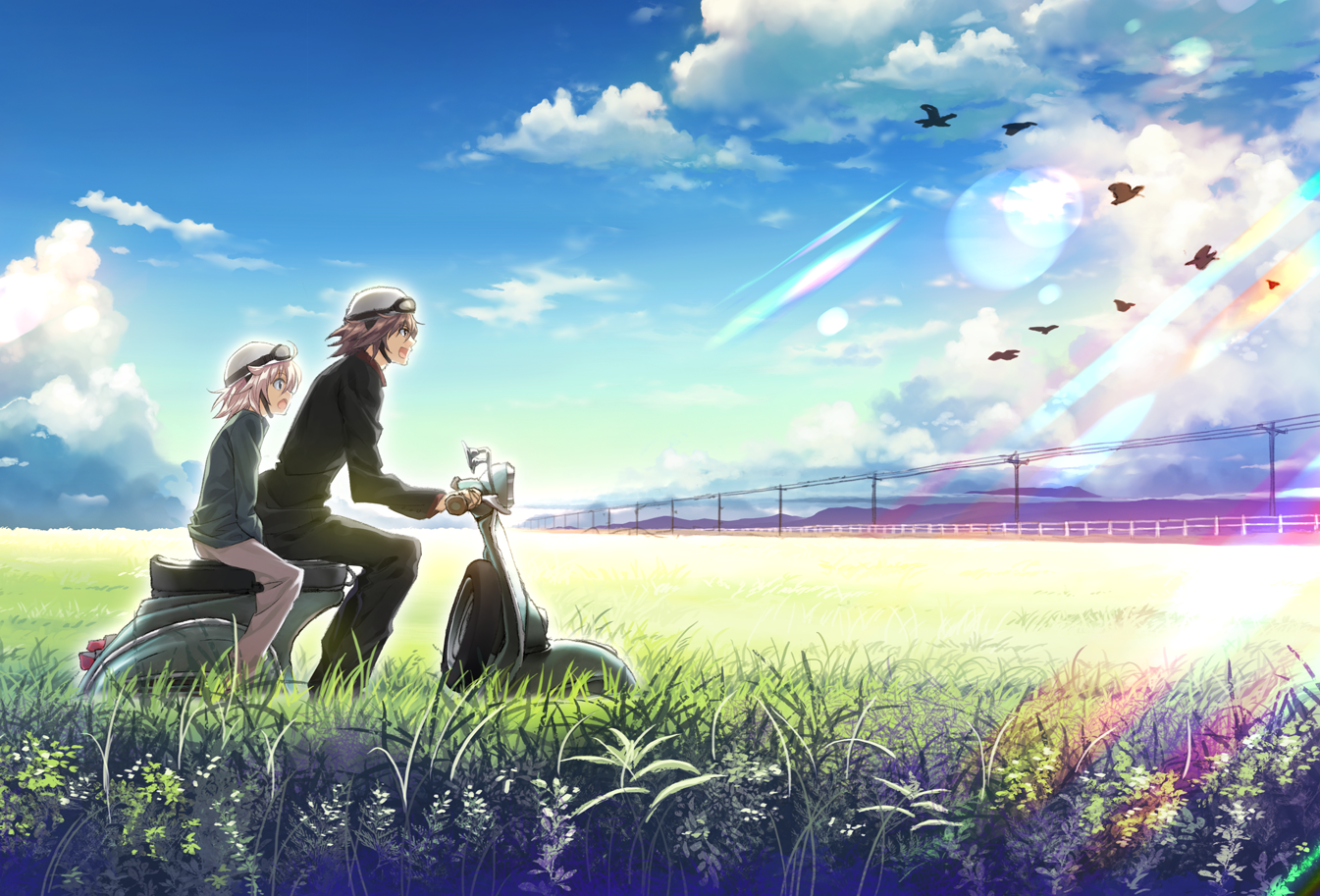
The “butterfly specimen” offers a way of approaching this tension. The image refers mainly to Ken’ichirou and Kei’s Vespa ride in Mon Panache! and to Naoya and Sakurako’s conversation about the Footprints of Cherry Blossoms in Картинки с выставки: 「標本の蝶は、色彩を帯びて再び飛び立ったと思った」 [I thought the butterfly specimen had regained its colors and flown away again]. I find this paradox particularly useful for approaching Kei’s death on three levels: the microscopic, the ordinary, and sub specie aeternitatis (i.e., under the aspect of eternity). At the microscopic level, Kei’s death constitutes a finality: a discrete event marking the termination of his life. At the ordinary level, it falls within the continuity of his life, from childhood and artistic development through his relationships and ultimately his death. Yet, viewed sub specie aeternitatis, even this continuity can be understood as part of a larger, indivisible movement of infinity.
By extension, Kei’s death was never merely an isolated fragment in time and space; his childhood days at the Nakamura’s, his (master-disciple) relationship with Misuzu and Ken’ichirou, his rivalry with Naoya, and his time at the Yumihari Art Club all precede it, while the lives and paths of those around him continue to be shaped by its aftermath. These fragments remain interwoven across time, reaching back into circumstances that preceded Kei’s life and continue to shape what has yet to come. The butterfly can thus “take flight again”; for even if Kei’s disappearance remains final, the traces he left behind continue to move through the lives and works that followed him.
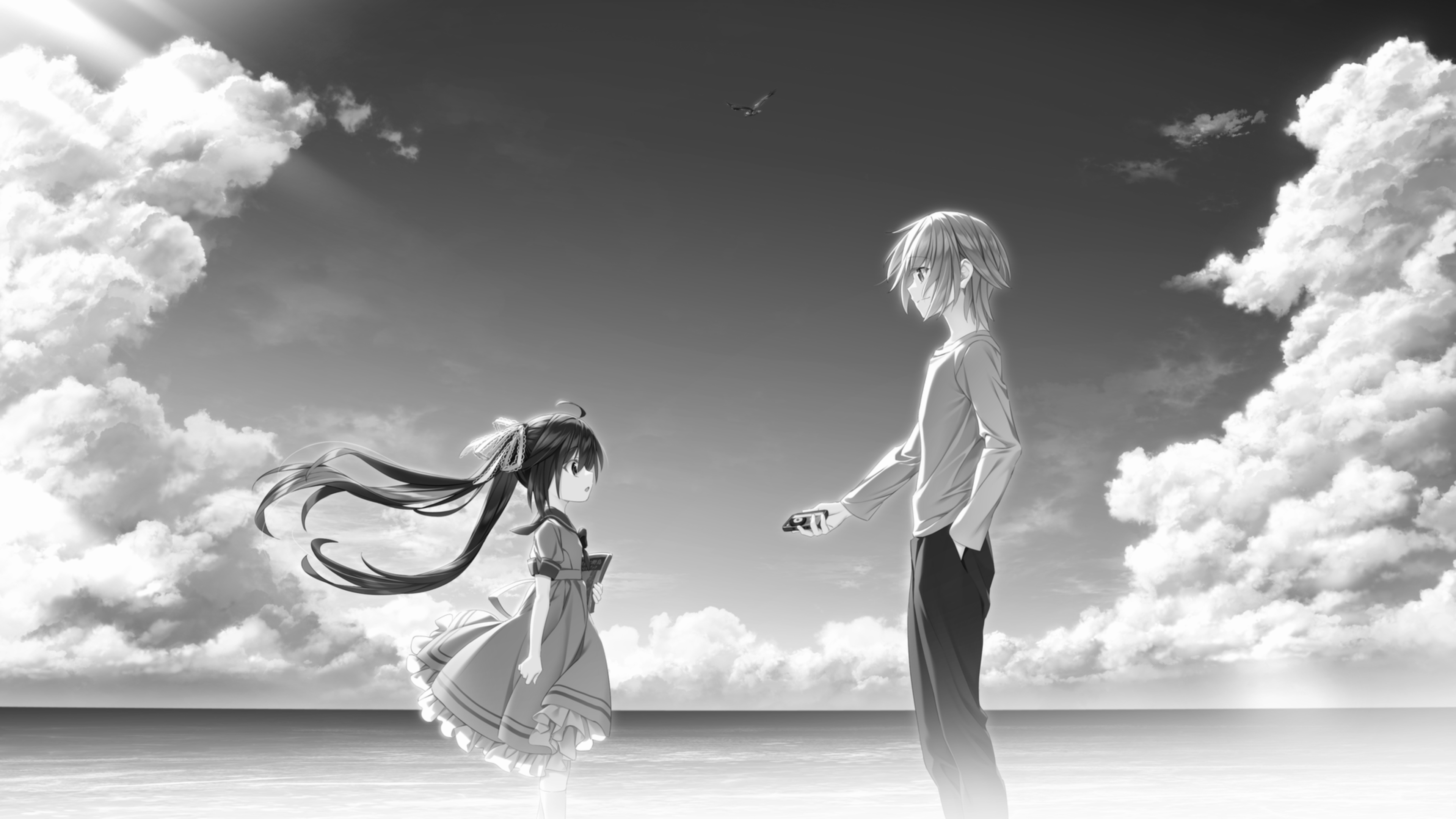
The identification of Naoya’s brush with Kei’s unfinished soul also gives this relation a further temporal dimension; what began with Kei persists into Naoya’s present. This is reflected in the tense of their “conclusions.” In Mon Panache!, Kei says that his life 満たされていた [had been filled] by everything flowing past, while Naoya, after the final brushstroke sequence, says that his life 満たされている [is filled] by the same flowing world. Kei’s retrospective recognition of his own life thus finds a present-tense counterpart in Naoya. As established earlier in the ‘artist–world–beauty’ relationship, what Kei “received” from the world (i.e., the people, experiences, and memories that shaped him) became beauty through his art, which then “entered the world” again and eventually “flowed into” Naoya. The ‘empty vessel’ is therefore filled in both directions—by the artist’s creation and by the world that continually enters the artist. The argument thus returns to the childhood image of the ‘empty vessel,’ where the sound of their empty glasses briefly seems to permeate the world before dispersing into it.
What changes, then, is the number of the “unfinished brush”: by the end, when Kei says that 俺達の未完の筆は、虚空すら色彩で埋め尽くす。 [Our unfinished brushes will fill even the empty heavens/void with color], the singular brush, initially regarded as Naoya’s alone, has now become something shared between the two of them. This recalls the 俺たちの芸術 [our art] of their childhood promise: “[...] the empty vessel is the world. It is our art that will fill it.” This near-final statement can thus be read as a return to that earlier promise, though now in a transformed form. What was once imagined as their art filling the “world” is now expressed as their unfinished brushes filling “even” the “void” or “empty heavens” with color.
Naoya immediately carries this promise into the subsequent final brushstroke. The canvas becomes the point at which Naoya’s “world”—his own memories together with those entrusted to him by others—finds artistic convergence in a single work. As with the sound of the glasses of the childhood scene, the forms that emerge upon the canvas eventually disappear. The Seven Aspects of Cherry Blossoms blooms, its memory absorbed into the composition, but even that epitaph disappears, leaving only Kei’s withered sunflowers behind. What enters the artist from the “world” is thus given form and, in turn, becomes part of the world again.
Empty Heavens
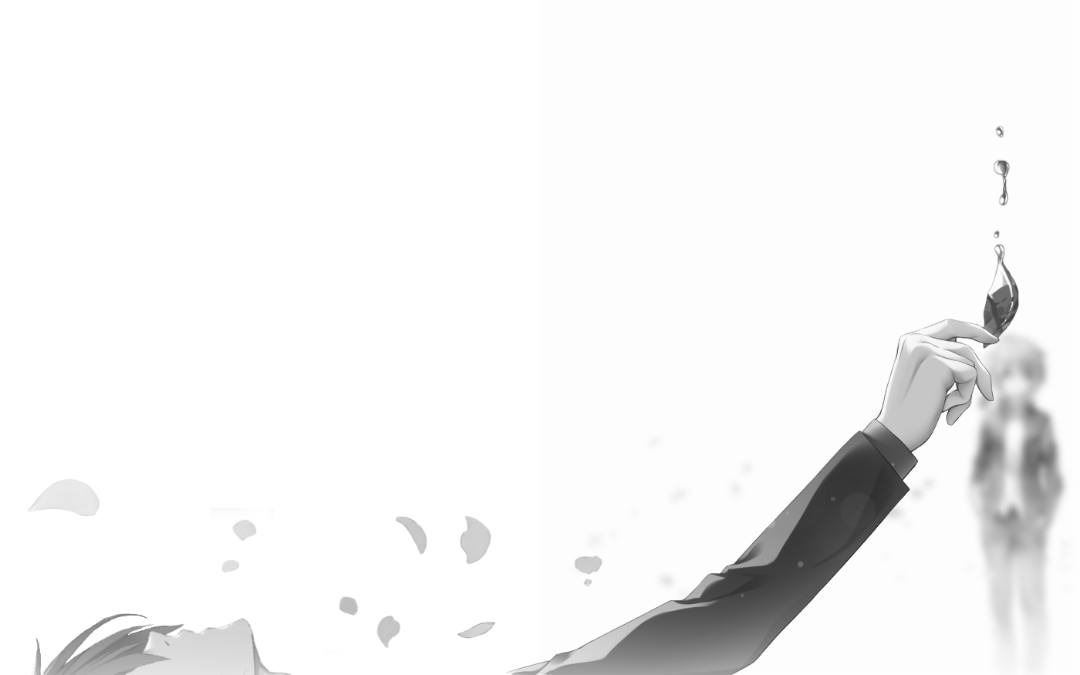
With the sequence established, the next question is what 虚空 [empty heavens/void] refers to in this context. I think the most coherent way to approach this ambiguity is through the relation between the world, the self, and beauty established earlier. In Night on Bald Mountain, during a conversation with Housai, Naoya states that “the world” is ultimately synonymous with the “self,” 「私が言う“世界”とは“私”の事でしかありません。そして、〈私〉は無限に開かれた世界です」 [The “world” I speak of is nothing other than the “I” itself. And the “I” is an infinitely open world]. Insofar as this world is infinitely open, there is no final “limit” to be reached; Naoya consequently describes its pursuit as an 無限の円環の旅路 [infinite circular journey] while explicitly defining “art” as the act of aiming toward an 約束されない土地 [unpromised land] whose limits can never be seen.
Ken’ichirou provides a complementary account, as explained earlier, when he describes beauty as “something that exists outside,” distinguishing ‘beauty-in-itself’ (i.e., Beauty) from its fleeting manifestations within the world. Although his account differs from Naoya’s more circular conception of the relationship between artist and world, both suggest that what appears within the world can point beyond any particular form in which it appears.
In The Frozen July Sky (i.e., the novella detailing the untold backstory of Rin and Shizuku; chronologically taking place after the events of Uta but before Toki), Otonashi Ayana describes the “now” as containing 過去も未来もすべて [all of the past and future], 広狭のすべての空間 [all of space, in its vastness and intimacy], and すべての現象すべて [all of existence], before concluding that 「今」は、生まれる事なく、消滅する事もなく [the “now” is neither born nor does it perish], and 「今」、言い換えれば、無限を内包する無なのだ [the “now,” in other words, is a nothingness that contains infinity]. This does not directly identify 虚空 with the “now,” but it provides a closely related conception of nothingness as capable of containing infinity alongside the totality of temporal, spatial, and phenomenal existence—in other words, the universe itself.
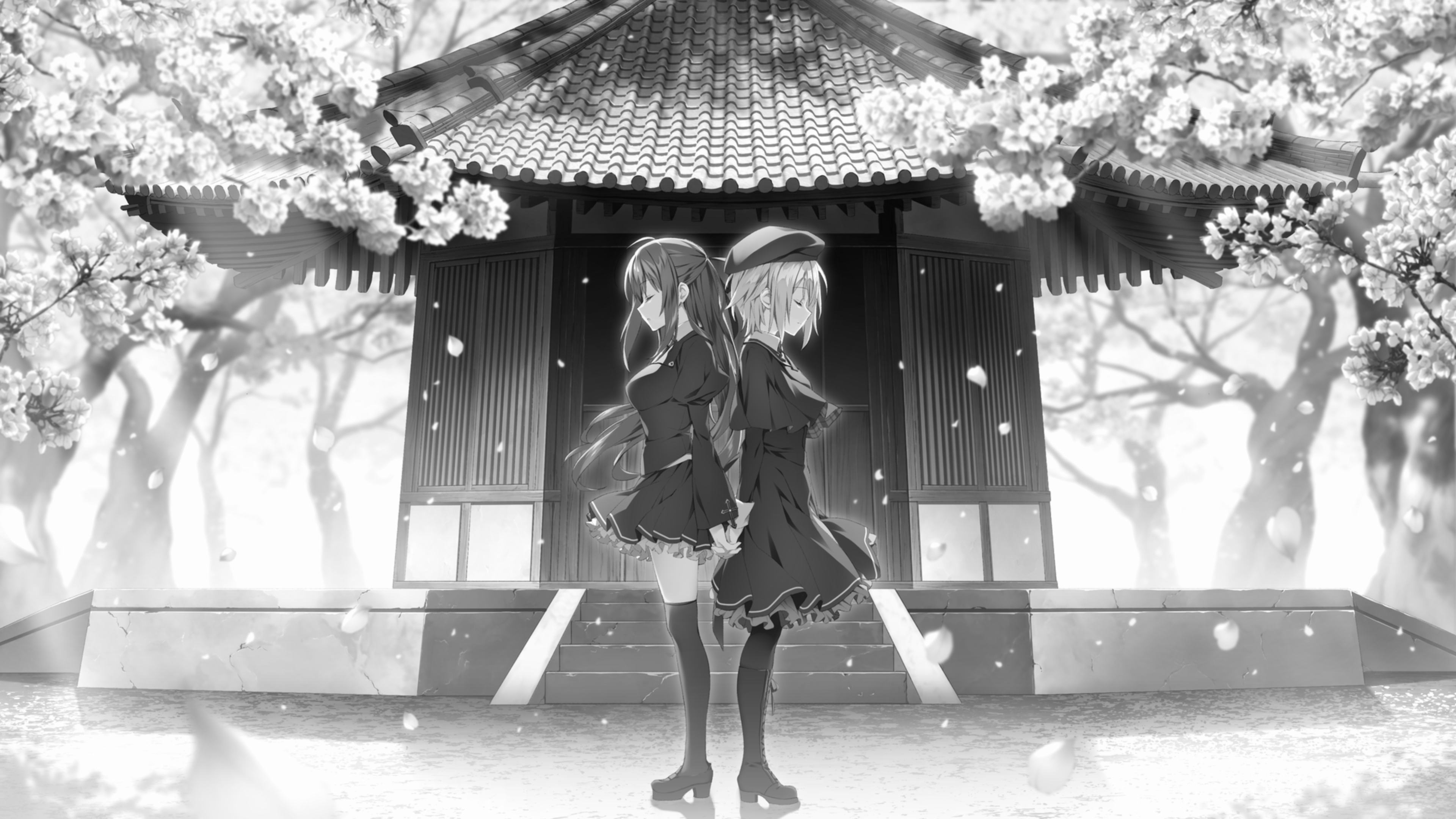
Seen in this light, the “outside” implied by this infinitely open world can be read as 虚空, the boundless, unreachable horizon of the ‘artist–world–beauty’ circuit, the “virtual openness” that exceeds every determinate form. Finite forms emerge within this openness (e.g., a fleeting scene like the sunset discussed earlier, a melody, or an artwork) only to recede into it again, even as further possibilities remain open. 虚空 therefore comes to signify an inexhaustible field of possibility. Gauguin’s Empire of Death, particularly his description of the néant primordial as an inert state of “potentiality” and “virtuality” preceding the emergence of distinct things, provides a useful conceptual parallel. In this sense, the ‘empty heavens’ can be understood as a field of virtuality, encompassing forms, experiences, and relations not yet brought forth. Seen this way, to “fill” this openness with color is the continual actualization of what remains open as beauty, as Naoya receives and gives determinate form to what has yet to be realized while reaching toward the unseen limits of the “unpromised land.”
This also helps clarify Kei’s Mallarméan language of Void and Beauty. The Void recedes as Beauty emerges, while the eventual disappearance of that manifestation returns it to the openness that exceeds any single form. Returning once more to the final painting, memories, emotions, music, and the painting itself all pass away as particular forms, dissolving into the “infinite earth” and the “eternal heavens.” The forms that emerge on the canvas are therefore transient manifestations of what has entered Naoya from the world, taking shape as beauty before dissolving again into the infinite. From the three-part framework established earlier, however, such disappearance reveals a “greater perspective” in which these losses do not negate what once existed. To recognize that 「俺達の旋律なんて小さなものだ」 [our melodies are insignificant] and that we will never see the same “deranged beauty” again is to recognize their transience without denying that they were heard. In the same manner, admitting that the butterfly in the specimen is dead allows the butterfly to “take flight” once again.
The Angel Who Proclaimed Infinity
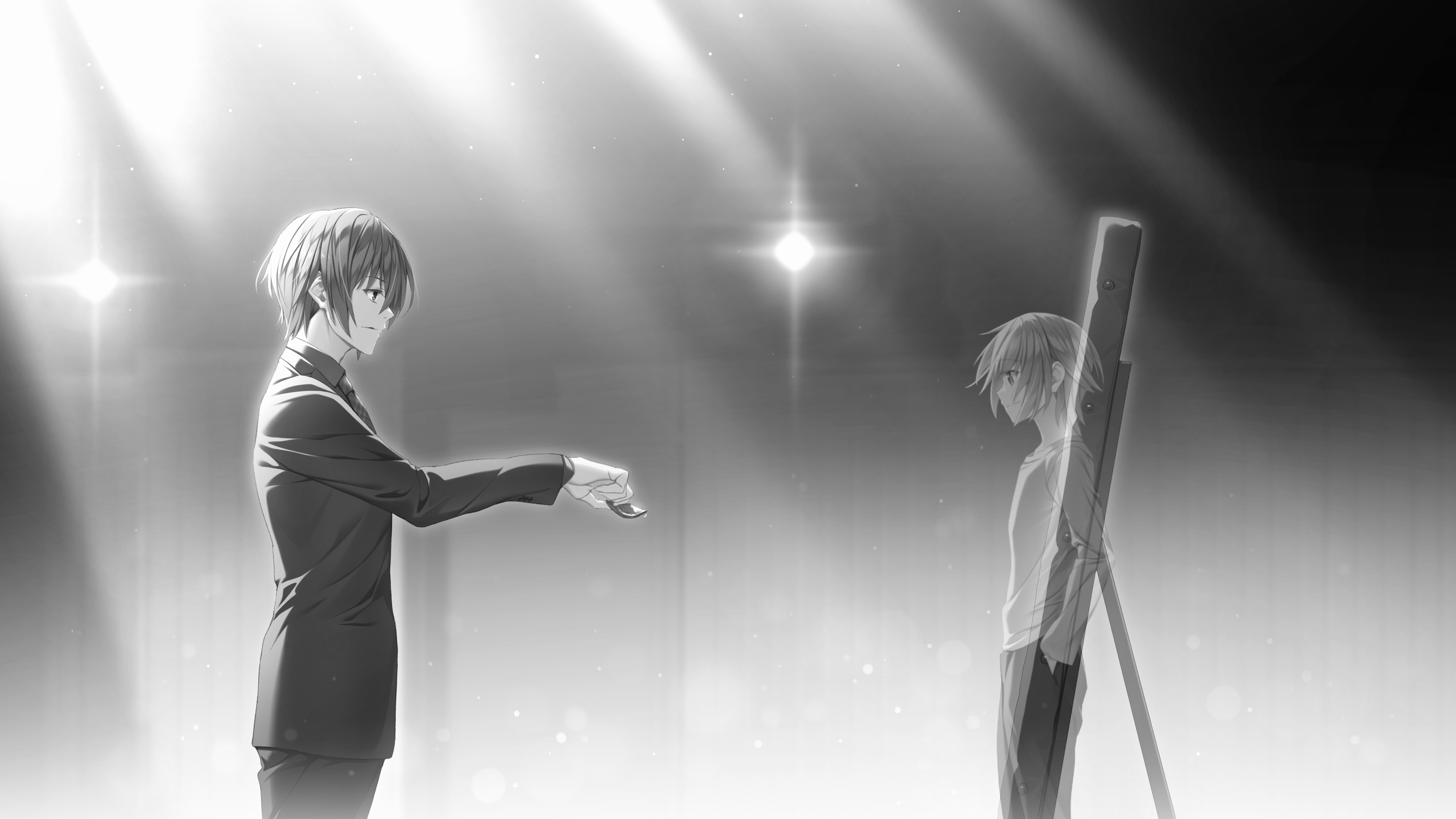
天使は言う。わたしに訊ねても無駄だよ。 だって、俺は、お前の考えが分かっているのだからさ。 そのうち、無限が案内してくれるように頼むがいいさ。 でも、まだ、お前に無限は早いよ。 神さまが、お前をどうするかって一度は考えてみろよ?それが出来たら、今のお前がどういう意味で未完であるか分かるよ。
[“There’s no use asking me.” The angel says, “Because I already know what you’re thinking. When the time comes, ask to be guided toward the infinite. [Kei begins narrating from this point onward:] But not yet. The infinite is still too soon for you. Think, just once, about what God intends to make of you. When you can do that, you’ll understand why you, as you are now, remain unfinished.”]
The passage also brings the nature of Naoya’s encounter with Kei into question: what exactly is happening in this scene? The scene is presented in deliberately ambiguous terms. After recalling the childhood memory of cutting Kei’s hair, the narration shifts to the image of a white-winged angel ascending toward the stars, and Gauguin’s words then pass through Naoya’s mind. It is precisely at でも、まだ、お前に無限は早いよ [But not yet. The infinite is still too soon for you], that Kei begins to speak, his voice suddenly entering the scene midway through Gauguin’s words. His figure then begins to emerge from the whiteness, gradually becoming more distinct as he continues speaking, until the end of the sequence where Naoya calls out his name. The VN never explicitly establishes what kind of encounter this is.
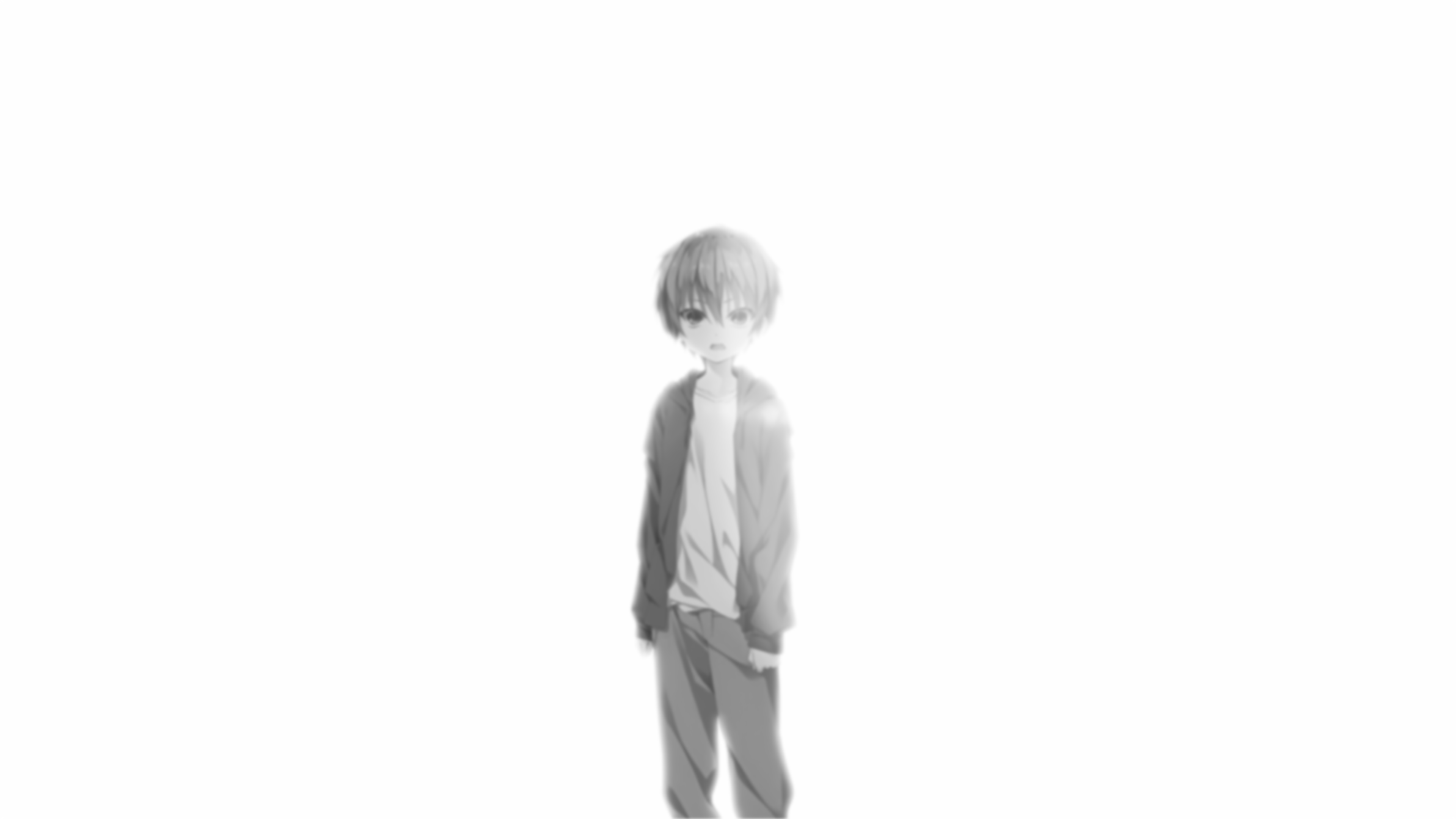
The ambiguity is reinforced by the language surrounding Kei’s appearance. Before he emerges, Naoya already describes Kei as someone who remains perceptible to him despite his disappearance: お前がいなくなっても、俺からお前の背中が消える事はない。[even after you’re gone, your back will never disappear from me] [...] and もうその姿は見えないのに、それでも俺には見えている [even though I can no longer see his figure, I can still see him] [...]. Kei’s emergence consequently admits at least three readings.
On a metaphysical reading, Kei’s soul genuinely appears to Naoya after death. This interpretation builds on the preceding analysis, in which the recurring references to Gauguin and Mallarmé have already established the imagery and ideas surrounding his appearance. The angelic imagery established earlier thus takes on a more literal possibility here: Kei’s words about being “unfinished” and the “infinite” continue the language of The Empire of Death. His appearance can consequently be understood as Kei continuing the artistic and philosophical trajectory established before his death. He emerges from beyond the world of the living—the “Empire of Death,” so to speak—but does so through the language and imagery that had already become part of Naoya’s world. A psychological reading does not require Kei to literally return. Naoya has already established that Kei remains with him despite his physical disappearance, and the scene can instead give that continued connection perceptible form. Kei’s words emerge from Naoya’s memories, experiences, and understanding of him, allowing his voice to become part of Naoya’s continued movement. A hybrid reading leaves these possibilities superimposed; Kei may genuinely appear, while his appearance remains inseparable from the memories and world through which Naoya experiences him.
The ambiguity of the encounter therefore seems appropriate to the sequence’s larger treatment of incompletion. Whether Kei literally appears, emerges as an externalization of Naoya’s continuing memory of him, or exists somewhere between these possibilities, the encounter produces the same fundamental transformation: Kei’s influence becomes something that accompanies Naoya into the future. His final words do not restore the past or complete what was left unfinished between them; they direct Naoya toward what remains ahead. He, the angel, proclaims the infinite, and in the same manner, proclaims it to be too soon for Naoya. The question of what Naoya sees remains open, but what the encounter enables him to do is much clearer. Kei tells him to go on—to run forth—and Naoya does.
Cherry Blossoms and Sunflowers
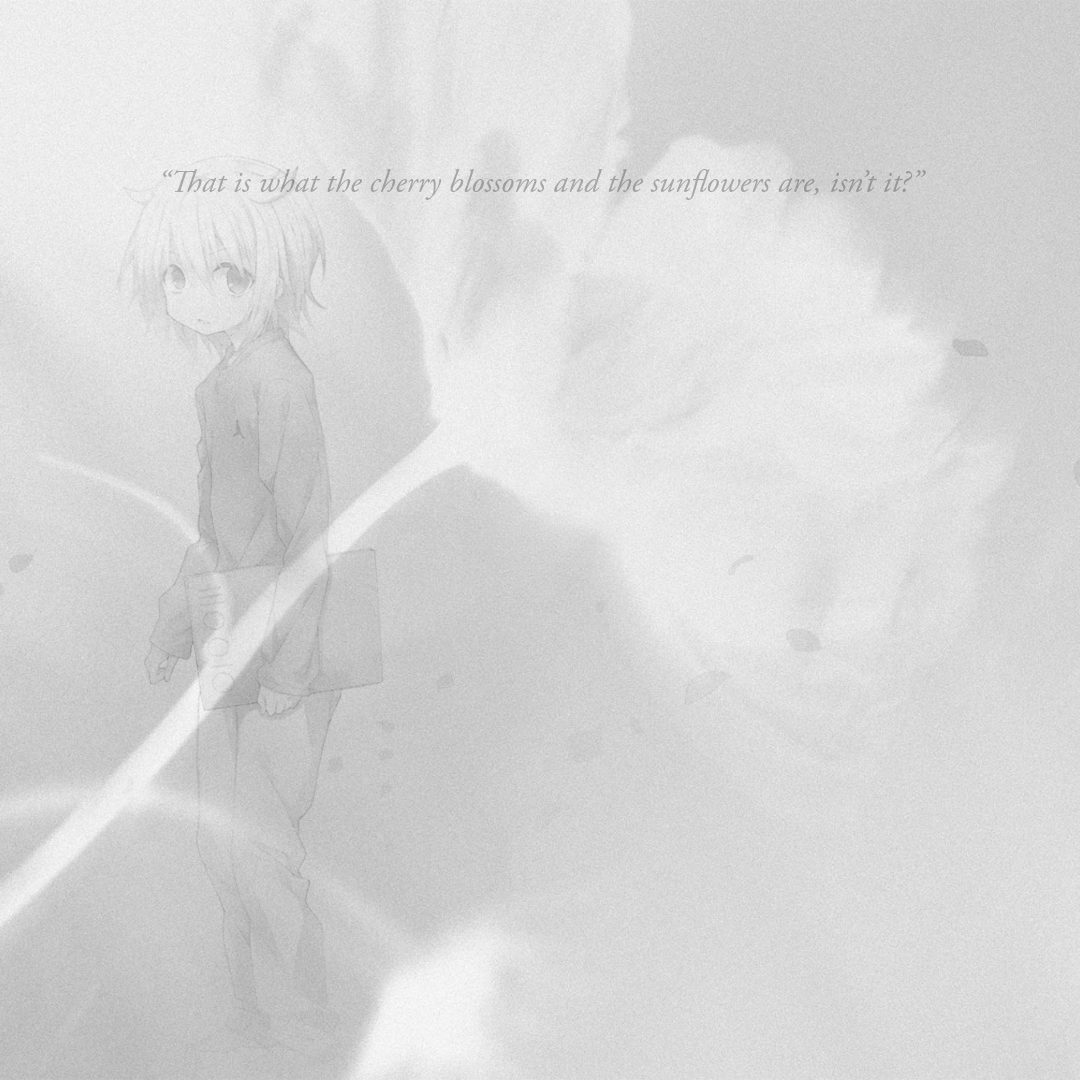
To consider the significance of the sequence’s final line—それが櫻と向日葵だろ? [That is what the cherry blossoms and the sunflowers are, isn’t it?]—it is necessary to look back at what this motif has meant throughout the work. If they are what fulfills the promise, then what, precisely, are they?
Most immediately, one may read the cherry blossoms and sunflowers metonymically as symbols for Naoya and Kei. Naoya has been called the 櫻の芸術家 [cherry blossom artist] since childhood, whereas Kei becomes inseparable from the sunflower through his repeated work on the motif, beginning with his childhood encounter with Van Gogh’s Sunflowers and culminating in Two Sunflowers. The correspondence extends further into the allegorical framework of Wilde’s The Happy Prince and Other Tales: the cherry blossom corresponds to Naoya, and the Happy Prince, while the sunflower corresponds to Kei and the Swallow. When the Swallow dies in Uta, we could say the Prince’s leaden heart falls rather than following him (i.e., a transformation of Wilde’s fable); in Toki, that fallen heart comes within the reach of those surrounding Naoya, who are then able to “give it wings” again. The image anticipates Naoya’s own return to art and eventual “flight” after Kei’s death.
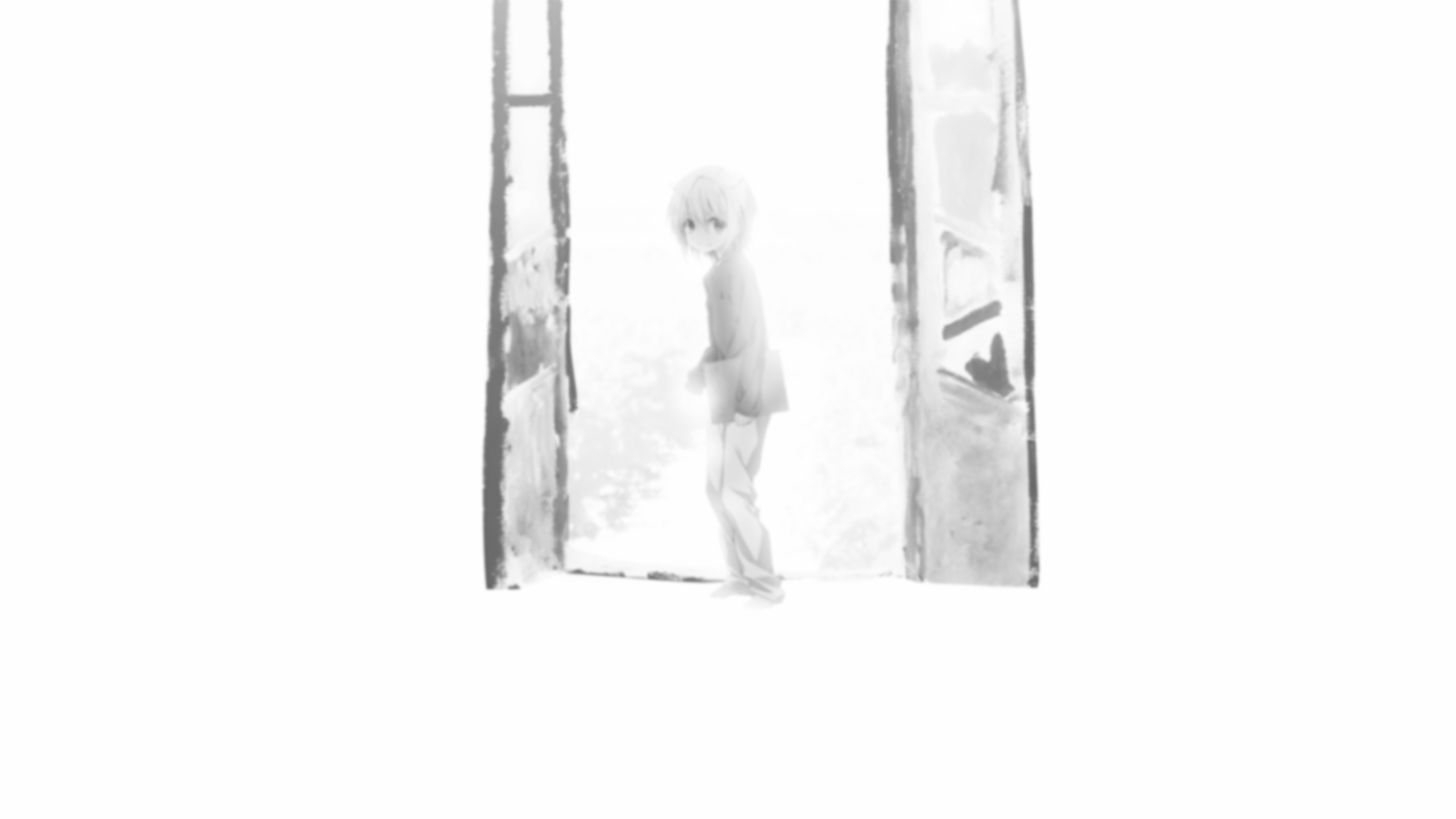
Looking at what cherry blossoms and sunflowers signify, the distinction between them lies in their different relationships to death. In Japan, cherry blossoms are traditionally closely associated with 物の哀れ [mono no aware], the “pathos” (aware) of “things” (mono), in which the beauty of an object is intensified by an awareness of its impermanence; their brief flowering and rapid dispersal make them an emblem of beauty shaped by evanescence. Sunflowers also wilt, but their passing carries a different implication. As the flower withers, its seed head remains, providing food for birds and producing seeds that can be collected and grown again the following year, allowing for the possibility of continuation. Their passing can therefore suggest both an endpoint and a legacy extending beyond the individual flower.
This distinction maps closely onto Naoya and Kei. Kei describes Naoya as 「お前は集める芸術家」 [[You’re] an artist who gathers things], someone who collects even the smallest fragments of experience and transforms them into something greater, while describing himself as 「俺は捨てる芸術家」 [[I’m] an artist who throws things away], concentrating himself upon a single pursuit—becoming a “man of ignorance,” just like Van Gogh, who sees only one thing—until his repeated return to the sunflower condenses his life into Two Sunflowers. Naoya’s cherry blossoms thus correspond to an art of gathering and continual becoming, while Kei’s sunflowers correspond to concentration and eventual crystallization. The surrounding winter imagery reinforces this correspondence, with the sunflowers wilting, the Swallow dying, and Kei himself dying in winter. Yet what Kei produces extends beyond him. Two Sunflowers changes Naoya’s world; Kei’s unfinished soul is entrusted to Naoya’s unfinished brush, and what he devoted his life to persists through Naoya’s art. The sunflower thus comes to embody both the end of Kei’s trajectory and the legacy that survives it.
This statement also returns to the promise at the foundation of their artistic relationship (i.e., the restaurant visit / ‘empty vessel’ conversation), now transformed through the language of the 未完の筆 [unfinished brushes] and 虚空 [empty heavens]. The cherry blossoms and sunflowers thereby become the visible manifestations of that promise.
The final painting also offers insight into why these particular forms emerge. Through the dream water, Naoya receives memories, emotions, and experiences from the world and gives them determinate form through his “brush”—in this case, the shard of the dream-water bowl. Rina’s cypresses make this explicit, as the text identifies them as 氷川里奈の想い [Rina’s feelings]. The cherry blossoms and sunflowers can likewise be understood in this way, as artistic manifestations of Naoya and Kei and, more precisely, of the memories, emotions, and shared histories through which they have shaped one another. Their appearance is thus a natural consequence of the ‘artist–world–beauty’ circuit: they bloom because they have become part of Naoya’s world.
Naoya and Kei spend much of their lives following different trajectories. From childhood onward, Kei looks toward Naoya, continually trying to catch up, while Naoya eventually loses his direction and withdraws from painting, only beginning to move forward again after Kei has already disappeared. The final painting brings these paths together after the final brushstroke, as まるで刈られてしなびた太陽の様であったが。 [[was like] a sun that had been cut down and withered], followed by 向日葵。 [Sunflowers]. Naoya continues: 「お前のはじまりが、この絵画の終わりなんだな」 [Your beginning became the end of this painting]. He then concludes: 「桜ではじまった絵画は、向日葵によってその焼身を終える」 [the painting that began with cherry blossoms completes its final burning through sunflowers]. The painting’s beginning in cherry blossoms and ending in sunflowers brings Naoya and Kei into convergence within the same work.
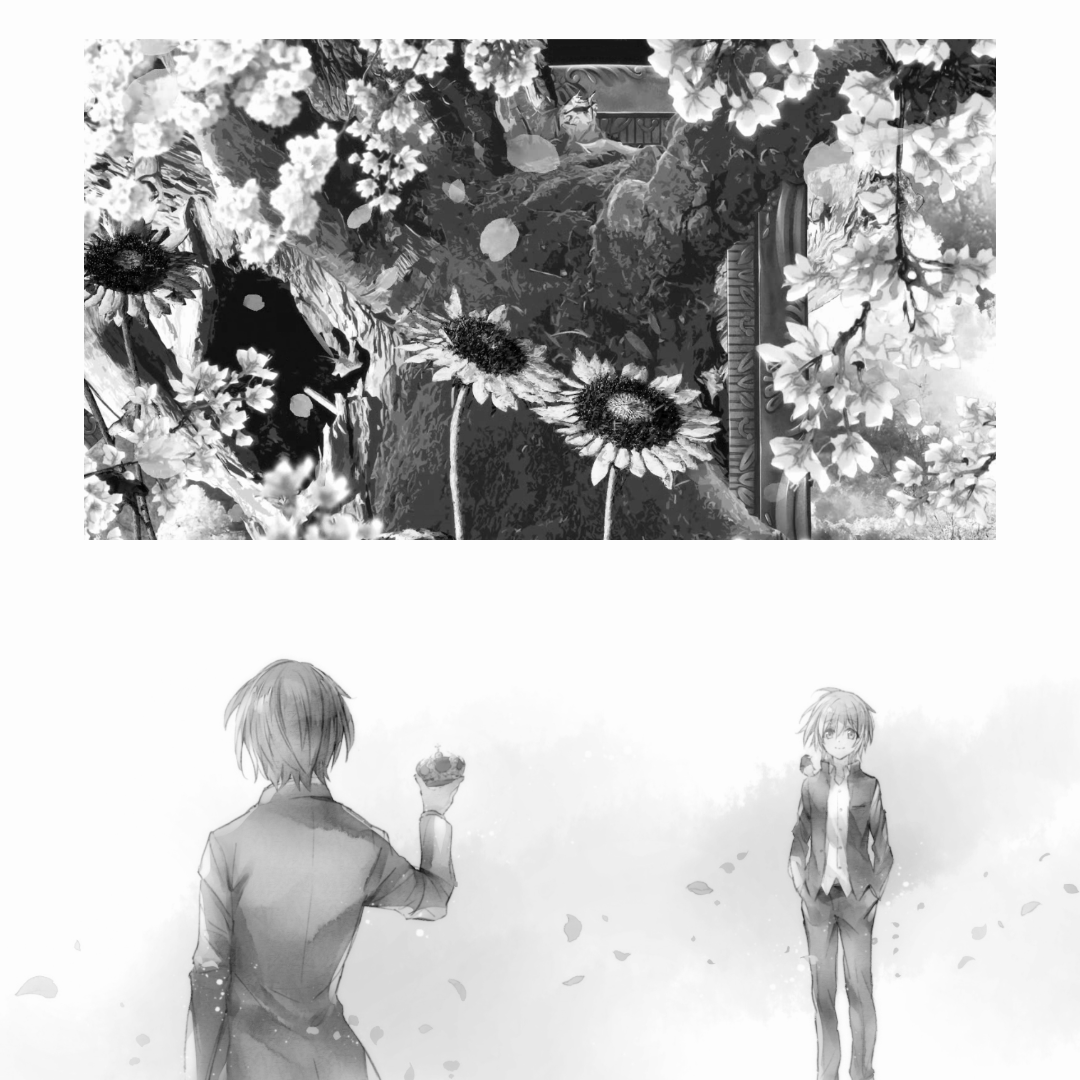
Returning to the question posed at the beginning of this section, the flowers represent both Naoya and Kei, as well as their respective artistic trajectories, their different relations to time and death, and the convergence of their paths within the promise they made all those years ago. They give that abstract relationship a visible form, bringing together two lives that moved separately, became inseparable through art, and finally meet within the same work. In the end, that is what the ‘cherry blossoms and the sunflowers’ are, isn’t it?
Thank you for reading.
References
Gauguin, P. (1897). Where Do We Come From? What Are We? Where Are We Going? [Painting]. Museum of Fine Arts Boston.
Gauguin, P. (1920). Avant et après. Éditions G. Crès et Cie.
Gauguin, P. (1996). The writings of a savage. Da Capo Press.
Hegel, G. W. F. (1977). Phenomenology of Spirit (A. V. Miller, Trans.; J. N. Findlay, Foreword and analysis of the text). Oxford University Press.
Heidegger, M. (1962). Being and Time (J. Macquarrie & E. Robinson, Trans.). Basil Blackwell. (Original work published 1927).
Heidegger, M. (1971). The Origin of the Work of Art. In A. Hofstadter (Trans.), Poetry, Language, Thought. Harper & Row.
Klein, R. (1988). Je suis véritablement décomposé : Sur une lettre de Mallarmé. Romantisme, 18(61), 47–57.
Livingston, P. (2014). History of the ontology of art. In E. N. Zalta (Ed.), The Stanford Encyclopedia of Philosophy (Winter 2014 ed.). Metaphysics Research Lab.
Makura. (2023). サクラノ刻-櫻の森の下を歩む- 通常版 (Sakura no Toki: Sakura no Mori no Shita o Ayumu — Regular Edition) [Windows visual novel]. Makura.
Makura. (2025). サクラノ詩-櫻の森の上を舞う- 10th Anniversary Edition (Sakura no Uta: Sakura no Mori no Ue o Mau — 10th Anniversary Edition) [Windows visual novel]. Makura.
Mallarmé, S. (2019). Correspondance (1854–1898) (B. Marchal, Ed.). Gallimard.
Norman, B. (2014). Mallarmé’s sunset: Poetry at the end of time. Modern Humanities Research Association.
Parkes, G., & Loughnane, A. (2023). Japanese aesthetics. In E. N. Zalta & U. Nodelman (Eds.), The Stanford Encyclopedia of Philosophy (Fall 2023 ed.). Metaphysics Research Lab.
Pearson, R. (1996). May ’68. In Unfolding Mallarmé: The Development of a Poetic Art. Oxford University Press.
Review of plot and philosophy in Sakura no Toki. (n.d.). [Unpublished article].
SCA-ji. (2023). 凍てつく7月の空 (The Frozen July Sky) [First-press bonus booklet for Sakura no Toki: Sakura no Mori no Shita o Ayumu]. Moonphase Co., Ltd.
Smith, D. W. (2013). Phenomenology. In E. N. Zalta (Ed.), The Stanford Encyclopedia of Philosophy (Fall 2013 ed.). Metaphysics Research Lab.
Thomson, I. D. (2010). Heidegger’s aesthetics. In E. N. Zalta & U. Nodelman (Eds.), The Stanford Encyclopedia of Philosophy (Spring 2024 ed.). Metaphysics Research Lab.
Wheeler, M. (2011). Heidegger. In E. N. Zalta (Ed.), The Stanford Encyclopedia of Philosophy (Summer 2015 ed.). Metaphysics Research Lab.