Warning
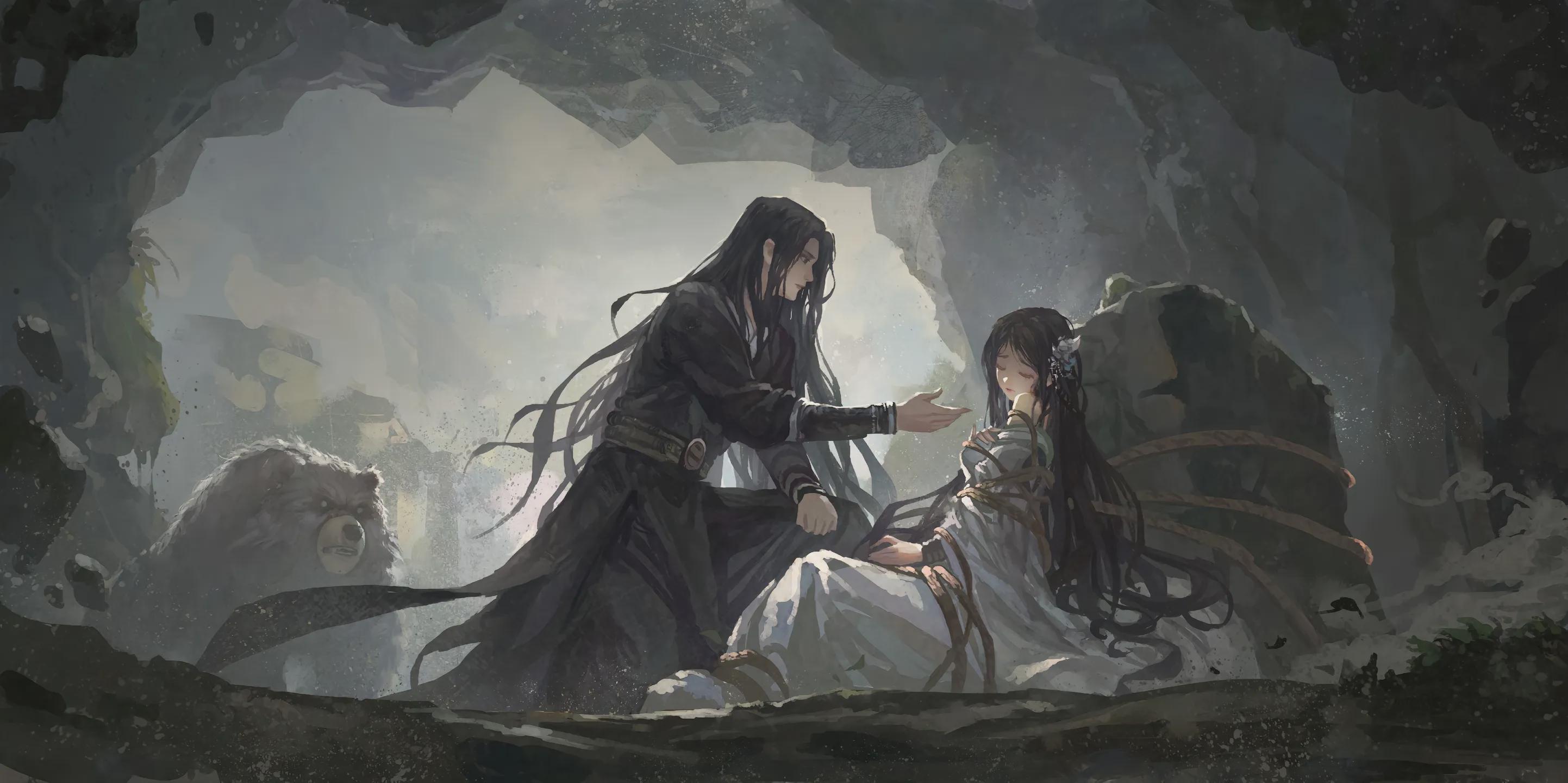
Chapter 151 of Reverend Insanity is probably one of the most interesting and thought-provoking chapters of the first volume (A Demon’s Nature Doesn’t Change), and one that offers one of our earliest glimpses into Fang Yuan’s worldview. Regardless of the “bear” in the room, I think focusing on the philosophy behind it is much more interesting.
What makes this chapter so compelling is how it takes an idea that resembles something like spiritual equality (the notion that all life is fundamentally the same) and twists it into something much darker. A more natural interpretation of that idea would probably be that all living beings deserve a chance to live—that predator and prey are not morally good or evil, but simply acting according to survival. However, here, that same premise is pushed toward the conclusion that all life is equally insignificant, and therefore equally expendable.
He isn’t merely rejecting morality; in a way, he is reinterpreting a seemingly “true” idea into something that supports his worldview. What makes it even more unsettling is that he does not do this to justify guilt or ease his conscience. There is no inner conflict. To him, this is simply the truth.
Fang Yuan folded his arms as he observed Gu Yue Yao Le’s expression, thinking of a Buddhist saying on earth: ‘Without a sense of self, without a sense of person; to be detached of all living things, detached of the sense of time. Void is the red skull and white bones, skin and flesh!’
I am namely myself, without individuality. Breaking the sense of self, realizing that one is common and ordinary. ‘Without a sense of self’ means ‘everyone is equal, there is no difference.’
Man is humanity no longer treating humans as a superior race and demeaning other living beings. ‘Without a sense of person’ means that ‘the world is equal, there is no difference.’
‘Living things’ refers to all life, no longer recognising life as superior and thinking that non-living beings like rocks and water have cognition. This is ‘detached of all living things,’ which means ‘all in the world is equal, there is no difference.’
Any object or creature has their respective lifespan, and ‘detached of the sense of time’ namely means ‘regardless of whether it exists or not, they are all equal without difference.’
No matter how beautiful the guy or girl, they eventually turn into a skeleton. Bones, skin and flesh are one, but people favoured skin and flesh while fearing bones—this is being fixated on appearance, not recognising that all is equal.
This Buddhist term is calling for humans to break through all forms, seeing the truth.
Beauty is superficial, and people, me, the world, and time, is all superficial. If one goes past the superficial aspect, they would see Buddha.
Recognising and going beyond, treating all as equal, all is equal.
(Gu Zhen Ren, 2012)
His morality is not based on good or evil, but on benefit (or, utility I suppose). Life and death are not sacred or tragic—they are essentially just tools. He does not actively seek to preserve life or destroy it (if he could attain eternal life through being a saint, then he would be one. But alas, in his eyes, the demonic path is a better suited path towards supremacy); he simply allows either outcome depending on what serves him best. In that sense, he is not truly bound by morality at all. Instead, he uses it when convenient and discards it when it is not.
Note
Thus, Buddha sacrificed his body to feed tigers, cutting off his flesh to feed eagles. This was the benevolence in his heart, seeing all in this world as his own, loving everything, and his great love for everything.
No matter if it’s me, others, animals or plants, or even the lifeless rocks and water, even those that do not exist, we have to love them.
If a mortal standing there watches the bear eat a person, some hot-blooded teenager would jump out and scream, “You beast, don’t you dare eat a person!” or “Beauty, do not fear, uncle is here to save you!” etc.
This was the mortal’s love and hatred, loving young girls and hating large bears. Not going beyond and still fixating on the superficial, not able to see her red human skeleton.
If Buddha stood there and watched the bear eat a person, he would sigh, chanting, “If I do not enter hell, who would enter?” He would save the young girl and feed himself to the black bear.
This was Buddha’s love and hatred, loving the young girl and loving the bear, treating all as equal.
But right now, Fang Yuan was the one standing here.
Seeing the young girl’s tragic and violent death, his heart was unmoved.
This was not because of his numbness to death, but he had gone beyond the superficial, having no obsessions. Without a sense of self, without a sense of person; to be detached of all living things, detached of the sense of time…
Seeing all living things as equal, the world is equal.
Thus, the girl’s death is no different from a fox or a tree’s death.
(Gu Zhen Ren, 2012)
The idea that “everyone has a right to live and a right to die, but no one is innocent” captures Fang Yuan’s outlook quite well I would say. Fang Yuan treats existence itself as neutral, stripping away its emotional weight and replacing it with pure utility.
What I find especially interesting is that the novel doesn’t portray Fang Yuan as someone who simply rejects Buddhist thought outright. Rather, it suggests that he arrives at almost the same philosophical destination (quite similar to that of his conclusion in regards to being a True Person / Zhenren, but that is an analysis for another time)—recognizing the illusory nature of distinctions, the equality of all beings, and the superficiality of appearances—but walks away with an entirely different conclusion. Where Buddhism transforms that realization into compassion through the dissolution of the self, Fang Yuan instead preserves his own desire above all else. And while the insight may be similar, what differs is what each chooses to do with it.
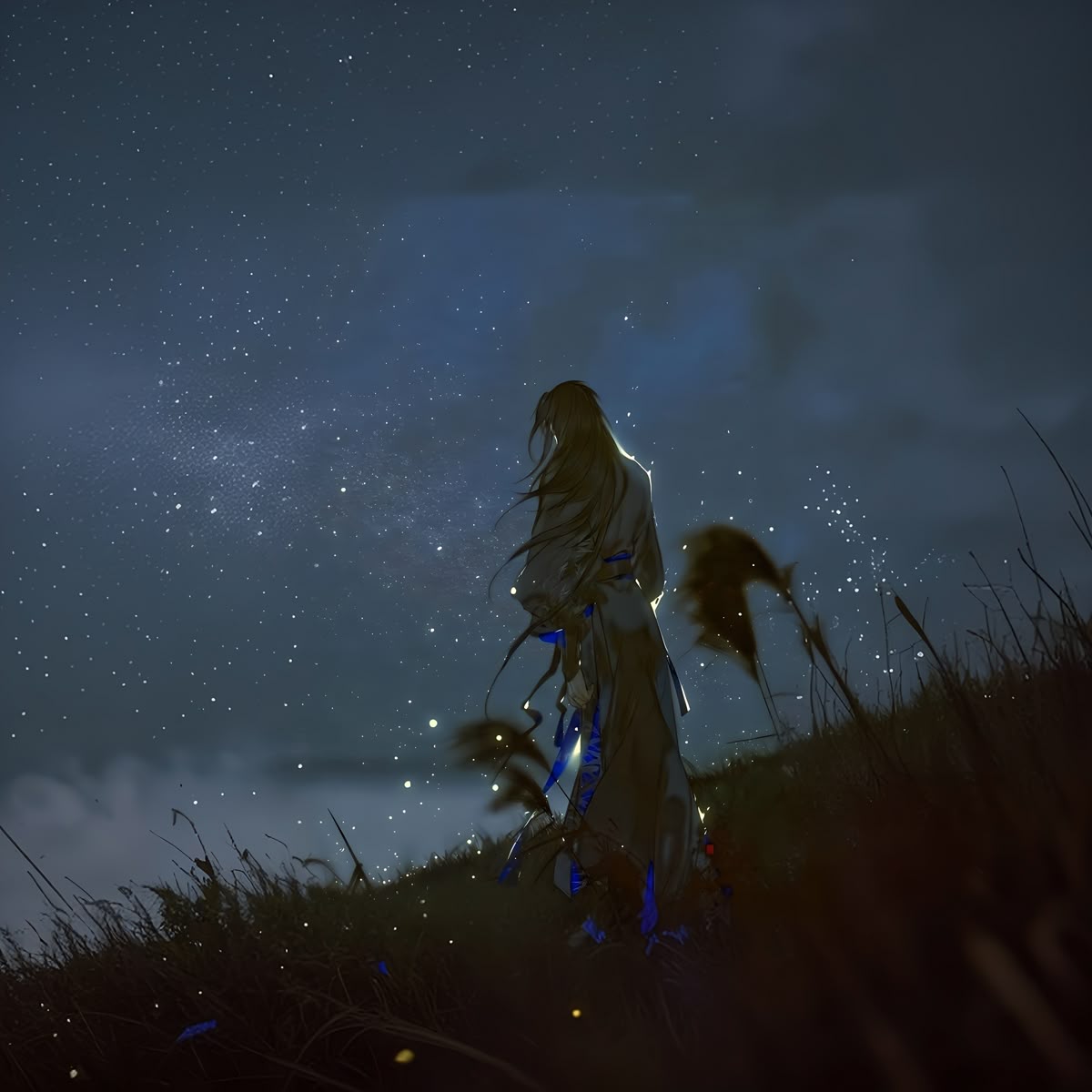
In the end, the same realization splits into two paths: toward the light, one becomes Buddha, choosing compassion despite meaninglessness and dissolving the self; toward the darkness, one becomes a demon, exploiting that same meaninglessness while preserving desire and discarding guilt.
But to a mere mortal, the girl’s death would trigger their anger, hatred, and pity. If it was the girl eating the bear, they would not feel anything. If an old lady was eaten, the pity in their hearts would be greatly reduced. If it was a villain, a murderer getting eaten, they would clap their hands in joy, praising.
In actuality, all beings are equal, and heaven and earth is just.
Nature is fair, disregarding love or hate; it is emotionless, and never gives differential treatment.
Rule of the strong, victor takes all!
The disappearance of a lifeform, towards the entire natural realm and the infinite cosmos, to the long river of history—what does it amount to?
Death means death, who can choose not to die? What talk about a girl, bear, ant, fox, tree, old lady, murderer, they are all lowly! Humble! Mongrels!
Only by recognising this and going beyond the superficial, arriving at the truth, does one gain divinity.
This divinity, taking a step towards the light, it becomes Buddha. If it takes a step towards the darkness, it becomes a demon.
Demonic nature!
(Gu Zhen Ren, 2012)
Ironically, I don’t really think this chapter is ultimately about Fang Yuan at all. His philosophy is already almost entirely internally consistent, regardless of whether we agree with it. The real target may simply be everyone else—ourselves included. We claim to value all human life equally, yet instinctively assign different moral weight to deaths depending on youth, beauty, innocence, familiarity, or even species. Fang Yuan’s worldview is disturbing, sure, and one may wonder how exactly he developed such a worldview, but it also functions as a mirror. It isn’t merely asking us whether he is wrong; it’s asking whether the principles we claim to hold are ones we actually apply consistently.
As said earlier, whether one agrees with Fang Yuan or not is quite literally beside the point. The chapter is effective precisely because it doesn’t simply ask whether his actions are evil—it asks why we judge some deaths differently from others (even more so when this is the world of Gu, not our own), why innocence seems tied to age, appearance, or species, and whether our compassion is truly universal or merely selective. I don’t think the novel expects us to embrace Fang Yuan’s conclusion. Instead, it forces us to confront the rather unfortunate possibility that our own morality may not be as consistent as we’d like to believe.
Thank you for reading.
References
Gu Zhen Ren. (2012). Reverend Insanity (Chapter 151). Unofficial English translation.